


Seat belts are one of the most basic and important passenger protection devices in various types of vehicles. There are various types of seat belts, and the differences between different types of seat belts are significant. Choosing the wrong seat belt can affect the riding experience and even pose safety hazards. This article will provide you with a detailed introduction to different types of seat belts and help you choose the product that suits you.
Seat Belt Types by Number of Restraint Points
One common way to classify seat belts is based on the number of fixed points. Generally speaking, the more fixed points there are, the more comprehensive the restraint of the seat belt on the body. Correspondingly, the structure of seat belts becomes more complex and costly.
Quick Comparison Table
| Type | Principle | Application | Advantages | Limitation |
| 2-Point Seat Belt | Single belt or single shoulder strap structure | Wheelchairs, airplane seats, forklifts, golf carts, medical beds | Low cost, lightweight, easy installation, anti-vibration | Only protects the waist and pelvis, without upper body protection, not suitable for high-speed passenger cars |
| 3-Point Seat Belt
| Integrated waist and shoulder webbing | Private cars, buses, trucks, and conventional construction vehicles | Balancing upper and lower body protection, with the strongest universality and mature mass production | Not suitable for high-intensity off-road and professional racing impact scenarios |
| 4-Point Harness | Shoulder straps+double waist belts | UTVs, ATVs, off-road karts, and light modified vehicles | The upper body is firmly fixed, the structure is simple, and it is easy to replace | No crotch strap; there is a risk of body slippage under high-intensity impact |
| 5-Point Harness | Shoulders+double waist+single center crotch strap | Karting, children’s racing UTV, vehicle-use child safety seats | Effectively prevents body slippage and provides more stable fixation throughout the body | More complex installation and higher cost than regular seat belts |
| 6-Point Harness | Shoulders+waist+independent crotch straps | Professional track racing, rally racing | Double crotch strap design, eliminating the risk of slipping off under high G-force | The volume is too large, and it is necessary to strengthen the installation points of the vehicle body |
2-Point Seat Belt
The 2-point seat belt is the most basic type of seat belt. It only has one waist belt that spans the waist and is connected to the seat through two fixed points at both ends. It restricts the forward movement of the passenger’s lower body by constraining their waist.
The advantages of the 2-point seat belt are simple structure, low cost, and easy to wear. It is mostly used in buses, airplanes, and amusement facilities.
The drawbacks of 2-point seat belts are also evident. They cannot restrain the upper body and head of passengers. If a collision occurs, the passenger’s torso will still tilt forward significantly, which may cause a secondary collision between the passenger and the steering wheel or front seats.
The protective ability of the 2-point seat belt is limited. If your protection requirements are relatively low or you only use seat belts for auxiliary restraint scenarios, then you can choose it.
3-Point Seat Belt
The 3-point seat belts are currently the most mainstream choice for passenger cars worldwide. It consists of a waist belt and a shoulder strap that diagonally spans the chest, fixed at three fixing points and used in conjunction with a retractor.
The shoulder and waist straps of the 3-point seat belt work together to restrain the upper and lower body of the passenger. The combination of these two can significantly reduce the risk of head and waist injuries in collisions.
It is easy to wear and has good comfort. The vast majority of car models use 3-point seat belts as protective devices. However, it should be noted that the design of the 3-point seat belt is mainly aimed at adults.
For smaller children, shoulder straps may get stuck in the neck, posing a risk of strangulation. If you are choosing or designing a seat belt for a child seat, we do not recommend choosing it.
 4-Point Harness
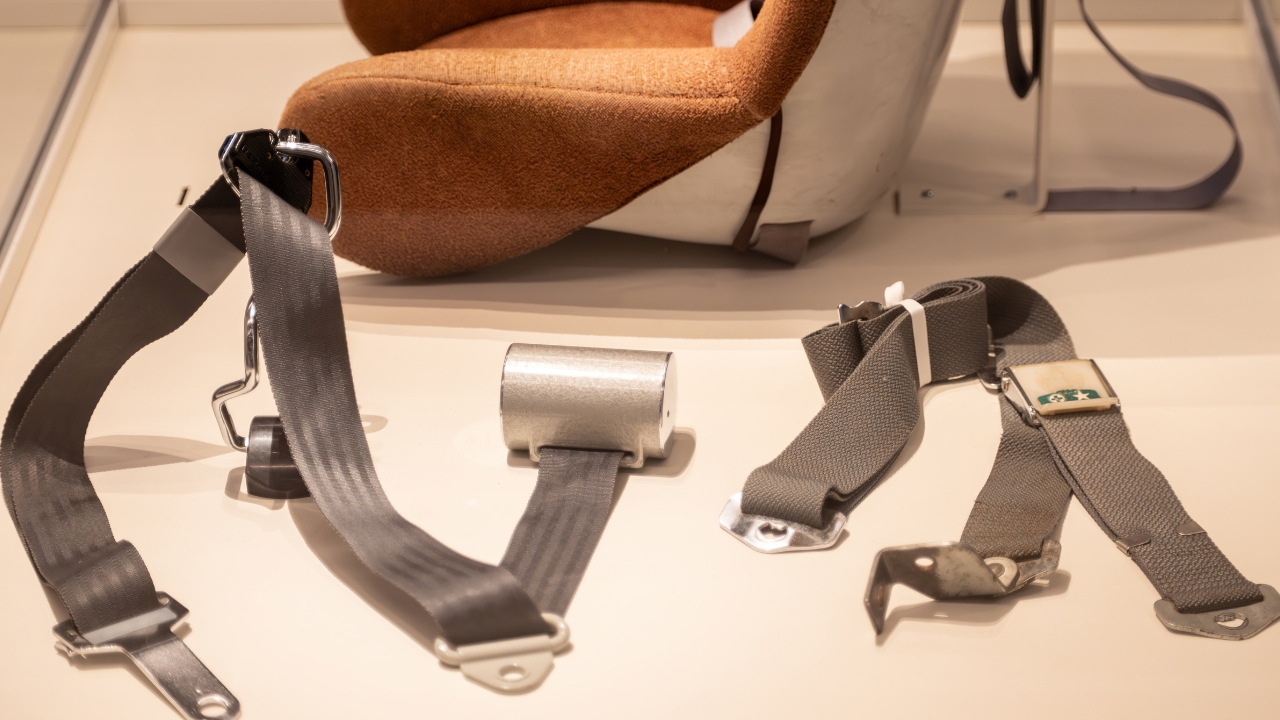
A 4-point harness consists of two shoulder straps and two lap belts connected to four mounting points. It is connected to the seat through four fixed points. It has an additional shoulder strap compared to the 3-point seat belt, which provides stronger restraint on the upper body of passengers.
The two shoulder straps of a 4-point harness firmly secure the passenger to the seat, significantly reducing torso displacement during sharp turns or collisions. But in a severe frontal collision, there is still a risk of submarining.
If your product is an off-road vehicle, track racing car, go-kart, or other construction machinery seat, you can choose it.
5-Point Harness
The 5-point harness has a total of five fixed points, and it adds a crotch strap between the legs on the basis of the four-point style. The function of the crotch belt is to prevent passengers from slipping out from under the waist belt in a collision.
The 5-point harness can simultaneously secure the shoulders, hips, and crotch area. It can firmly restrain the body of passengers on the seat. Currently, most child seats on the market adopt a 5-point harness design. Meanwhile, it is also widely used in pilot seats and professional racing cars.
Its protective effect is relatively good, but the disadvantage is that it is relatively cumbersome to wear. It requires fastening multiple straps and adjusting the tension, and its comfort is not as good as the three-point style. It is generally used in scenarios that require high safety but have a relatively short wearing time.
6-Point Harness
The 6-point harness is an upgraded version of a 5-point harness. It changes one crotch strap into two and fixes them on the inner sides of both thighs, with a total of six fixing points.
Two crotch straps can evenly distribute the force on the seat belt between the legs. Its anti-slip effect and fixed stability have been further improved. At the same time, it can also alleviate the discomfort caused by a single crotch strap.
Along with increased safety, its structure has become more complex, and wearing and adjusting it has become more time-consuming.
If you want to purchase a 6-point harness, you need to note that it needs to be used correctly under professional guidance and is generally only used in professional racing and high-performance vehicles. If your product is an ordinary car model, you don’t need to choose it.
 Seat Belt Types by Retractor Mechanism
In addition to classifying based on the number of fixed points, seat belts can also be classified based on their structure. Seat belts are usually divided into static seat belts and retractable seat belts.
Quick Comparison Table
| Type | Characteristics | Application | Advantages | Limitation |
| Static Seat Belt | Pure manual adjustment, no automatic retraction function | Airplane, wheelchair, medical restraint equipment, forklift | No vulnerable moving parts, anti-vibration, extremely low failure rate, strong stability | Excess straps cannot be automatically stored |
| Retractable Seat Belt | Elastic stretch, adaptive length | General term for vehicle seat belts | Flexible adjustment, tidy storage, and space-saving | Belonging to a general concept, not an independent technical specification |
| ELR Seat Belt | Daily comfort and flexibility, instant protection in case of accidents | Private cars, trucks, and the vast majority of civilian cars | Balancing daily user experience and collision safety | Severe turbulence may trigger false locks, depending on the quality of the accessories |
| ALR Seat Belt | Fixed length throughout the entire process, unable to stretch freely | Only used for fixing child safety seats | Fixed and stable, preventing seat shaking and displacement | Not suitable for daily wear by adults; restricted mobility |
Static Seat Belt
The static seat belt does not have a retractor, and the length of the webbing is fixed. Passengers need to manually adjust the length of the webbing and fasten the buckle. Its advantages are a simple structure, low cost, low failure rate, and durability. But its comfort and convenience are poor, and it is no longer suitable for modern passenger cars.
Retractable Seat Belt
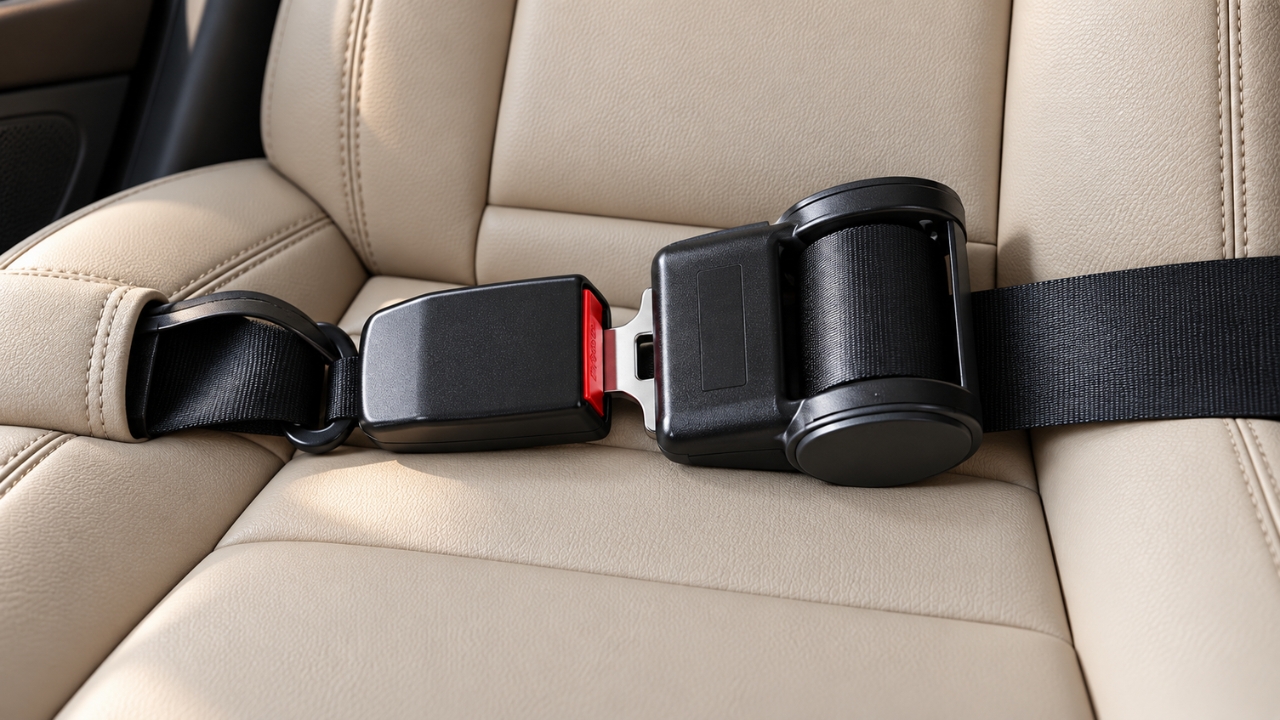
A retractable seat belt is a general term for all seat belts with an automatic retraction function, including subtypes such as ELR, ALR, etc. The biggest difference between it and a static seat belt is that it has a retractor. The built-in spring scroll inside can automatically store excess webbing, keeping the appearance clean. Meanwhile, it supports free stretching and length adjustment, making it flexible and convenient to use.
ELR Seat Belt
ELR is currently the most widely used type of retractor in passenger cars. During normal driving, the webbing can stretch and retract freely, and passengers can adjust their sitting posture at will. When the vehicle brakes suddenly or in a collision, or when the webbing is quickly pulled, the winch will immediately lock and secure the passenger to the seat. ELR seat belts balance daily comfort and safety.
An inertia reel is a type of retractor mechanism that uses inertial sensing to lock the webbing during sudden movement.
Many automotive ELR systems use a dual-sensing lock mechanism. It senses the acceleration, deceleration, and body tilt of the vehicle through its built-in inertial sensing device. When it detects sudden deceleration, collision, or large body tilt, the sensing device will activate and trigger the scroll lock. Thus playing a role in protecting passengers.
ALR Seat Belt
The locking logic of ALR is opposite to that of ELR. When the webbing is fully pulled back and rewound for a section, the retractor immediately enters a locked state, after which the webbing can only be tightened and cannot be pulled out. Only after fully retracting the webbing can it come into contact with the lock.
ALR seat belts are mainly used in child safety seats to eliminate the risk of seat displacement and shaking during driving. Currently, the commonly used tool in the industry is a switchable retractor. It automatically activates the ALR mode for securing the child seat after being smoothly pulled out to the longest end, and can return to ELR mode when fully retracted.
 Other Seat Belt Types
In addition to different seat belt configurations, modern restraint systems may include safety features such as pretensioners.
Pretensioner Seat Belt
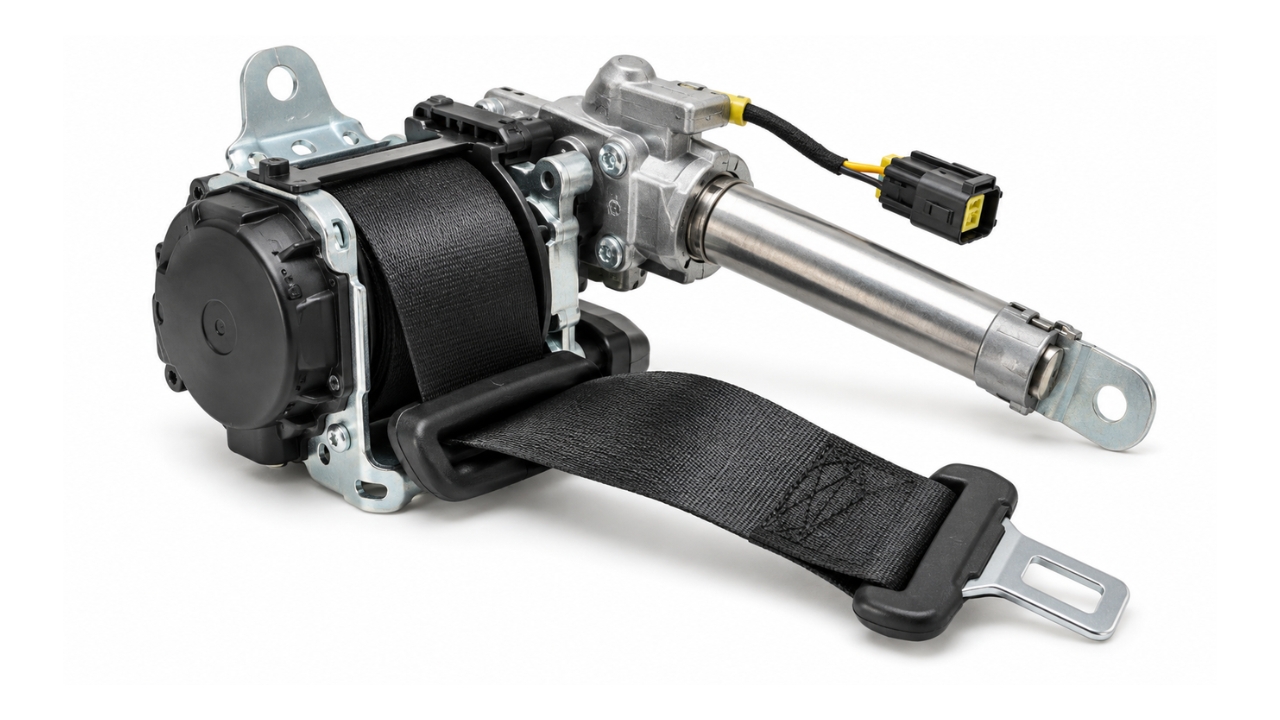
The pretensioner seat belt is equipped with a pyrotechnic or electric pretensioner trigger. At the moment of a collision, the system will quickly tighten the webbing and cooperate with the airbag to protect the occupants.
What you need to note is that this product needs to be linked and matched with the vehicle’s ECU and airbag system. Its vehicle certification threshold is very high. Most general seat‑belt manufacturers cannot deliver fully validated pretensioner solutions; special project evaluation is required if this component is within your BOM.
Quick Release Seat Belt
The quick-release seat belt is equipped with a release buckle structure. It can be quickly worn and disassembled with one click, with simple and efficient operation. It is mainly used for racing restrictions and off-road UTV equipment, which can enhance the usability of your product.
 How to Choose the Right Seat Belt for Your Product?
Product Type
Before choosing a seat belt, you should first clarify what your product is. There are significant differences in the requirements for seat belts among different products. For example, most passenger cars use three-point seat belts equipped with ELR retractors. Child safety seats should use five-point seat belts. Choosing the corresponding seat belt based on the type of product can avoid unnecessary problems.
Installation And Installation Points
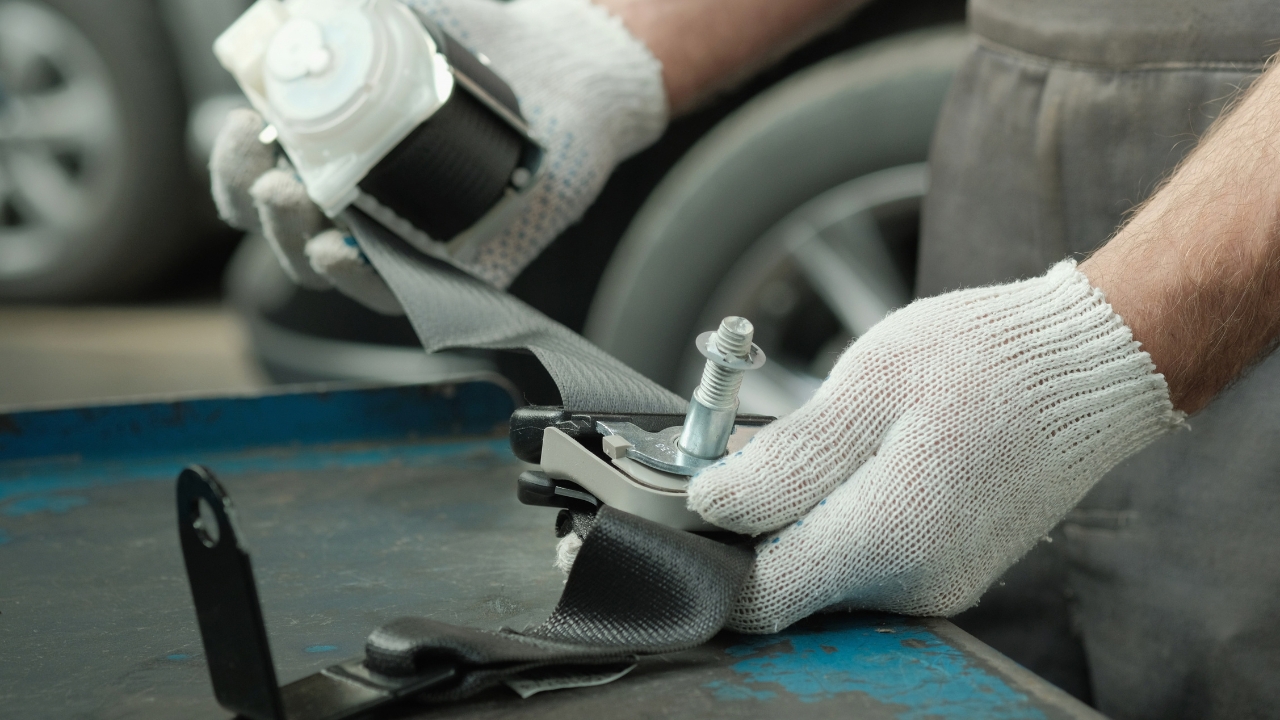
When purchasing seat belts, you also need to confirm whether the number and location of installation points reserved for the product match the selected seat belt. Incorrect installation position of seat belts can affect their performance. If you are unsure which seat belt to choose, you can contact us. We have a professional team of engineers who can recommend suitable products based on your needs.
Supplier Capability
The ability of suppliers directly determines the quality of seat belt products. Before choosing a seat belt, we suggest that you evaluate the supplier’s capabilities. BXseatbelt has rich experience in the research and manufacturing of seat belts. We have a complete quality system and testing equipment, and can provide you with product testing reports. We can guarantee the quality of your product.
 FAQ
FAQ
Can BXseatbelt’s Products Be Customized?
Yes. We can provide OEM/ODM customized services according to your needs. Our customized services include webbing color and width, buckle and tongue styles, webbing length, logo printing, and packaging solutions, etc. We can also adjust the structural design of your seat belt according to your needs.
At the same time, we ensure that all customized seat belts still comply with standards and meet the safety requirements of the target market.
Is The Seat Belt Standard The Same For Exporting To Different Regions?
No. Different regions have different standard requirements for seat belts. Automotive seat belts may need to comply with applicable regulations such as FMVSS requirements in the United States or UN ECE Regulation No.16 in many international markets, depending on the application and vehicle category.
All BXseatbelt products comply with standards and certifications. We can provide you with corresponding products according to your needs, ensuring that the products can meet special certification and certification requirements. We can also provide you with supporting documentation. If you are unsure which product to choose, please feel free to contact us.
Can ELR And ALR Be Replaced With Each Other?
No. The characteristic of ELR is that it can freely expand and contract under normal conditions and lock in case of emergency. It is suitable for adults. The characteristic of ALR is that it locks immediately after pulling out and rewinding. It is suitable for securing child safety seats. The working logic and applicable scenarios of these two are different and cannot be replaced by each other.
Can The Same Seat Belt Be Used For Different Car Models?
It needs to be judged based on specific circumstances. The installation point of the seat belt, the specification of the fixing bolt, the installation angle of the retractor, and the length of the webbing all need to correspond to the vehicle’s body structure.
Therefore, we suggest that you verify the installation dimensions, load parameters, and certification standards before purchasing. If you have multi-model adaptation needs, you can contact us for customized adjustments.
How To Verify The Quality Of Seat Belt Webbing?
When purchasing seat belts, you can inspect the quality of seat belts from three aspects: appearance, physical performance, and material. And conduct sample testing on the seat belt and simulate its usage effect on the machine.
All BXseatbelt products undergo quality testing before leaving the factory, and we can provide you with corresponding testing reports. And we have a comprehensive after-sales service system, so you don’t have to worry about product quality issues.
How Should Seat Belts Be Stored Before Installation?
Firstly, seat belts should be stored in a dry and ventilated location, avoiding moisture, acidic and alkaline gases, and direct sunlight. Secondly, the stacking of seat belts should avoid heavy pressure, folding, and dead folding, and prevent permanent creases on the webbing. In addition, the retractable components should be properly protected against dust to prevent the failure of internal springs and locking mechanisms.
Final Thought
There are various types of seat belts, and there is no absolute good or bad. You should choose the most suitable product for yourself based on your own needs. BXseatbelt has been dedicated to the research and manufacturing of seat belts for many years, with rich experience. If you want to purchase high-quality seat belt products or optimize seat belt solutions, please feel free to contact us.