

A seat belt is not made up of a single component; seat belt components such as the retractor and webbing each serve different functions while working together. By understanding the functions of the main seat belt components and the factors to consider when selecting them, you can choose seat belt components that are better suited to your target market.
Main Components of a Seat Belt System
This seat belt parts list includes the main components found in a typical restraint system, such as the retractor, seat belt buckle, latch plate, pillar loop, webbing, and pretensioner. The different parts of a seat belt work together to provide restraint, with the retractor, pretensioner, seat belt buckle, and webbing serving as the main components.
Most seat belts feature a two-part design consisting of a lap and shoulder belt.
Taking the common three-point seat belt as an example, the webbing runs diagonally from the shoulder across the chest and then extends to the lap, restraining the occupant by securing both the shoulder and pelvic areas.
In the event of a collision or sudden braking, the seat belt limits the body’s forward movement, reducing the likelihood of the occupant striking hard surfaces inside the vehicle. At the same time, the restraining force is distributed across areas such as the chest and pelvis, thereby reducing the risk of injury during a collision.
 Restraint and Locking Components
Seat Belt Retractor
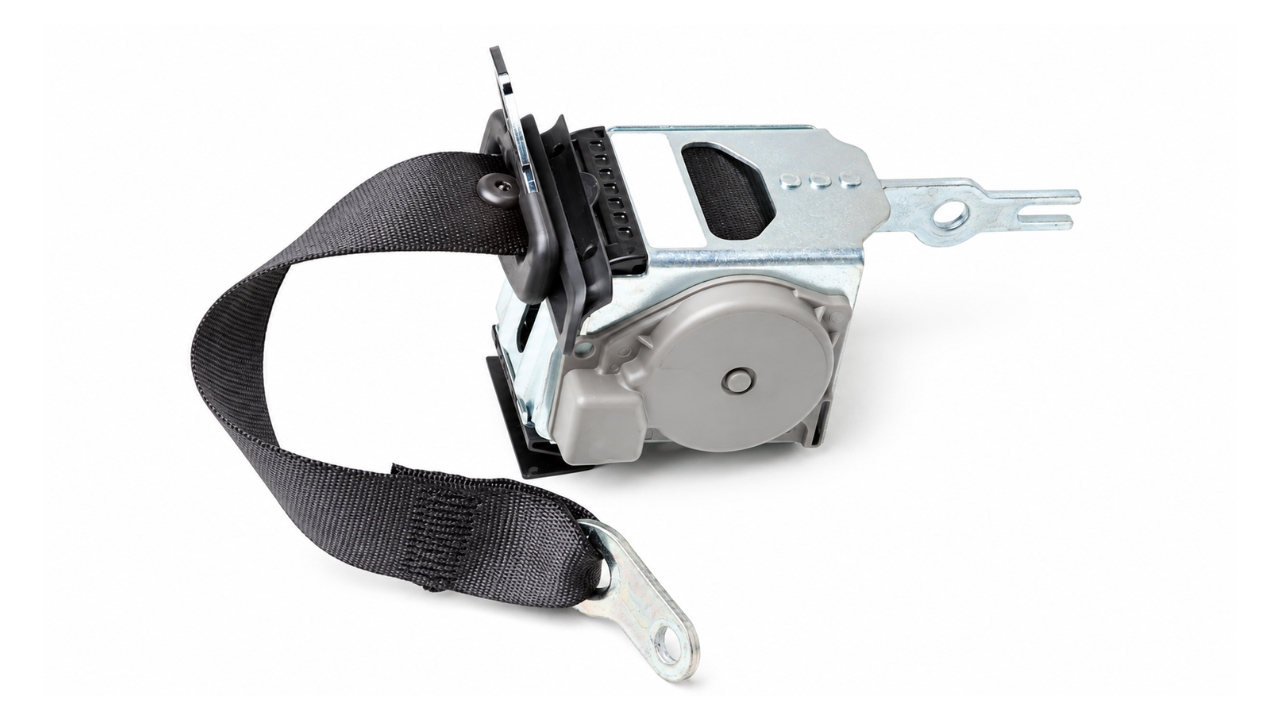
The retractor is primarily responsible for allowing the seat belt webbing to extend and retract normally, while locking the webbing in place when necessary. During normal use, your customers can pull the webbing out or retract it depending on their seating position. When the webbing is pulled out rapidly, the retractor activates its locking mechanism to secure the occupant in the seat.
Common types of retractors include the ELR (Emergency Locking Retractor) and the ALR (Automatic Locking Retractor).
Under normal conditions, the ELR allows the webbing to extend and retract freely, but locks instantly upon detecting rapid webbing pull or sudden vehicle deceleration. The ALR (Automatic Locking Retractor), commonly used for securing child safety seats, switches into a locked ratchet mode once the webbing is fully extended, allowing the belt to retract but preventing it from extending further until completely rewound.
In terms of operating principle, when the webbing is pulled out of the retractor, the internal spool rotates, causing the spring to generate tension. This not only maintains a certain retractive force on the webbing but also facilitates its retraction after use.
When the vehicle comes to a sudden stop or a collision occurs, the locking mechanism inside the retractor prevents the spool from continuing to rotate, thereby limiting the webbing from being pulled out further.
There are two common locking mechanisms.
- One utilizes the inertia generated by the vehicle’s sudden stop; a pendulum drives a metal rod, causing it to engage with the spool’s gear.
- The other relies on the motion generated by the spool’s rapid rotation, which causes an internal lever to move outward and engage the locking mechanism to lock the spool’s gear.
Although the trigger mechanisms for these two designs differ, their ultimate purpose is straightforward: to prevent the spool from continuing to rotate and to lock the webbing in place.
 Latch Plate / Seat Belt Buckle and Latch Plate
The seat belt buckle receives and locks the latch plate, securing the occupant within the restraint system during use. It typically consists of a locking mechanism and a release button; when the latch plate is inserted, the internal mechanism locks it in place.
It is typically a tongue-shaped metal component designed to withstand the loads generated during restraint. It must be inserted into the seat belt buckle and securely locked in place, while also being able to slide up and down along the webbing to allow for adjustment based on the webbing’s length and position.
In some modern vehicle seat belt buckles, a buckle sensor or microswitch is also integrated. This small sensing component detects whether the seat belt buckle is in the locked position and sends a corresponding signal to the seat belt reminder system (SBR).
Therefore, when considering a seat belt buckle assembly, in addition to the mechanical locking structure, you must also ensure that its sensing and electrical interfaces are compatible with the vehicle’s overall system.
Pillar Loop
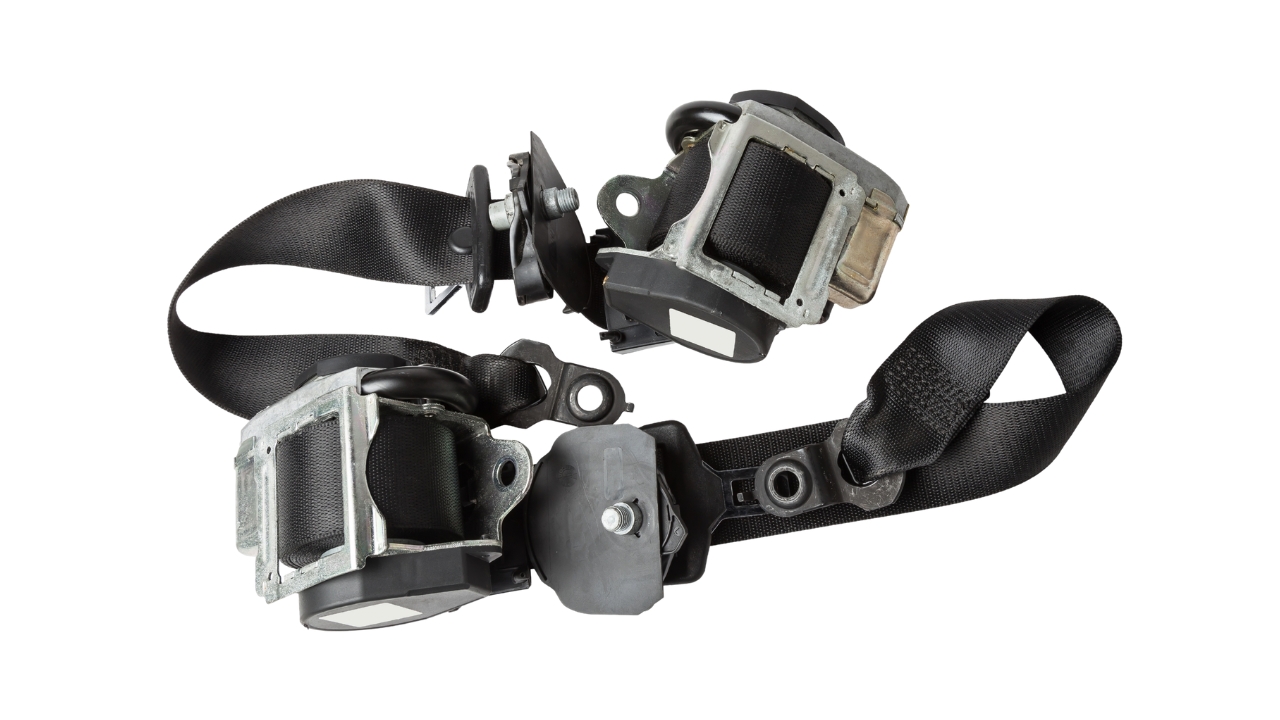
The pillar loop is the component in a three-point seat belt system that guides the webbing. It is typically mounted near a vehicle pillar and is used to guide the webbing from the retractor to the occupant’s shoulder, ensuring that the webbing crosses the chest and shoulder in the proper position.
This component itself does not lock the webbing in place, but it directly affects the webbing’s path and movement. A properly fitted pillar loop keeps the webbing on the correct path and reduces unnecessary friction and wear.
Webbing and Collision Protection Components
Seat Belt Webbing
Seat belt webbing is a fabric strap that comes into direct contact with occupants and provides restraint; it is also commonly referred to as a “belt” or “strap.” It is typically made from high-strength textile materials, with polyester fiber being a common material used in seat belt webbing. You can also choose nylon or blended materials depending on the specific application.
When selecting webbing, the goal is not simply to pursue “the stiffer, the better” or “the stronger, the better.” It must provide sufficient tensile strength while maintaining the flexibility and elongation characteristics required by the restraint system.
You should also focus on the material’s comprehensive performance characteristics. These include tensile strength, abrasion resistance, temperature resistance, corrosion resistance, and performance under impact loads. These properties, in particular, affect the webbing’s reliability during long-term use and under varying environmental conditions.
Seat Belt Pretensioner
A seat belt pretensioner is primarily used to quickly tighten the seat belt webbing in the event of a collision. Once the vehicle detects a qualifying collision, the pretensioner activates instantly. It reduces the slack in the seat belt, bringing the occupant into a restrained state sooner and thereby minimizing excessive forward movement of the body.
How It Works:
Pretensioners are typically integrated into the vehicle’s overall restraint system and may operate in coordination with the airbag control system and other safety systems. They can generate an instantaneous tightening action—either through a small pyrotechnic device or a mechanical system—to pull the seat belt webbing taut in a very short amount of time.
Because pretensioners play a direct role in collision protection, their safety performance requirements are quite stringent. All seat belt components must generally undergo appropriate reliability and safety testing. The webbing must withstand high tensile loads while also withstanding long-term wear and exposure to corrosive substances.
 Different Types of Seat Belts and Their Parts
Different types of seat belts do not always use exactly the same components.
Three-Point Seat Belt
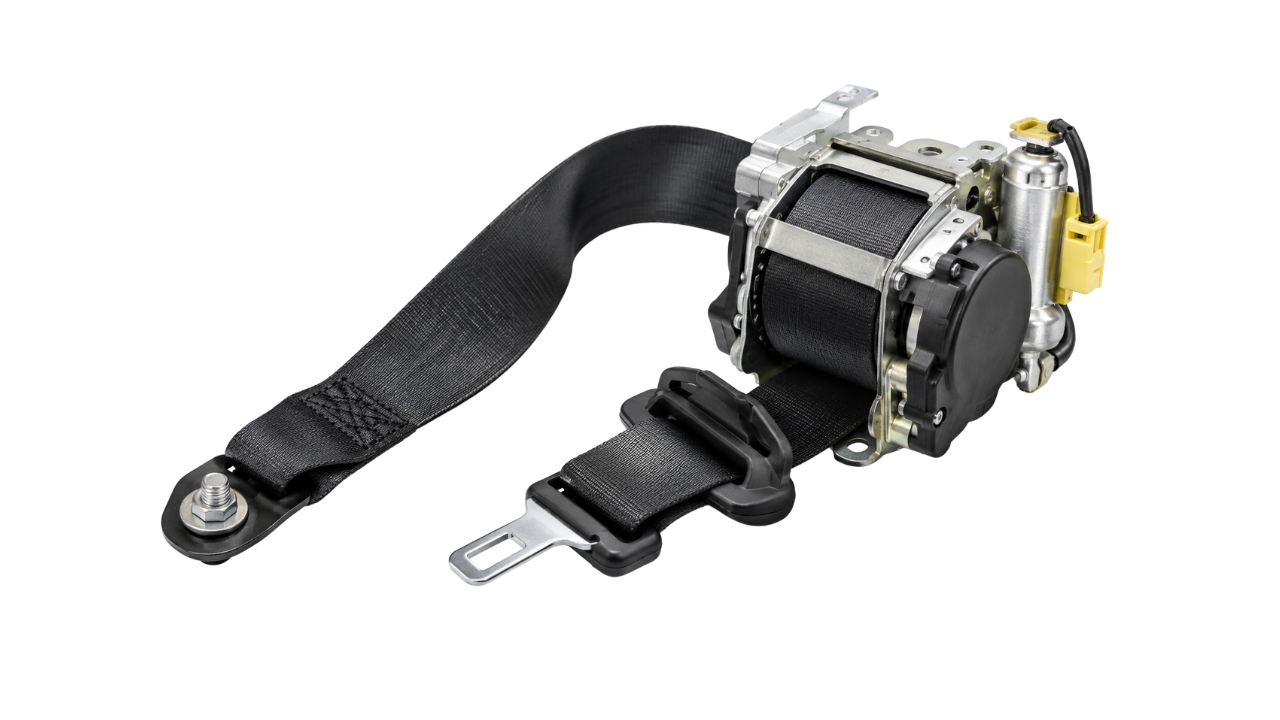
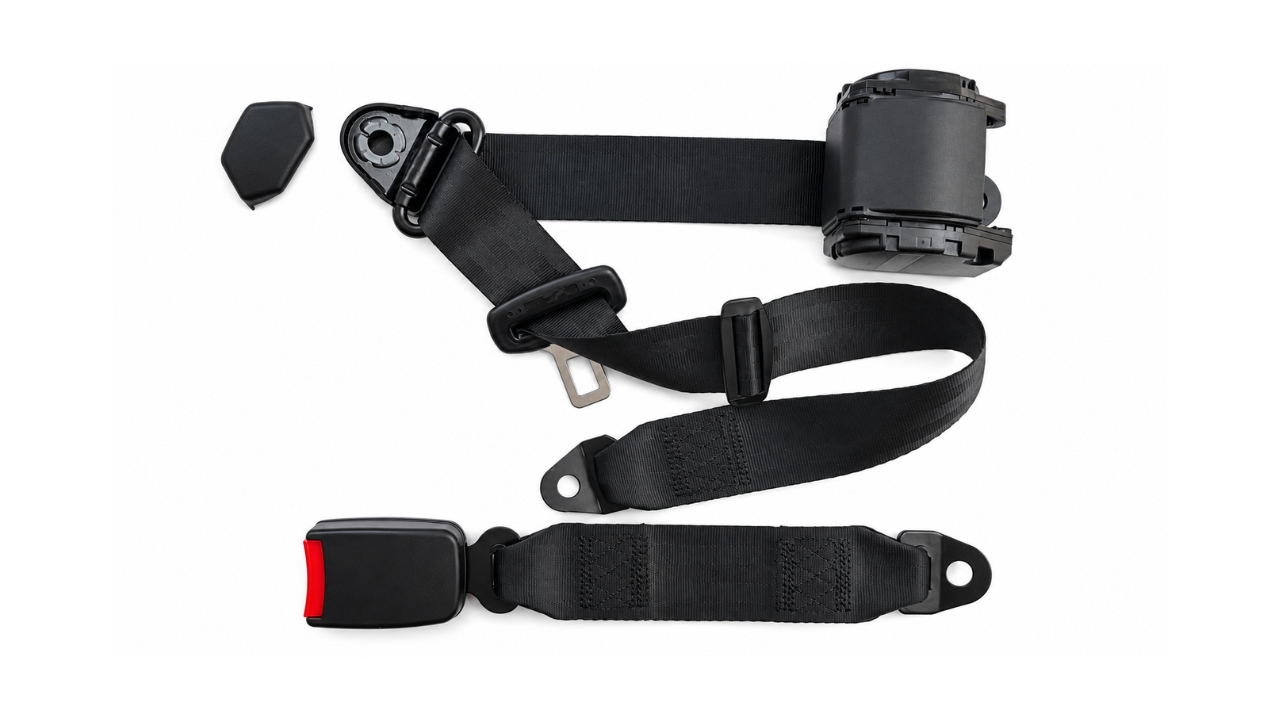
The three-point seat belt is the most common type used in passenger vehicles. Its basic configuration usually includes:
- Retractor
- Webbing
- Latch plate
- Seat belt buckle
- Pillar loop or guide
- Anchors
These parts work together to control the movement and positioning of the webbing and keep the occupant properly restrained.
If the system includes additional active safety functions, it may also use a pretensioner, load limiter, or buckle sensor.
The specific configuration varies depending on your vehicle model and restraint system, so not all three-point seat belts include all of the components listed above.
 Two-Point / Lap Belt
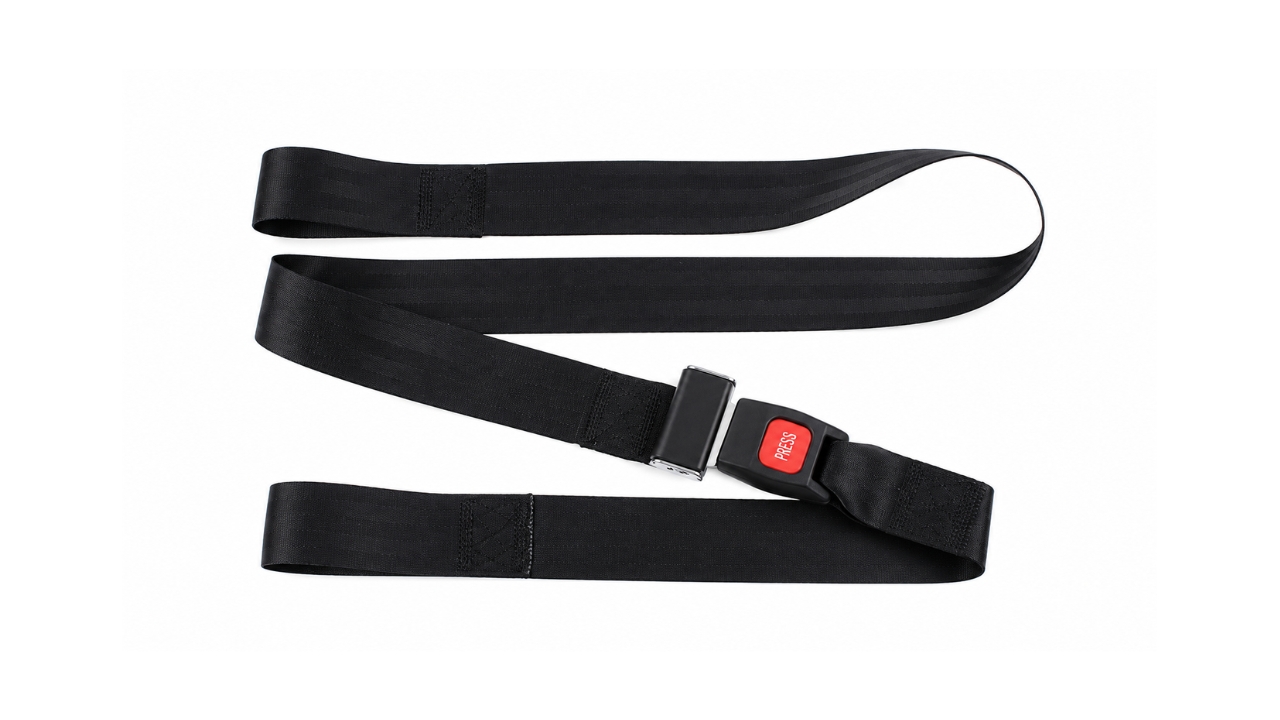
A two-point seat belt, also called a lap belt, has a simpler structure than a three-point seat belt. Its main parts generally include:
- Webbing
- Buckle
- Latch plate
- Anchors
Since it only restrains the occupant around the lap area, it does not normally require the shoulder webbing guide used in a three-point system. As a result, a pillar loop is generally not a necessary component for this type of seat belt.
 Automatic Seat Belt / Motorized Seat Belt
Automatic or motorized seat belts may use additional components to move or position the belt automatically. Depending on the system design, these can include:
- Motor (provides power to move the assembly)
- Drive mechanism and transmission belt
- Guide track
- Electronic control unit (ECU) / sensors
Because the mechanism varies between designs, you should not simply apply the component configuration of a conventional three-point seat belt to an automatic seat belt system. The mounting method, movement mechanism, and electrical or control interfaces may also need to be confirmed before selecting the parts.
Racing / Harness Seat Belt
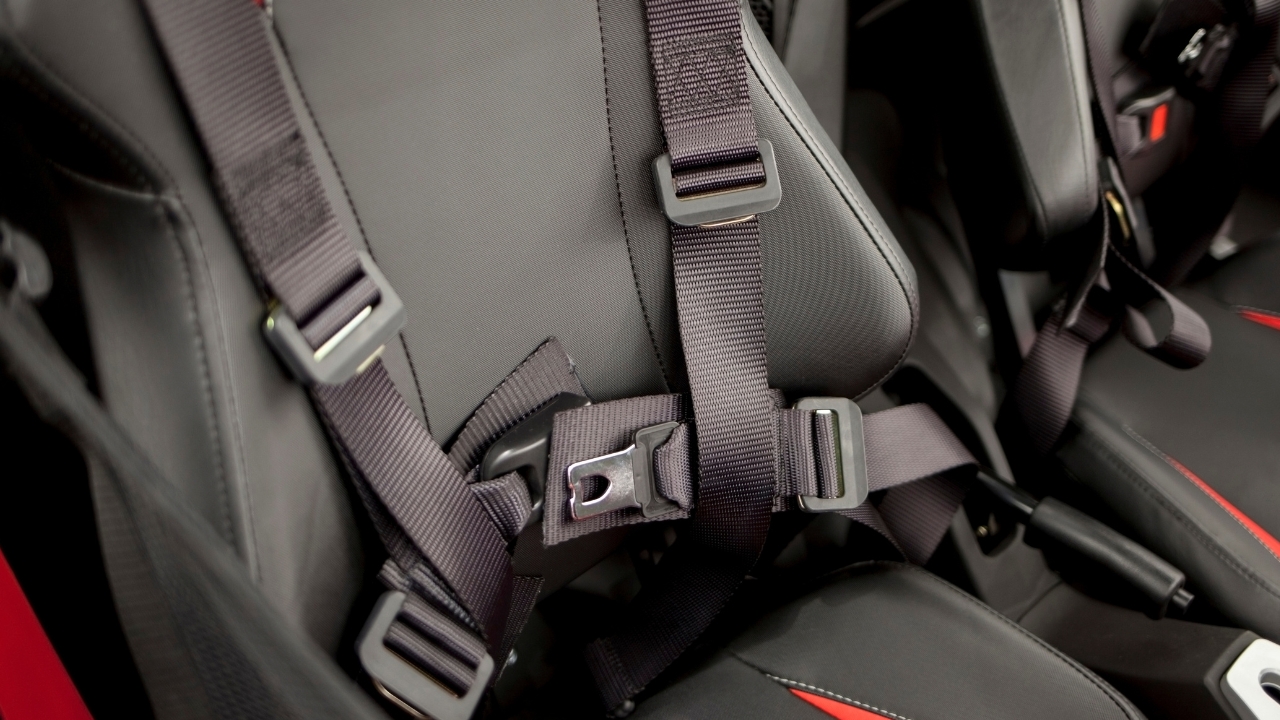
Racing and harness seat belts are different from conventional passenger-vehicle three-point seat belts. Four-point, five-point, and six-point harnesses use multiple straps to restrain the occupant from different directions.
Typical components may include:
- Shoulder straps: Restrain the upper body and shoulders.
- Lap straps: Secure the occupant around the hips and lap area
- Crotch straps: Help prevent the occupant from sliding under the lap straps.
- Buckles: Connect and secure the harness straps.
- Adjusters: Allow the strap length to be adjusted for a proper fit.
- Anchors or mounting hardware: Secure the harness to the vehicle or mounting structure.
The number and arrangement of the straps, as well as the mounting method and buckle structure, can vary according to the harness design and intended application.
How to Choose the Right Seat Belt Parts
Based on Seat Belt System and Component Configuration
When determining the configuration of components, you need to consider how these parts work together. For example, the mounting position of the retractor, the direction of the webbing, the position of the seat belt buckle, and the configuration of the pretensioner can all affect the structure and operation of the entire system. It is more appropriate to first define the overall system and then match the specific components to it, rather than selecting individual seat belt parts separately.
Based on Application
Different seat belt applications may require different component configurations. For example, a three-point seat belt, lap belt, and racing harness use different parts and mounting methods. When choosing seat belt parts, you should first confirm the seat belt type and application, then match the components to the system requirements.
Based on Component Performance and Material Requirements
You should focus on the webbing’s tensile strength, abrasion resistance, and performance under impact loads.
Seat belt components themselves must also undergo rigorous safety and reliability testing. When selecting materials, you should not rely solely on material names or individual strength data; you must also evaluate them in the context of the specific application environment.
Choose the Retractor and Pretensioner
Retractors are primarily responsible for the normal extension and retraction of the webbing, as well as emergency locking.
Depending on the system design, you should also consider whether the pretensioner uses a small pyrotechnic device or a mechanical mechanism to generate the instantaneous tightening action.
 FAQ
FAQ
Why Does a Seat Belt Get Stuck?
A seat belt getting stuck is usually related to twisted webbing or a malfunctioning retractor. When the webbing is twisted, it may not feed smoothly into the retractor, preventing the seat belt from being pulled out or retracted. Compared to damage to the retractor itself, twisted webbing is one of the more common causes.
What Should You Do if a Seat Belt Retractor Has a Problem?
If the retractor does not extend, retract, or lock properly, first check for obvious issues such as twisted webbing or incorrect installation. Do not open the retractor or attempt to lubricate or repair its internal mechanism. Most retractors are designed as integrated assemblies, and opening the housing may compromise the retractor’s safety performance. If the retractor itself is faulty, it should generally be replaced with a suitable replacement unit according to the applicable vehicle or manufacturer requirements.
Does Damaged Seat Belt Webbing Need to Be Replaced?
Yes. If the webbing has been cut or torn, it should be replaced promptly. Damaged seat belt webbing should be replaced rather than repaired or re-sewn. Replacement should use a suitable webbing and follow the applicable vehicle and safety requirements.
Why Does a Seat Belt Pretensioner Fail?
The pretensioner may fail due to component wear or because it has already been activated in a previous collision. If you notice that the seat belt is unusually loose or fails to tighten properly during emergency braking, you should inspect the pretensioner.
What Should You Check When Sourcing Car Seat Belt Parts?
In addition to the structure and performance of the components themselves, it is necessary to confirm whether the supplier can meet certification and compliance requirements, as well as minimum order quantity (MOQ) and sample requirements. For custom components, specific requirements such as dimensions and interfaces should also be confirmed in advance to avoid the need for adjustments later on.
What Certifications and Compliance Requirements Apply to Seat Belt Parts?
When selecting components, you should first identify the target market and the specific requirements of the vehicle system. Then, you should verify the relevant certifications, testing standards, and compliance documentation, rather than simply checking whether the product itself is “certified.”
Can Seat Belt Parts Be Customized?
Yes, whether customization is possible depends on the type of component and the production requirements. Common customization options may include dimensions or electrical interfaces. Before starting formal production, it is best to first confirm the sample, technical specifications, and delivery schedule, and then determine the MOQ and mass production plan.
Final Thought
The right seat belt components must be compatible with the entire restraint system, rather than being selected based solely on the specifications of individual parts. If you are looking for seat belt solutions, please feel free to contact Bxseatbelts—we offer one-stop solutions.