


Understanding when seat belt rules came into force helps you grasp how seat belt regulations evolved across different countries and regions.
Seat belts were in use long before mandatory laws were introduced. Due to differences in traffic legislation, vehicle technology and safety policies around the world, the effective dates for mandatory seat belt use vary widely. Mandatory seat belt requirements were not implemented all at once. Instead, they were rolled out gradually alongside advances in automotive safety technology and growing crash statistics.
Let’s start with the origin and evolution of the automotive seat belt.
The Birth and Evolution of Seat Belts
The modern three-point seat belt was designed by Volvo engineer Nils Bohlin in 1958 and fitted to Volvo vehicles starting in 1959. Prior to three-point belts being adopted for cars, restraint systems were already used in aviation. Before joining Volvo, Nils Bohlin worked on ejection seats and pilot safety equipment for aircraft. This experience shaped his later design philosophy for automotive occupant restraint systems.
Back in the 1950s, some automakers began offering seat belts as factory options for mass-produced vehicles. Nash was one of the earliest manufacturers to provide this feature, followed by Ford, which made seat belts available as an optional add-on. These early seat belts were quite different from today’s versions. Two-point belts only restrained the lower body, offering limited protection for the torso. Many occupants also found them restrictive, and some feared seat belts could cause injury during collisions. As a result, seat belt uptake remained low in those early years.
In 1967, Nils Bohlin published findings from a statistical analysis of 28,000 crash cases in Sweden. The research proved the protective value of three-point seat belts and drove their wider adoption.
Starting in the 1960s, governments in multiple countries introduced rules requiring seat belts to be fitted in new vehicles. It is important to distinguish between mandatory installation and mandatory use of seat belts. These two regulatory milestones happened at very different times across nations.
 From Mandatory Fitting to Mandatory Wearing
Even after seat belts became required factory equipment, wearing them was not yet compulsory. Most people found them cumbersome and restrictive, much like how people tend to resist new technologies at first. In 1983, only around 15% of US drivers and passengers wore seat belts while travelling. In 1984, New York became the first US state to pass a law mandating seat belt use, with other states quickly following suit. As more crash data and reports demonstrated how many lives seat belts saved, usage rates climbed steadily.
By 2008, seat belt usage among front-seat occupants in the US had reached roughly 83%. In some European countries, the figure stood between 90% and 99%.
Rear seat belts took far longer to gain widespread acceptance. This is something many of us can relate to. For instance, passengers often skip wearing seat belts in the back of taxis. Rear seat belts are frequently overlooked, and legislation covering rear occupants was introduced much later. Again, a requirement that vehicles must have rear seat belts installed does not automatically mean passengers must wear them. Ongoing public education was needed to encourage rear-seat passengers to buckle up. Take the UK as an example:
| Year | Regulatory Update | Impact on Vehicles / Occupants |
| 1965 | New cars required to be fitted with seat belts | Seat belts moved from optional extras to legally required equipment |
| 1983 | Mandatory seat belt use introduced for front-seat occupants | Rules expanded from “must be fitted” to “must be worn by occupants” |
| 1989 | Further improvements to child occupant protection rules | Greater regulatory focus on child safety |
| 1991 | Mandatory seat belt use extended to adult rear-seat passengers | Seat belt requirements covered all seating positions |
As seen in the UK timeline, seat belt legislation was introduced in phases, starting with mandatory fitting and gradually expanding to cover occupants in different seats and of different age groups.
The US took a different approach, with mandatory seat belt laws introduced at state level.
- 1984: New York became the first US state to enforce mandatory seat belt use. Seat belt laws in the US are set individually by each state, so effective dates differ across the country.
- Between 1984 and 1992, mandatory seat belt laws were adopted in 44 states, the District of Columbia and Puerto Rico.
Mainland Europe saw gradual adoption starting in the late 1960s, with national mandatory use laws passed through the 1970s. Individual countries implemented rules at different times:
- 1969: Czechoslovakia became the first country globally to require seat belts in all new vehicles.
- 1973: France became the first Western European nation to mandate both seat belt fitting and use.
- 1976: Italy required three-point seat belts to be fitted in new cars.
- 1974: Sweden, birthplace of the three-point seat belt, made seat belt wearing compulsory for drivers.
As adult seat belt regulations matured, child occupant protection was brought into the regulatory framework. Since children have different body sizes and physical characteristics from adults, many markets introduced separate requirements for child restraints or child safety seats.
 What Do These Regulations Mean for Automotive Component Buyers and Vehicle Manufacturers?
The shift in seat belt rules – from requiring belts to be installed in vehicles to requiring occupants in all seating positions to wear them – means product selection is about more than whether a belt can physically fit a vehicle. You also need to verify compliance with regulations and vehicle specifications for your target market.
Key points to check:
- Target market regulations: Seat belt requirements vary by country and region. Confirm applicable standards and certification requirements before export or import. Always check regulations for the country where the finished vehicle will be sold.
- Seating position: Rules for drivers, front passengers and rear passengers may differ.
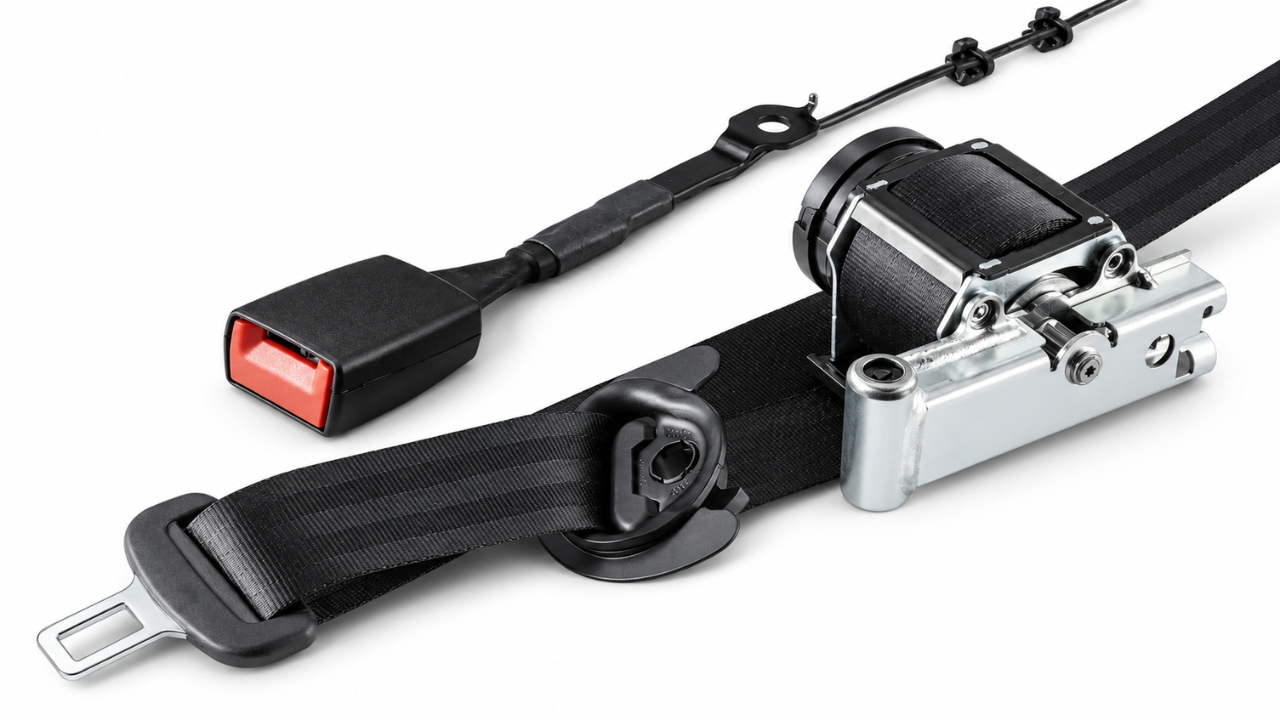
- Seat belt type: Select two-point, three-point or other restraint systems according to seat structure and regulatory requirements. Even among three-point belts, mounting points, seat geometry, retractor layout and webbing length vary between vehicle models. Compatibility cannot be judged by the label “3-point seat belt” alone.
- Mounting configuration: Belt anchor points, retractor position, webbing length and seat structure must work together.
- Product compliance documentation: Request test reports, certification documents and product specifications from suppliers for project reviews and market access assessments.
- Multi-market compatibility: If a vehicle model will be sold in multiple countries or regions, confirm regulatory requirements for each market in advance, to avoid costly late-stage changes to restraint systems or vehicle design.
Learning about the history of seat belt regulations is not just an academic exercise. Understanding the logic behind these rule changes helps reduce risks during product selection and supplier evaluation today.
 FAQs
Why Was There Such a Long Gap Between Seat Belt Development and Mandatory Legislation?
Seat belt technology continued to evolve. Regulations moved in stages: first requiring belts to be fitted, then requiring occupants to wear them, with separate timelines for different seating positions. Countries also adopted different legislative approaches.
What Should I Look For When Selecting a Seat Belt Supplier?
Beyond pricing, review product specifications, material consistency, manufacturing repeatability, testing capabilities, quality control, compliance documentation and mass delivery capacity. For automotive projects, confirm the supplier can provide seat belt configurations tailored to your vehicle model, mounting geometry and target market requirements.
Do Seat Belt Regulations Change Over Time?
Yes. Regulations are not static. They evolve alongside vehicle technology, traffic safety research, crash data and rising occupant protection standards.
How Can I Tell If a Seat Belt Fits a Specific Vehicle Model?
Compatibility depends on more than whether it is a two-point or three-point belt. You need to evaluate vehicle construction and target market regulations. Key checks:
- Vehicle details: Make, model, model year and trim level
- Belt type required: two-point, three-point or other restraint systems
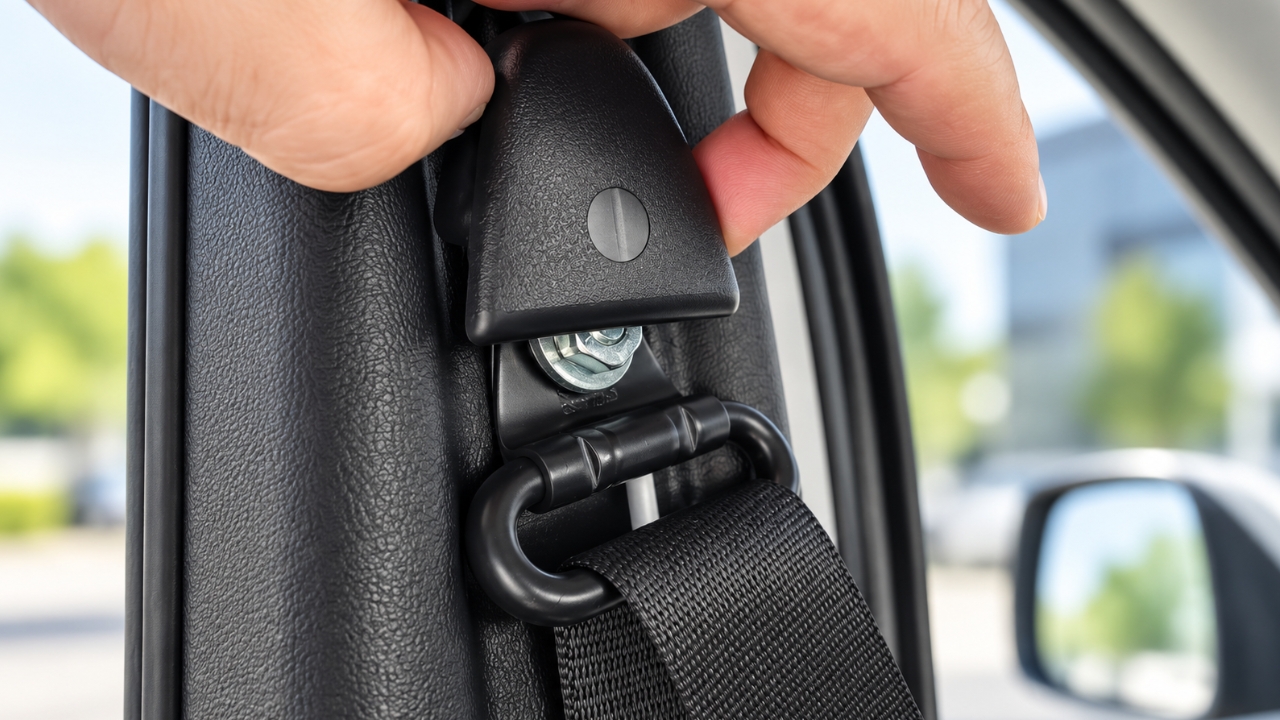
- Mounting locations: Verify anchor points match seat structure
- Retractor configuration: Check mounting position, installation orientation and webbing payout direction
- Webbing length: Match to seat dimensions and anchor layout
- Buckle specifications: Ensure buckle and tongue are compatible with the vehicle seat and restraint system
- Regulatory compliance: Confirm the assembly meets standards for the market where the vehicle will be sold
 What Certifications or Compliance Documents Are Required for Automotive Seat Belts?
Required certifications depend on the country/region where the vehicle will be sold and the seat belt application. Different markets follow distinct regulatory and certification systems. Confirm target market requirements before procurement. For example, seat belts sold into the US must meet FMVSS 209, which specifies requirements for strength, elongation, webbing width, durability and more.
Documents to obtain from suppliers:
- Applicable standards and regulations, linked to your target market
- Test reports covering relevant performance criteria and results
- Product specification sheet: belt type, webbing, retractor, buckle and mounting details
- Certificates or declarations of compliance as required by the target market
- Product marking and traceability records, as mandated by local regulations
- Model/project-specific documentation for integration with the vehicle restraint system
Important note: A test report does not guarantee a seat belt assembly can be used for every vehicle model or every market. Final approval depends on target market rules, vehicle structure, belt configuration and whole-vehicle certification requirements.
Are All Three-Point Seat Belts Interchangeable?
No. “Three-point” only describes the restraint geometry. Belts cannot be swapped between different vehicle models. Compatibility relies on anchor points, retractor design, webbing length, buckle type, mounting direction and vehicle body structure.
Can Seat Belt Regulations from One Country Apply to Another?
Not necessarily. Different countries and regions use separate regulatory frameworks, test protocols and compliance systems. A seat belt that meets rules for one market will not automatically satisfy all requirements for another. Confirm the applicable standards for your vehicle’s destination market before placing orders.
Final Thoughts
Seat belts have come a long way: from optional add-ons to mandatory factory fitment, and now governed by detailed safety rules across the globe. Requirements continue to shift by market, seating position and vehicle type.
For automotive component buyers and importers, reviewing this regulatory history is more than learning about the past. It helps you accurately assess whether seat belt products meet target market requirements and match the mounting structure of your vehicle projects.
If you have questions about overseas market access or seat belt selection for vehicle models, feel free to get in touch. We are ready to support you.