
Why Source Truck Seat Belt from Bxseatbelts?
- Heavy-duty polyester webbing built for long-haul cabs
- Extra-long straps sized for large truck seats
- 2-point, 3-point and pretensioner options in one supplier
- Salt-spray tested hardware for rough work environments
- Self-retracting shoulder belt, no loose cab straps
- E-Mark and IATF 16949 certified for fleet buyers
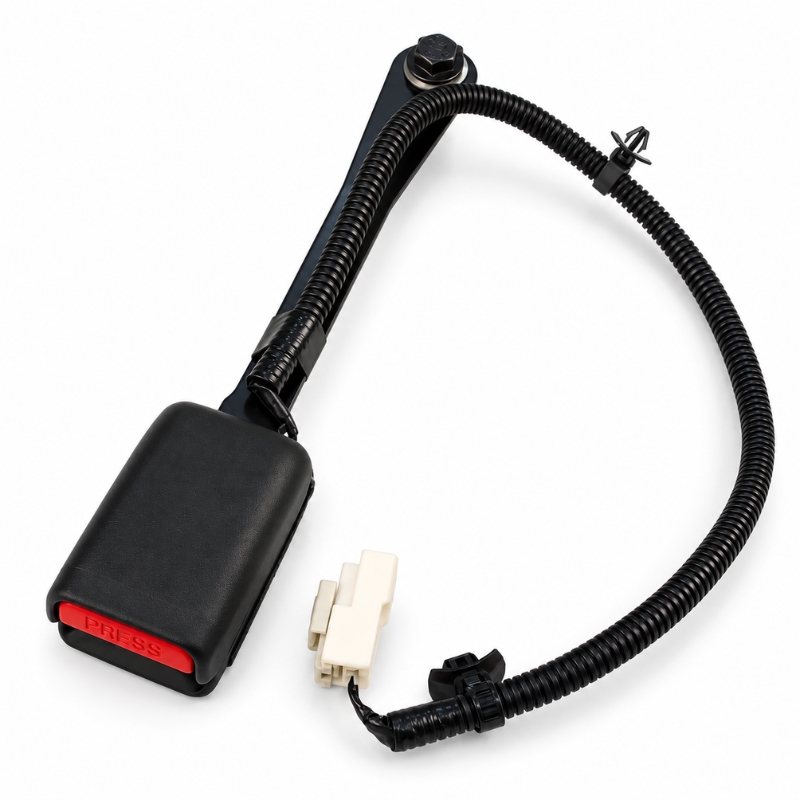
- Seat belt switch for seat-belt reminder systems
Your Trusted Truck Seat Belt Manufacturer and Supplier in China
Truck seat belts are a restraint system fitted at the driver’s seat, middle seat, and passenger seat positions in the cab. We engineer them to handle frequent driver rotation and high cab vibration. Use them in heavy-duty trucks, dump trucks, tractor-trailers, and construction vehicles, but not in heavy off-road trucks, which need a 4-point or 5-point harness instead.
Bxseatbelts has over 20 years of experience manufacturing truck seat belts, with a 30,000-square-meter factory covering stamping, injection molding, webbing sewing, assembly, and packaging. Our annual capacity tops 1 million pieces, so we can handle large-volume orders and custom projects. We customize width, length, color, buckles, logo, and packaging to your specs, and support OEM/ODM. Samples ship within 3 days. Reach out for your project needs!
Types of Truck Seat Belts
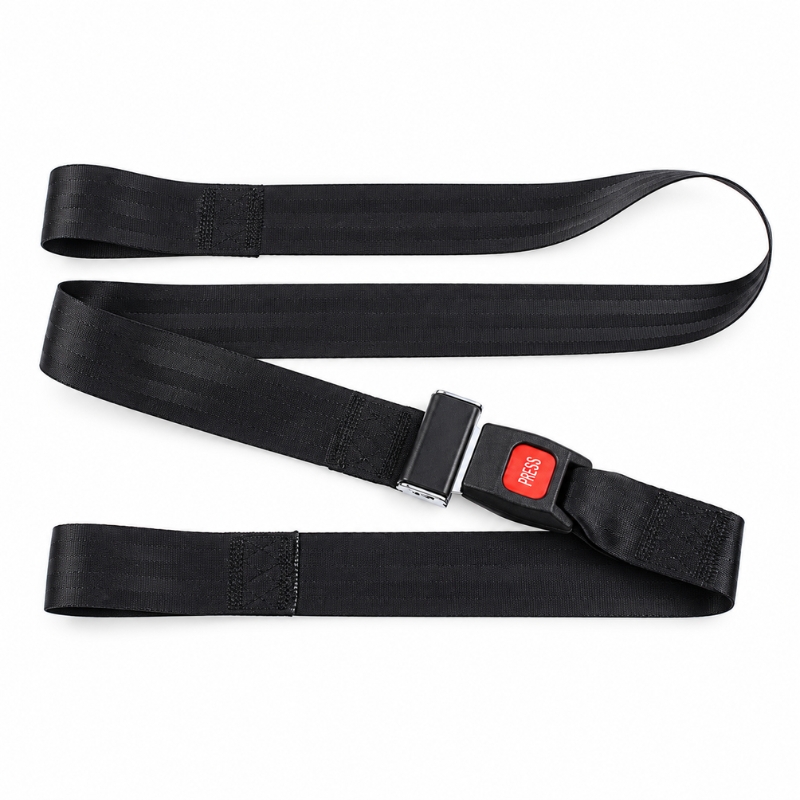
A 2-point truck seat belt is a single lap strap across the hips. It works well for middle seats and older cabs that only have two anchor points.
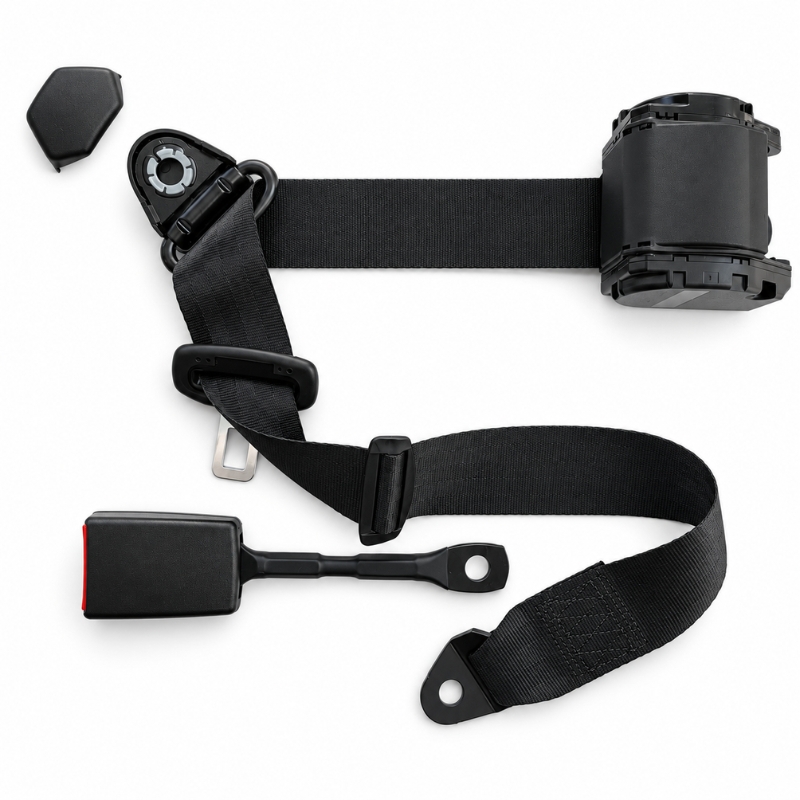
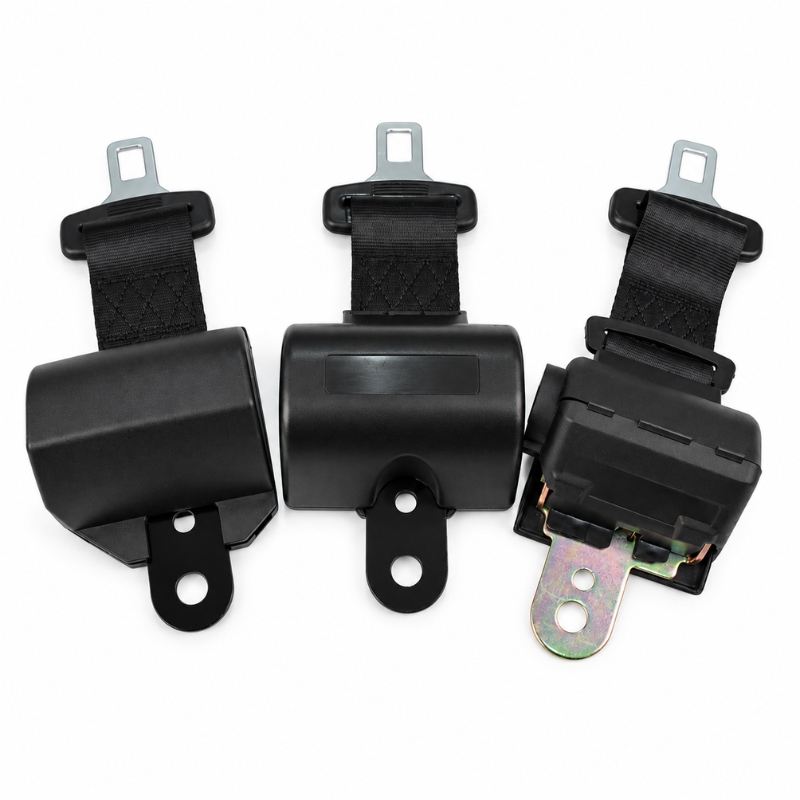
The 3-point truck seat belt combines lap and diagonal shoulder coverage in one latch. It secures the chest and pelvis, which is why it’s the usual choice for the driver and outer passenger seats.
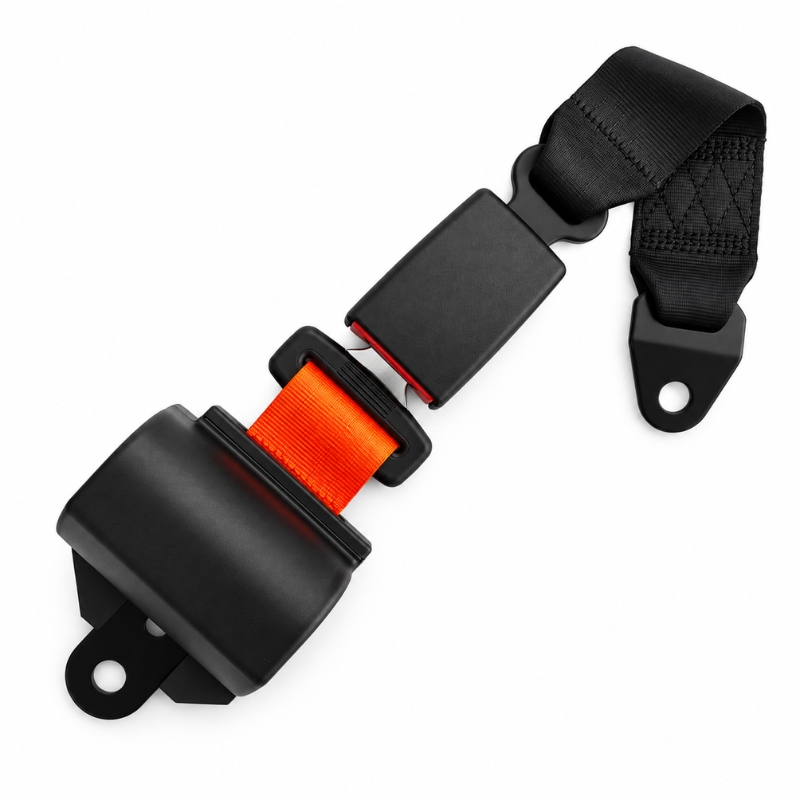
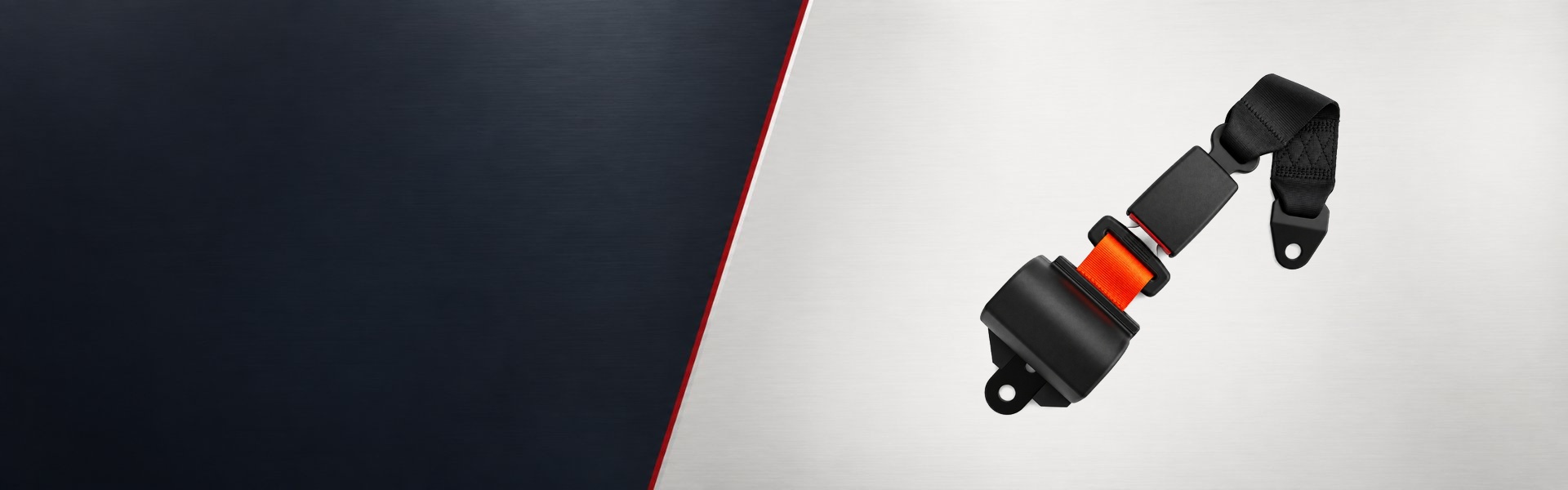
A retractable truck seat belt pulls out smoothly and winds itself back on its own. This means different drivers can share a cab without resetting the strap length each time.
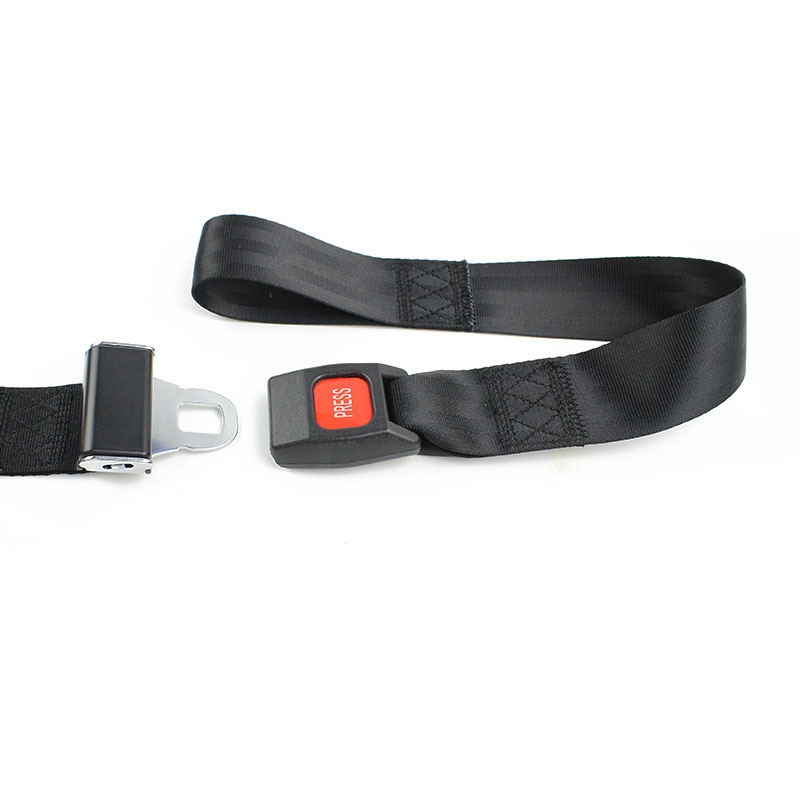
The non-retractable truck seat belt uses a fixed length, with no spool or spring inside. This makes it a tough, low-maintenance option with fewer parts that can fail.
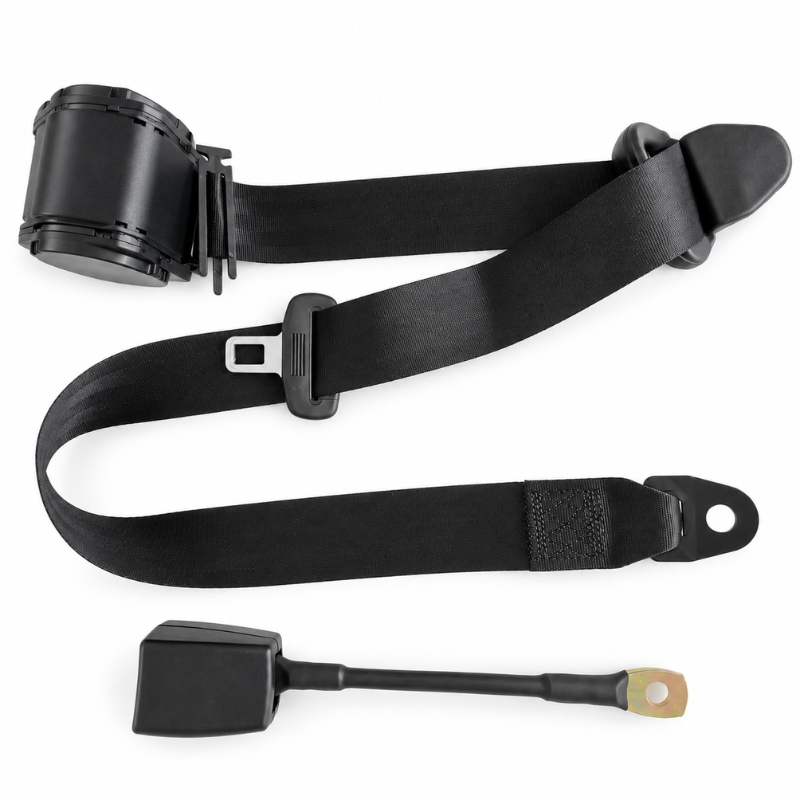
The universal truck seat belt fits most truck makes and seat positions, and it can swap between left and right sides. It ships with the hardware included, so replacement goes quickly.

A custom truck seat belt is built to your specifications. We can adjust the webbing width (1.75, 2, or 3 inches), buckle, mounting, color, and logo for OEM programs.
- Truck Seat Belt Specifications
- Quality Control & Testing
| Specification | Details |
| Seat Belt Type | 2-Point / 3-Point |
| Webbing Material | High-Strength Polyester |
| Webbing Width | 45 / 50 / 75 mm |
| Belt Length | Adjustable / Custom |
| Retractor | Retractable / Non-Retractable |
| Buckle Type | Push-Button / Custom |
| Mounting | Bolt-In / Wrap-Around / Hook |
| Hardware Material | 45# Steel / ABS Components |
| Color | Black / Custom Colors |
| Application | Trucks / Semi Trucks / Commercial Vehicles |
| Customization | Length / Color / Buckle / Retractor / Logo |
| Item | Details |
| Quality Management System | IATF 16949:2016 |
| Certifications | E-Mark |
| Breaking Strength Test | Webbing and component strength verification |
| Webbing Anti-Fatigue Test | Webbing durability verification |
| Salt Spray Test | 72-hour test for applicable metal components |
| Material / Product Inspection | Batch inspection and quality verification |
| Pre-Shipment Inspection | 100% quality inspection before delivery |
How to Choose a Truck Seat Belt: 2-Point vs 3-Point, Retractable vs Non-Retractable
When selecting truck seat belts, the two most important factors to consider are the number of anchor points provided by the seat or cab, and whether the webbing can automatically retract. Both decisions shape every other spec that follows.
Anchor Points
First, check the existing anchorages in the cab. Driver’s seats and outer passenger seats typically have upper anchor points, so three-point seat belts, which protect both the chest and pelvis, are usually a fit. For the middle seat in a long bench seat, or older cabs with only floor anchor points, only two-point lap belts will work. To install a three-point seat belt in a location without upper anchor points, structural supports must be added, which adds time and cost, so confirming the anchor layout early is worth it.
If you are manufacturing seats rather than simply replacing seat belts, send us your anchor point layout and our engineers can confirm whether the seat frame supports three-point seat belts or requires additional supports.
Retractable or Fixed Seat Belts
Retractable seat belts extend when pulled and automatically take up the slack afterward. For trucks with shift drivers, this eliminates the need to readjust the belt length when changing drivers and prevents belt sagging. However, it requires space to install the retractor box, and the installation angle must be within the effective working range of the mechanism.
Fixed seat belts maintain a set length and require manual adjustment by the user. With no internal reel or spring, this type of seat belt has fewer parts to fail in bumpy work environments and costs less. It works best for trucks with a fixed driver or older models that come standard with fixed seat belts.
We also offer pretensioner seat belts for new truck projects. You will need to provide project details so we can match them to the seat and vehicle structure.
Match the belt to the work
For long-haul trucking fleets with rotating drivers, a three-point retractable seat belt is the better fit. Dump trucks and construction vehicles usually face dust, vibration, and often corrosive job sites, so a fixed seat belt or a retractable seat belt with salt spray-tested steel hardware tends to hold up longer.
Two-point lap belts work well for middle or secondary seats. You can also mix different types in the same cab: for example, a three-point retractable seat belt for the driver and a two-point lap belt for the middle seat. We support ordering complete sets.
Before You Ask for a Quote
You will need to provide the following information: number of anchor points, space and angle required for retractor installation, webbing length, webbing width (1.75, 2, or 3 inches), and buckle type. Please provide photos or drawings of the seat so we can work with you to determine the seat belt specifications. We send samples within three days, so you can confirm compatibility before bulk purchase or production.
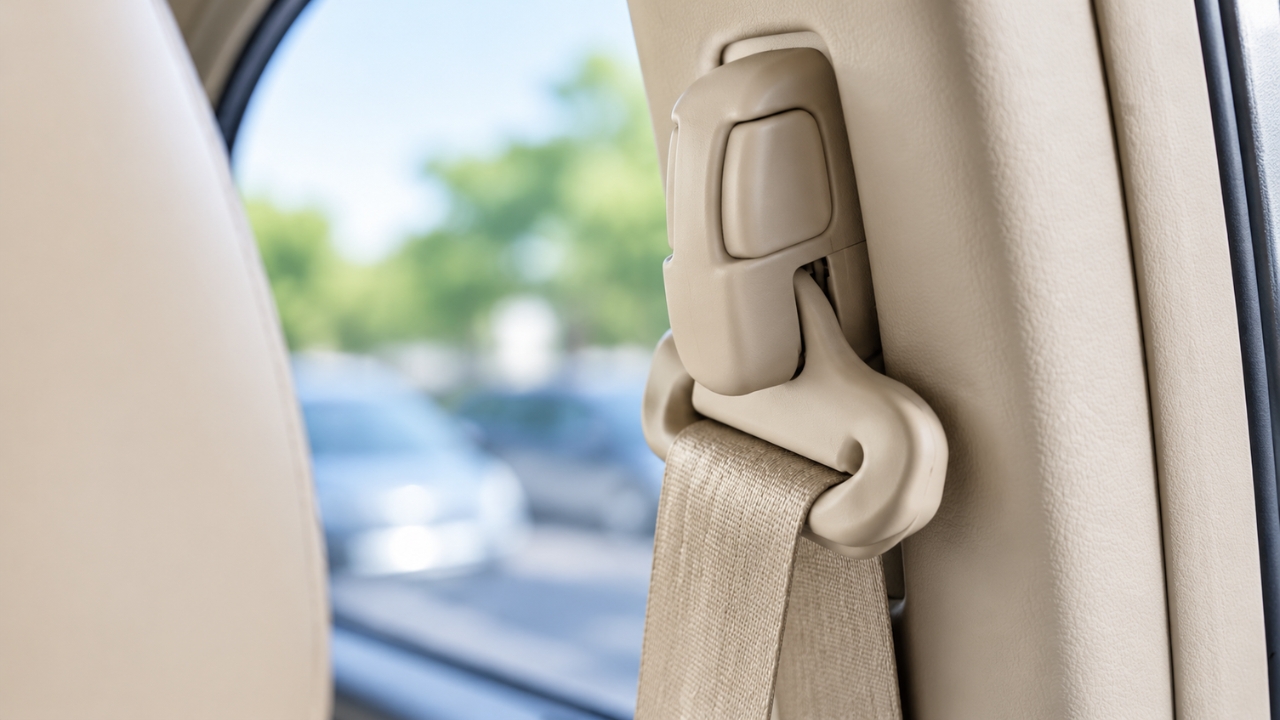 Truck Seat Belt Replacement: How to Match a New Belt to an Older Truck
When replacing seat belts in older trucks, buyers often end up with the wrong part because of different fixing devices used in cabs manufactured in different years, shifted fastener positions, or old belt buckles that no longer match any current standard parts. A few checks before purchasing will prevent this.
Collect the Old Belt’s Spec First
You will need to provide the old seat belt or a photo of its installation location, and record the following information: two-point or three-point, fixed or retractable, webbing width (1.75 inches, 2 inches, or 3 inches), buckle style, end fittings, and total length with the seat fully reclined.
Tongues and buckles from different manufacturers rarely match, so please tell us both the tongue and buckle information if either side is worn or damaged.
Check the Anchors Before You Commit to a Fit
When replacing truck seat belts, you need to use a wrench to check each anchor bolt for stripped threads or rust on the baseplate, and ensure that the upper anchor point of the three-point restraint is still secure. Wrap-around ends require a load-bearing tube of the appropriate diameter. Hook-type connectors, meanwhile, require anchor eyes that match their openings. If the anchor points are insufficiently strong or have been modified, they must be repaired first.
If the old belt is retractable, check the position of its housing. This mechanism only works within its designed angle range, so tilting of the mounting surface due to cab modifications may cause the new belt to misalign, lock, or fail to engage. We can fabricate a bracket to restore the correct angle.
When a Universal Belt Works, and When It Won’t
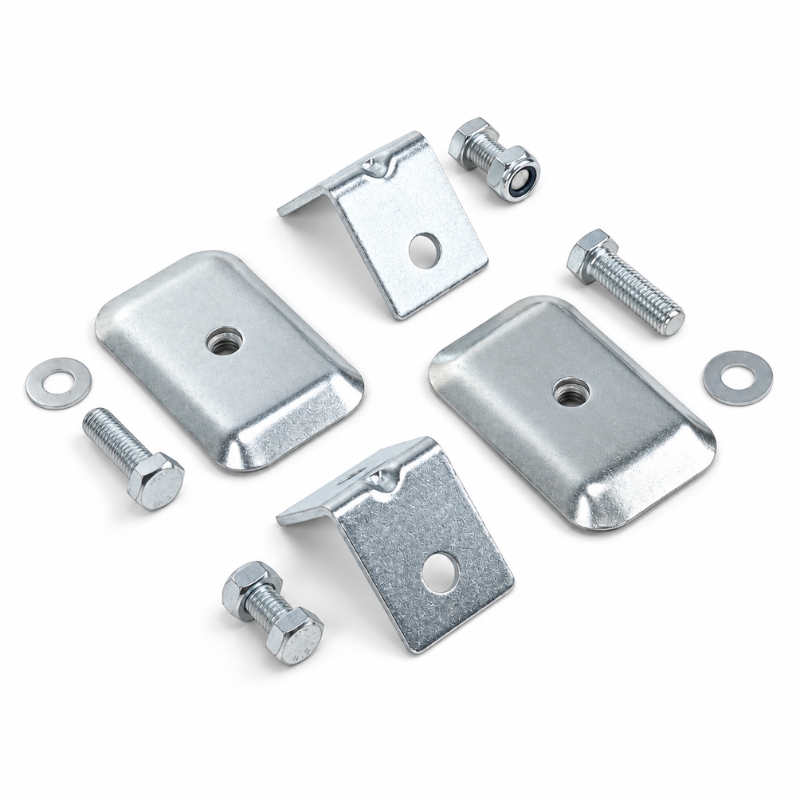
Our universal truck seat belt fits most cabs. It adapts to common anchor point layouts and comes with bolts and nuts. That combination makes it a strong pick for bulk replacements and common vehicle models.
Customization is required if the anchor point spacing is unusual, the retractor requires a specific mounting position, the seat is non-standard, or the fleet wants uniform colors, logos, and buckles across different truck brands. We have our own stamping, injection molding, and sewing lines to customize brackets, lengths, and hardware to fit the dimensions of your old truck.
To ensure a fit, please send us a removed seat belt as a sample, or provide clear photos of two anchor points, buckles, retractor housings, and any labels, along with the dimensions mentioned above.
How to Install a Truck Seat Belt: Anchor Points, Retractor Angle and Position
Truck seat belts may not function properly if bolted to thin, non-structural sheet metal or if the retractor angle is incorrect. These issues should be addressed before use.
Structural Anchors
Before installation, check that the retractor, straps, buckle and fittings are all present. The belt must anchor to a rigid structure, such as the seat frame or floor reinforcement, and the webbing must be flat, since a twist can keep it from retracting smoothly and may cause it to bind.
If threaded anchor points are available, bolts can be used for a secure fit. After securing the retractor bracket, align each strap tab with its anchor, fit the washers and run the bolts in, then torque them to specification.
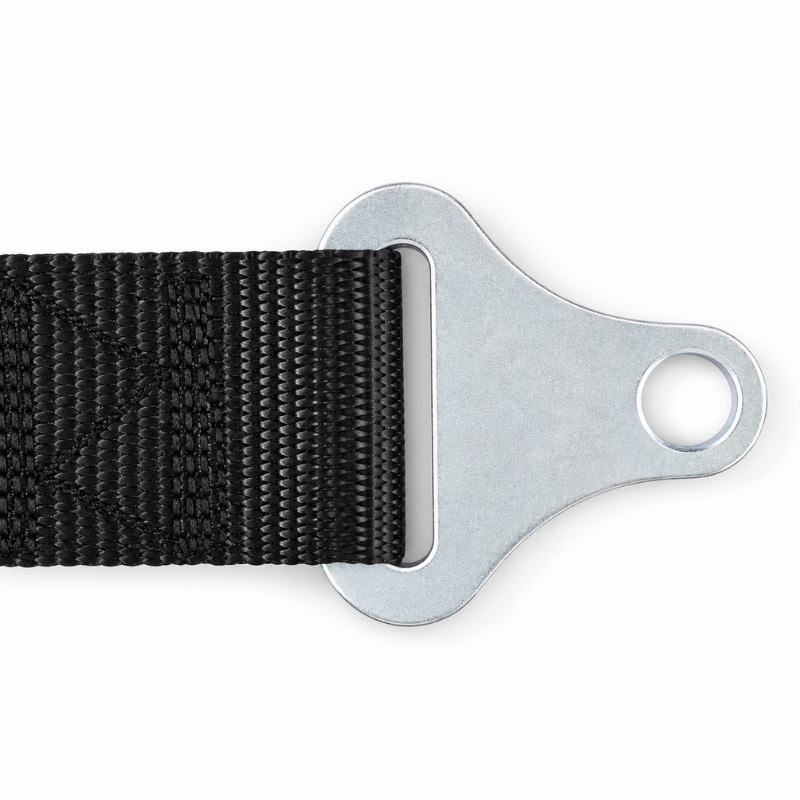
If the seat does not have bolt holes, you can wrap the sewn end around the load-bearing tube and then feed it back through its keeper, or clip each hook onto its anchor eye.
Retractor Placement
The retractor needs to be installed within its designed angle range to prevent it from locking itself while the truck is in motion or failing to lock during emergency braking. There also needs to be sufficient clearance for the webbing to pay out and retract smoothly.
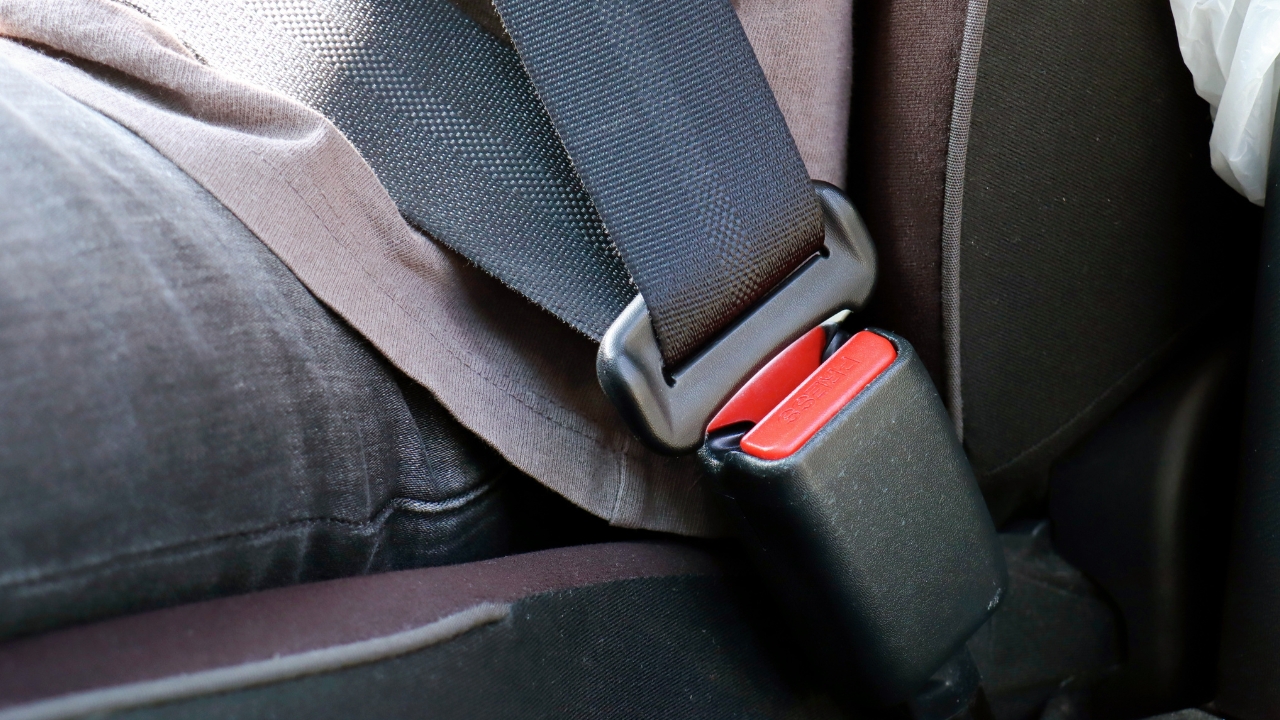 When to Replace a Truck Seat Belt: Inspection and Care for Fleets
Truck seat belts, which need to be fastened and unfastened multiple times during shifts and are often used in high-temperature, dusty, and vibrating environments, are prone to wear and tear, so they need regular checks, and any problem should be dealt with early.
Read the Webbing
If you find wear, fraying, or hardening along the strap edges, the surface fibers are damaged. Pay close attention to areas near the anchor points, as these are prone to wear. If a truck seat belt is found to be damaged, it should be removed and replaced immediately.
Try the Buckle and the Retractor
When fastening the belt buckle, listen for a crisp click. If there is dirt or other stains on the buckle, wash it with water and dry it fully to prevent rust. If the belt still sags after cleaning and straightening, or if the casing is cracked and the metal surface has rust spots, the belt needs to be replaced.
One Rule With No Judgment Call
If a belt has been used in emergency braking or a collision, it must be replaced even if there are no visible marks. Fibers stretch inside the webbing, invisible to the naked eye, and a fired pretensioner cannot be reset. No repair shop test can prove the belt is back to normal.
Simple Care Buys Extra Years
Wash dirty belts with mild soap and warm water, rinse well, then pull them to full length and let them dry fully extended. Do not let bleach or solvents contact the polyester fibers, and never spray oil into the retractor housing. Keep the housing closed; opening the housing will void the warranty and usually worsen the situation.
Maintenance Plan
Ask your repair shop to log the date of each inspection, noting the truck and seat locations. If seat belts have been removed, please retain them or take photos so they can be matched when replaced. We offer universal seat belts that fit standard cabs, along with custom belts for older or mixed fleets. Mounting kits, including brackets, bolts, or hooks, are available as well. Please send us photos, and our engineers will confirm the specifications and send samples within three days.
They operate on the same principle, but truck cab seats are larger, seat belts are longer, and the hardware is subject to long-term vibration and corrosion from de-icing salt, so we use heavier webbing and our hardware goes through salt-spray testing. That means truck seat belts and regular car seat belts generally are not interchangeable.
Yes, but the belt anchors must move with the seat. Air suspension seats rely on air springs for height adjustment while the cab floor stays still. If the seat belt or retractor is fixed to the floor, the strap will be pulled or go slack every time the seat height changes, which puts extra strain on the retractor and throws off the fit. The seat belt should be mounted to the seat structure, or fitted with a bracket that moves with the seat.
No. The internal lock relies on a gravity sensor and only functions properly when the housing is close to its designed angle. Excessive tilt may cause it to lock during normal driving or fail to lock during sudden braking.
Standard and universal truck seat belts are available for small trial orders, and we can send samples within three days. For custom builds, the MOQ moves with the hardware, logos and packaging you choose. Our automatic retractable seat belt production line has a minimum order quantity of 500 pieces, with a delivery time of 10 to 15 days for that batch size. Truck safety belts follow a bulk schedule based on your quantity and the amount of custom work.
All our truck seat belts come with a one-year warranty covering manufacturing defects, plus lifetime technical support from our engineers. If you find any problems, please send photos and your order number, and we will identify the cause and arrange a replacement seat belt or send the necessary parts. Normal wear and tear, collision damage, and belts opened or modified in the field are not covered under warranty; those units should be replaced rather than repaired.