
Features of Bus Seat Belt
- 2 point, 3 point, and other configurations available.
- Made from materials resistant to UV rays, moisture, and wear.
- Supports FMVSS 209, ECE R16, and other certification requirements.
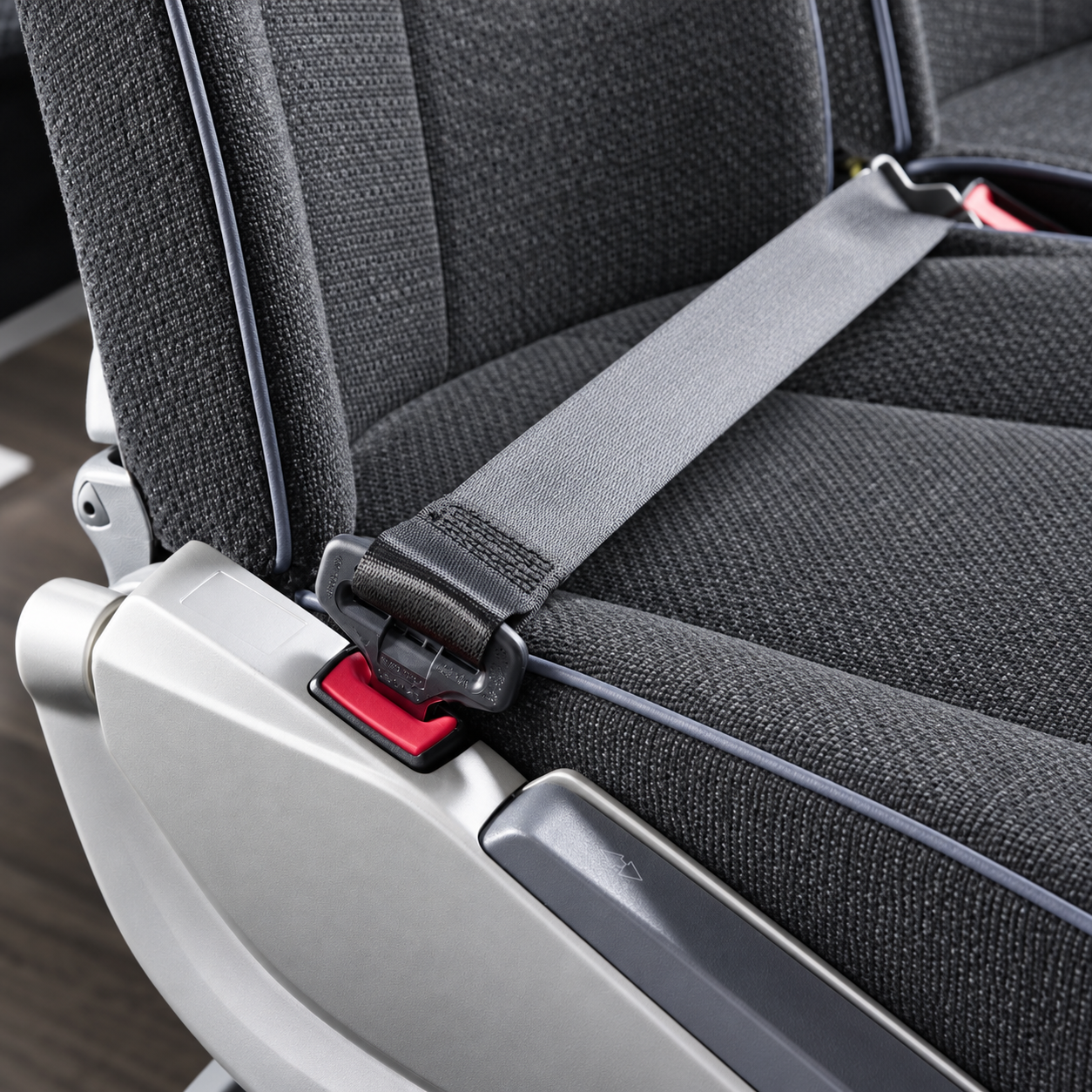
- The quick-release buckle enables easy entry and exit for passengers.
- Retractable and fixed belt options available.
- Offers customization with over 150 webbing colors.
Your Trusted Bus Seat Belt Supplier in China
A bus seat belt is a passenger restraint system installed on the seats of buses, coaches, and shuttle vehicles. It is primarily used to secure passengers during sudden braking, sharp turns, or collisions, minimizing injuries resulting from forward movement or falls. Not only is it an important configuration for enhancing passenger safety, but it also helps satisfy the traffic safety regulations of different countries and regions, providing more reliable protection for public transportation.
BX Seatbelts is a manufacturer of bus seat belts with 20 years of industry experience who is familiar with bus seat belt laws in multiple regions. We have a comprehensive production system, including 2 webbing cutting machines, 10 stamping machines, 5 ultrasonic welding machines, 5 injection molding machines, 40 sewing machines, and 2 final assembly lines, to ensure your orders are delivered on time. Additionally, we offer one-stop custom services ranging from CAD design to finished products. You can customize the webbing length, color, buckle style, installation method, logo, packaging, and more according to your vehicle and seat needs.
Bus Seat Belts We Supply
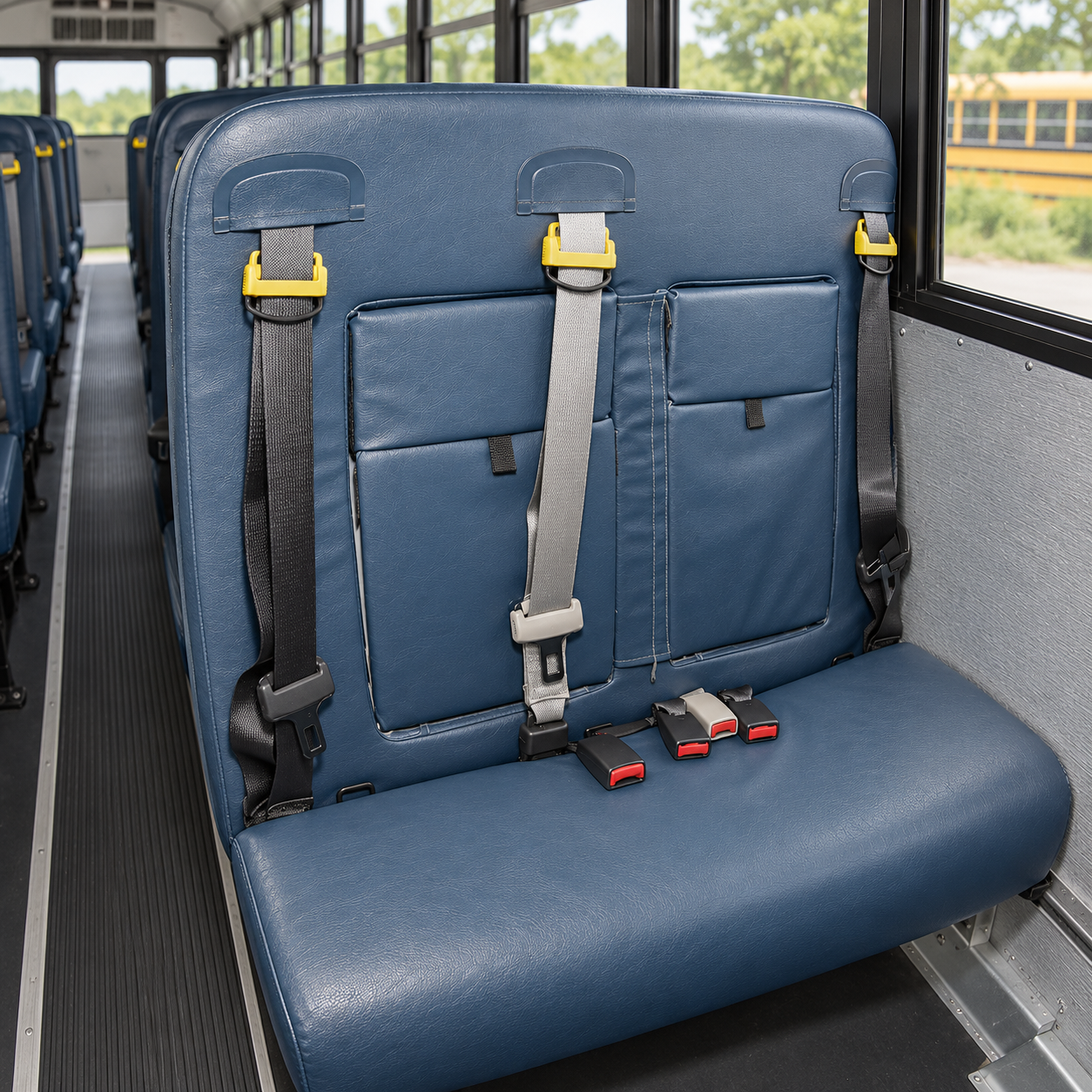
Equipped with cut-resistant webbing, easy-to-use buckles, and an Automatic Locking Retractor (ALR), students can easily operate the system, while emergency braking immediately locks the retractor to safeguard them.
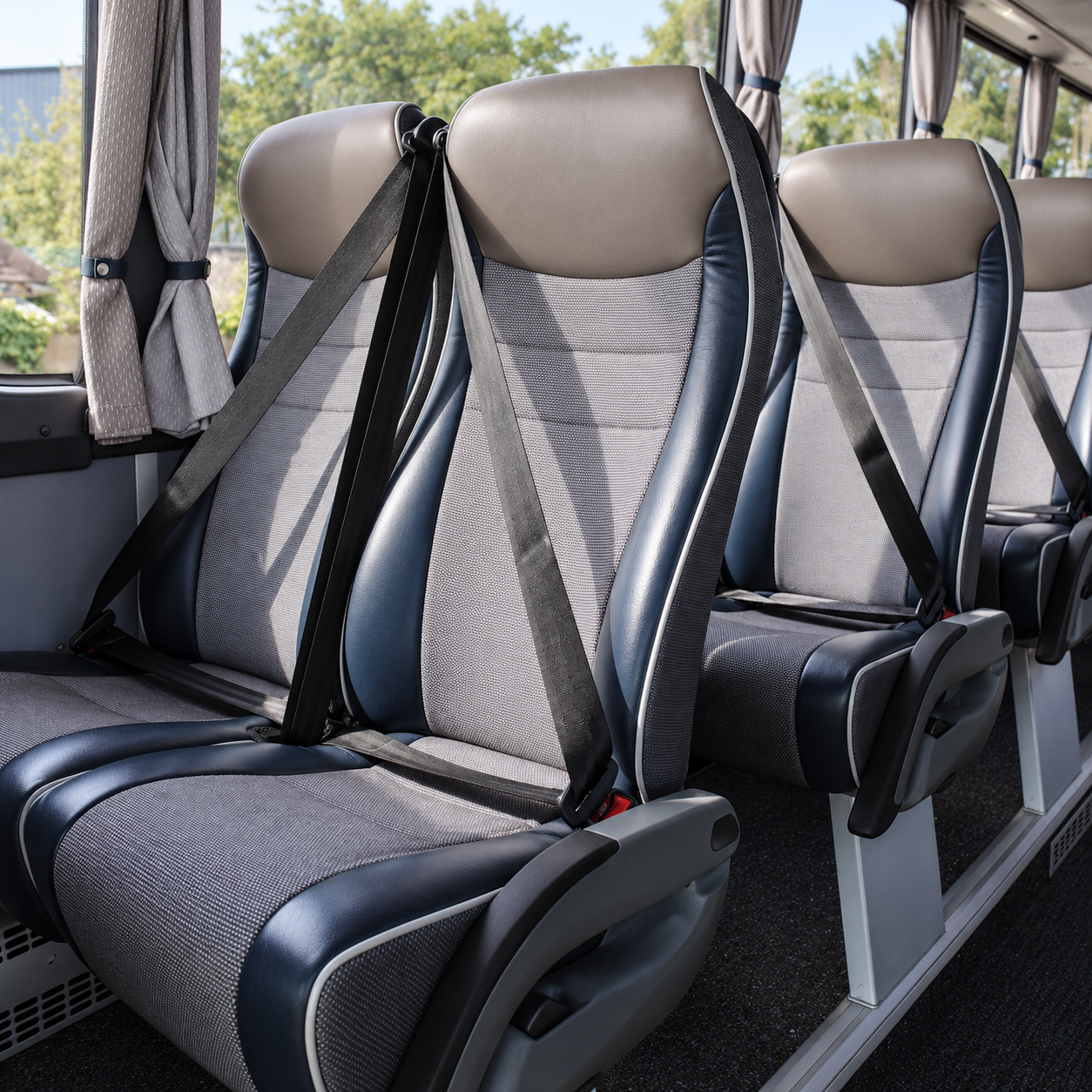
To address the long-distance and high-speed operating conditions of coaches, the product uses high-strength polyester webbing and a retractable design to achieve a balance of durability and comfort.
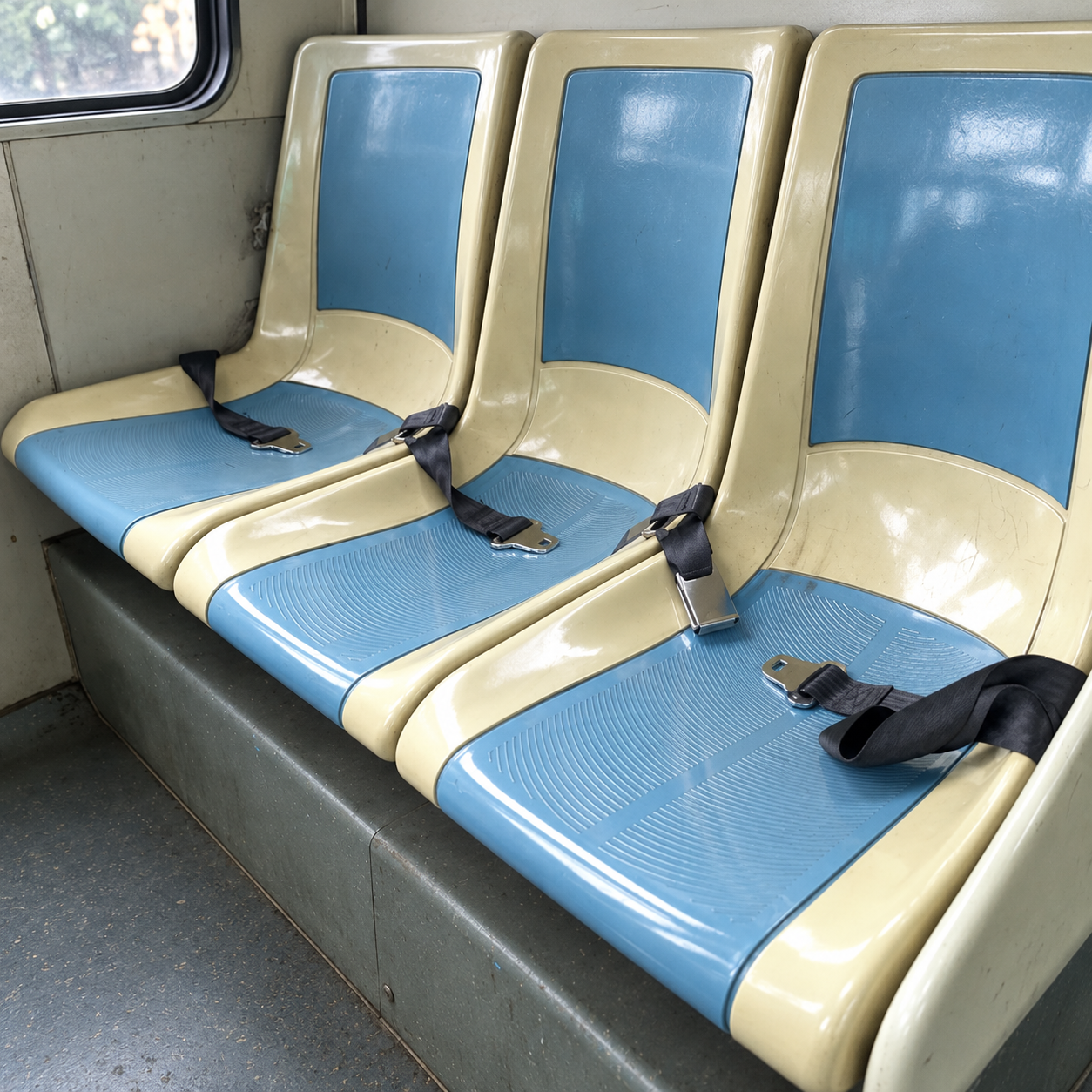
Featuring quick-release buckles and easy-to-clean, wear-resistant webbing, these seat belts enhance passenger efficiency when boarding and exiting the vehicle.
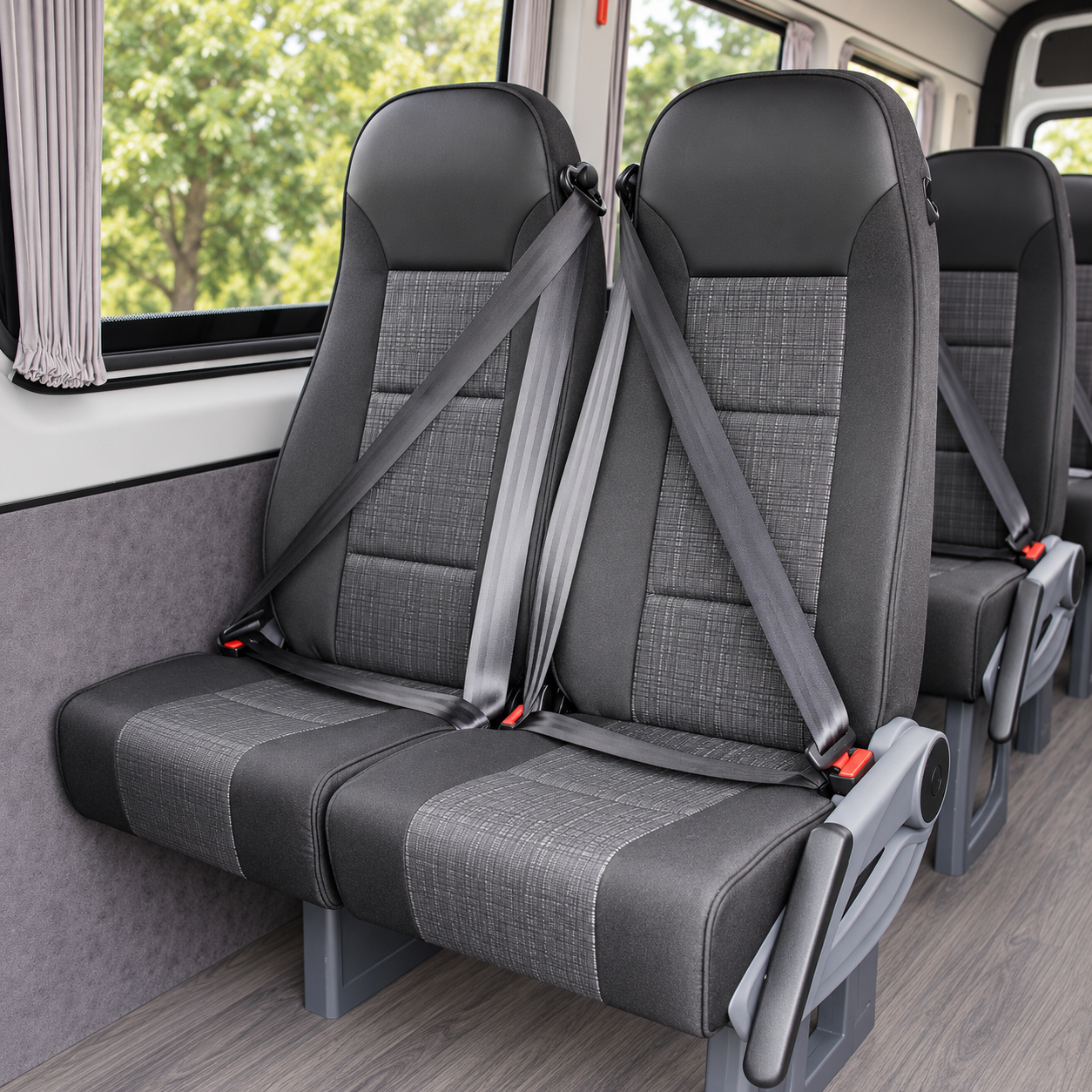
Given the compact interior space and diverse seating configurations, flexible webbing lengths, buckles, and installation designs are employed to meet seat structures and passenger positions.
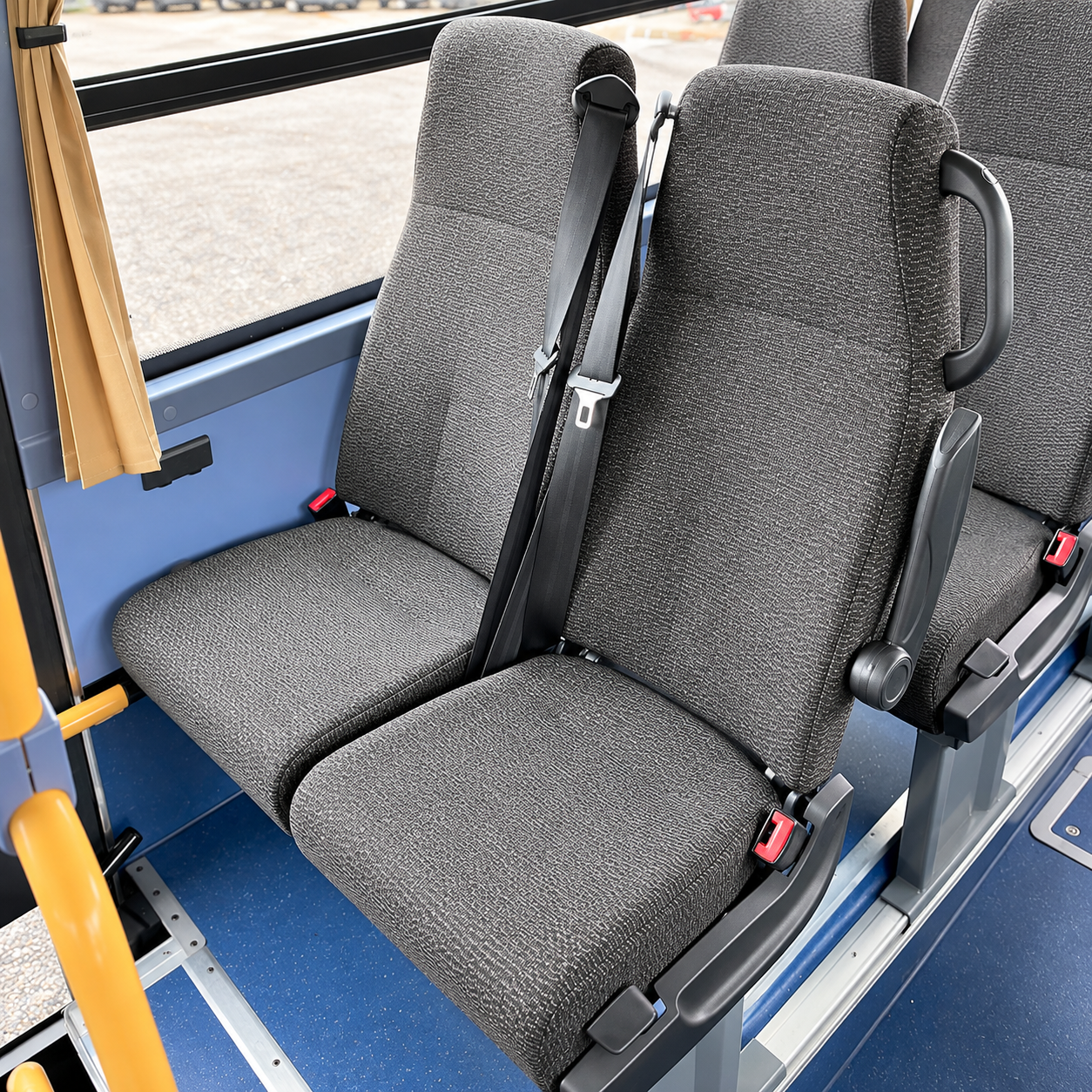
Made from highly flame-retardant fabric (certified to FMVSS 302) and stainless steel or zinc alloy fasteners, this product withstands corrosion and resists fading even in humid or sun-exposed environments.
Technical Specifications of Bus Seat Belts
| Parameter | Specification |
| Product Type | Bus Seat Belt / Passenger Seat Belt |
| Belt Type | 2-Point / 3-Point |
| Webbing Material | Polyester / Nylon |
| Webbing Width | 46–50 mm / Custom |
| Standard Length | 60–90 in |
| Custom Length | Available |
| Webbing Color | 150+ Colors / Custom Color |
| Buckle | Push-Button / Chrome Lift Latch / Custom |
| Buckle Material | ABS / POM / Steel, depending on configuration |
| Metal Hardware | 45# Steel / Custom |
| Mounting Ends | Bolt-In Bracket / Latch Plate / Custom |
| Retractor | Non-Retractable / Retractable |
| Anchorage Configuration | Application-specific, depending on bus seat structure |
| Testing Available | Breaking Strength / Webbing Fatigue / Opening Force / Salt Spray / Webbing Abrasion / Adjuster Micro-Slip |
| Certifications | FMVSS 209 / E-Mark / SFI, depending on product configuration |
| Quality Management System | Manufactured under IATF 16949 compliant quality system |
| Customization | Length, Color, Buckle, Logo, Hardware & Configuration |
| Sample | Free Sample Available |
| Sample Lead Time | Within 3 Days |
| MOQ | 500 pcs per Model (Standard) |
| Production Lead Time | Confirmed According to Order Quantity & Customization |
| Warranty | 1 Year After Sale |
| After-Sales Support | Lifetime Technical Support |
How to Choose a Bus Seat Belt for Your Market?
Start with Your Market
Different target markets have significant variations in regulations, standards, and certification requirements for bus seat belts. Some markets demand the use of 3 point seat belts, while others only require 2 point seat belts.
For example, the U.S. market involves safety belt requirements like FMVSS 209 and FMVSS 210, while the European market follows UN Regulation No. 16. Additionally, different vehicle models or seat configurations within the same country may be subject to different regulations. To choose the right bus seat belt, you must identify the target country or region and make your decision according to those specific laws.
Identify Your Bus Type
Different bus types correspond to different operational environments and passenger characteristics. These factors will influence the choice of seat belt configuration. To help you quickly make a decision, we have prepared the comparison table below as a reference.
| Bus Type | Passenger Characteristics | Seat Belt Selection Direction |
| City Bus | Frequent boarding and exiting, many standing passengers, and relatively low speeds | 2-point lap belts may be selected; some areas may not require seat belts, but installation interfaces should be reserved |
| Tourist Bus | Mainly older passengers and children, with passengers seated for extended periods | 3-point seat belts are preferred, with adjustable height, load limiters, and pretensioners; passenger comfort is highly important |
| School Bus | Children with smaller body sizes and developing bones | High-back compartmentalized seats paired with 3-point lap-and-shoulder seat belts or integrated restraint systems are standard. |
| Business Bus | Higher expectations for passenger experience | 3-point seat belts with pretensioners, load limiters, and comfort pads; may even be integrated into massage seats |
Inspect the Seat Fit
A bus seat belt is not a single component. It must work in coordination with the entire seat system. When choosing a seat belt, it is important to carefully examine the seat structure, installation location, mounting method, positions of the retractor and buckle, seat belt entry/exit points, webbing length, and available installation space to ensure that the bus seat belt is properly matched to the seat and vehicle structure.
For OEM projects, we recommend determining these installation requirements early in the product development process.
Consider Passenger Comfort
Comfort is a critical factor affecting the actual usage rate of bus seat belts. During the procurement process, we recommend that you place particular emphasis on these areas:
- Webbing Material: We suggest you use materials that are soft, lightweight, and comfortable. Make sure the edges are flat and smooth to minimize stress or friction on passengers’ necks and skin.
- Buckle Operability: The button design should be easy for passengers to quickly identify and operate, while also supporting use with hand gloves.
- Length Range: It is best to select products with sufficient adjustment capability to accommodate passengers of different ages, body types, and heights.
Evaluate Supplier Capabilities
Finally, you should evaluate the supplier’s bulk delivery capacity, product consistency, custom development capabilities, and after-sales response time. As an important component, bus seat belts directly influence project delivery quality and ultimate experience for users. Working with a supplier like BXSeatbelts, which has 20 years of experience, not only helps lower quality risks but also effectively controls long-term maintenance costs.
A Guide to Bus Seat Belt Laws
When selecting school bus seat belts, it is particularly important to understand the relevant school bus seat belt laws in your area, especially in the United States. Because U.S. school bus seat belt requirements are composed of both federal safety standards and state laws, forming a multi-tiered management system.
The requirements are quite different in each state. California school bus seat belt law requires new large school buses that meet the criteria to be equipped with occupant restraint systems, commonly using a 3 point seat belt that restrains passengers’ hips and upper body. Small school buses, instead, comply with appropriate federal safety standards. Texas school bus seat belt law mandates that all new large school buses manufactured and put into service after September 1, 2018, must be equipped with 3 point seat belts. Illinois school bus seat belt law similarly imposes occupant restraint requirements on newly purchased school buses, and 3 point seat belts are gradually becoming an essential configuration in new school buses.
In addition to these three key states, other regions have their own demands. In New Jersey, the state has established additional requirements beyond federal standards that impose knee restraints. Before purchasing, you should review current regulations from the target state’s DMV, Board of Education, NHTSA, and legal compliance advisors.
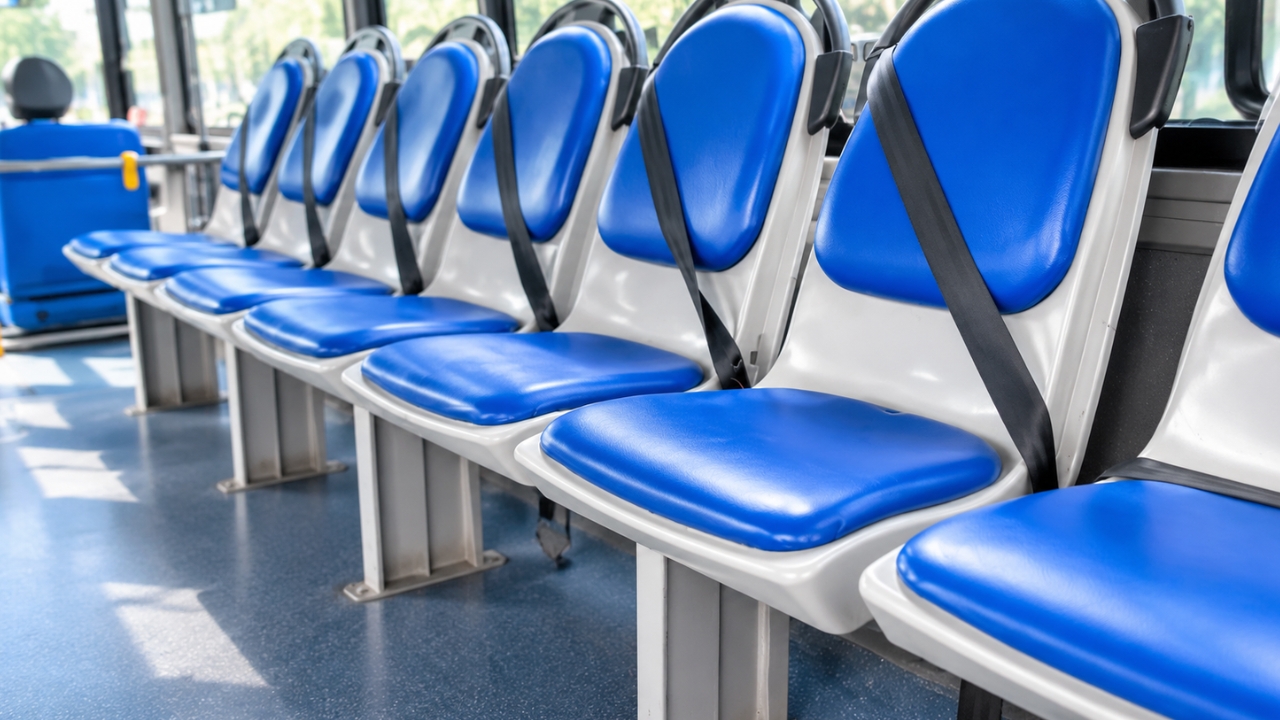 What Factors Affect Bus Seat Belt Prices?
The price of bus seat belts is not determined by a single factor but is influenced by product type, materials, features, vehicle compatibility, manufacturing standards, and purchase quantities. These factors can help you objectively evaluate product quotes when selecting bus seat belts that satisfy your actual needs.
Seat Belt Types & Functions
Different types of bus seat belts have variations in structure, components, and functions, so the cost will also fluctuate accordingly.
| Type | Characteristics | Price Level |
| 2 Point Seat Belt | Simple structure with lower production cost | Low |
| 3 Point Seat Belt | complex structure and enhanced protection | Medium |
| ELR Seat Belt | an Emergency Locking Retractor for automatic locking during dynamic impact | Higher |
| Equipped with a Pre-Tensioner/Force Limiter | Actively tightens the belt or limits restraint force during a collision | High |
Vehicle Types & Applications
City Buses: Frequency of passenger loading and unloading place higher demands on the seat belts’ durability, convenience, and seat compatibility, with relatively simple configuration needs.
Long-distance Coaches/Tour Buses: Comfort and safety are primary, often featuring 3 point seat belts with retractors, which tend to be more expensive.
School Buses: Seat belt configurations depend on the laws, seat structure, and vehicle design, so the price variations are significant.
Materials & Manufacturing Processes
The materials used in bus seat belt webbing, buckles, retractors, and mounting brackets directly affect the product’s cost. High-strength polyester webbing, abrasion-resistant materials, corrosion-resistant metal components, and specially treated buckles typically offer better durability and safety performance, but may also be more expensive.
In addition, manufacturing processes such as sewing, heat treatment, abrasion testing, and quality inspection also influence the final price.
Purchase Quantity & Customization Needs
Bulk purchasing usually helps decrease per-unit production costs. If your bus seat belts require custom webbing lengths, colors, buckles, special connectors, mounting brackets, or structural designs, this will incur additional costs.
2 Point vs 3 Point Bus Seat Belts
 2 point bus seat belts primarily restrain passengers in their seats using two fixed points on either side of the pelvis. These are classified as “lap belts.” They feature a simple design and requires minimal installation space, suitable for bus seats with relatively simple structures or those without upper anchor points. Since it lacks a shoulder strap, its protection for the head and chest is relatively limited. It is commonly used in city buses, shuttle buses, sightseeing buses, or as a basic restraint configuration for specific seat layouts.
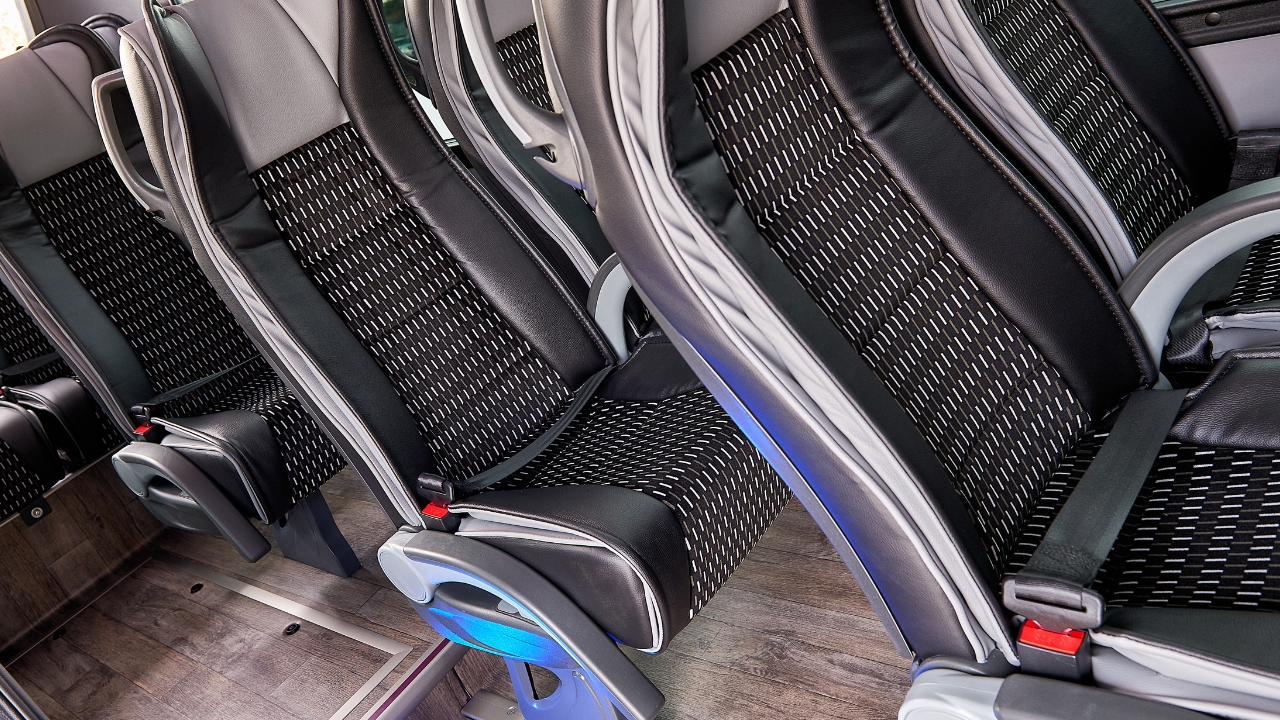
The 3 point bus seat belt adds a shoulder strap to the lap belt, forming an “integrated shoulder-waist” restraint system through three mounting points. It restricts forward movement of both the waist and upper body, effectively dispersing collision forces and offering a significant safety advantage over the 2 point system. It requires an additional upper anchor structure, placing higher demands on seat strength, installation space, and vehicle design. Therefore, it is mostly used in seats with higher safety requirements, such as coaches and tour buses.
This table summarizes the most essential comparison dimensions we’ve prepared, hoping it will be helpful to you.
| Comparison | 2 Point Bus Seat Belt | 3 Point Bus Seat Belt |
| Restraint Type | Lap belt | Lap-and-shoulder belt |
| Anchor Points | 2 mounting points | 3 mounting points |
| Body Restraint | Provides restraint across the pelvis/lap | Provides restraint across the pelvis and upper torso |
| Shoulder Restraint | No | Yes |
| Installation Space | Requires less mounting space | Requires additional upper anchorage space |
| Installation Complexity | Simpler installation | More complex installation |
| Seat Structure | Suitable for seating positions designed for lap-belt installation | Requires a suitable upper anchorage |
| Passenger Movement | Allows greater upper-body movement | Provides greater upper-body restraint |
| Typical Applications | Bus seats, shuttle buses, sightseeing buses, and other seating positions designed for 2-point restraint | Bus seats and passenger seating positions designed for 3-point restraint |
| Retractable Option | Available | Available |
| Selection Priority | Based on seating position, mounting structure, vehicle design, and applicable regulations | Based on seating position, upper anchorage, vehicle design, and applicable regulations |
Yes. BXSeatbelts offers bus seat belt extenders and replacement components, including seat belt webbing, buckles, retractors, adjusters, mounting brackets, and fasteners. For replacement projects, you provide the length of the existing seat belt, type of buckle, method of installation, and other relevant information, so we can help find suitable parts according to your current seat belt configuration.
Before we can provide a customized solution and quote for the bus seat belt project, we generally need you to provide the following information:
- Vehicle Information: Vehicle model, seat type, installation location, and applications;
- Product Requirements: Seat belt type, width, length, buckle style, retraction mechanism, etc.;
- Installation Requirements: Mounting method and mounting hole locations;
- Standard Requirements: Relevant certification standards, testing requirements, or target market regulations;
- Project Details: Product drawings, samples, or reference images.
If you’re currently unable to provide complete documentation, you can also share your requirements with us. Our engineering team can recommend suitable configuration solutions.
- Breaking Strength Test: Evaluates the tensile strength of bus seat belts and webbing to verify overall load-bearing capacity.
- Webbing Anti-Fatigue Strength Test: Measures the webbing’s fatigue resistance under long-term repeated stress.
- Opening Force Test: Checks the force required to open the buckle to guarantee smooth locking and release.
- 72-Hour Salt Spray Test: The 72-hour salt spray test determines the corrosion resistance of metal components.
- Webbing Abrasion Test: Evaluates the webbing’s abrasion resistance under repeated friction.
- Adjuster Micro-Slip Test: We inspect the adjuster for micro-slip under load to verify the longevity of the length adjustment.
Some school buses are not equipped with seat belts, primarily because they are designed with a “Compartmentalization” safety concept in mind, which includes high-back seats and cushioning between seats. These features provide students with a certain level of protection in the event of a collision. In addition, each state has its own safety standards for school buses, so some school buses may not be equipped with seat belts.
BXSeatbelts offers multiple bus seat belt installation solutions, including fixed installations, retractor installations, and different mounting bracket and fastener configurations. If your bus seats have standard seat belt mounting points, you can choose a fixed installation solution that matches the existing mounting points. If you need more flexible webbing extension and retraction, the retractor installation solution is preferable.
Yes. Our bus seat belts can be equipped with quick-release buckles. In the event of an emergency evacuation, you can quickly unfasten the seat belt. In addition, we offer a range of buckle designs, release mechanisms, and retractor systems, which are developed specifically for your project to address particular vehicle and seat requirements.
Our bus seat belts have a service life of 10 years in normal use. During this time, we suggest that you perform a complete inspection every 6 months to guarantee their safety.
If any of these conditions are found, the bus seat belts should be replaced immediately:
- Visible cuts, wear, or tears on the webbing;
- Webbing showing noticeable fading, sun damage, or stiffness;
- Signs of mold, mildew, or chemical damage on the webbing;
- Rust or corrosion on the buckles or mounting hardware;
- Buckles cannot be securely fastened or unfastened;
- Mounting hardware fails to lock or retract properly.