


A seat belt may seem like a simple safety component, yet the materials used in its manufacturing directly impact its strength, durability, long-term reliability and overall safety performance.
For automakers, distributors and importers, understanding the materials used to manufacture seat belts helps you learn about their composition. It also assists in evaluating product quality, supplier competence and compliance requirements.
In the following article, we will explore the materials used for automotive seat belts, including webbing, buckles and retractors, as well as how material selection affects seat belt performance.
What Materials Make up Seat Belt Webbing?
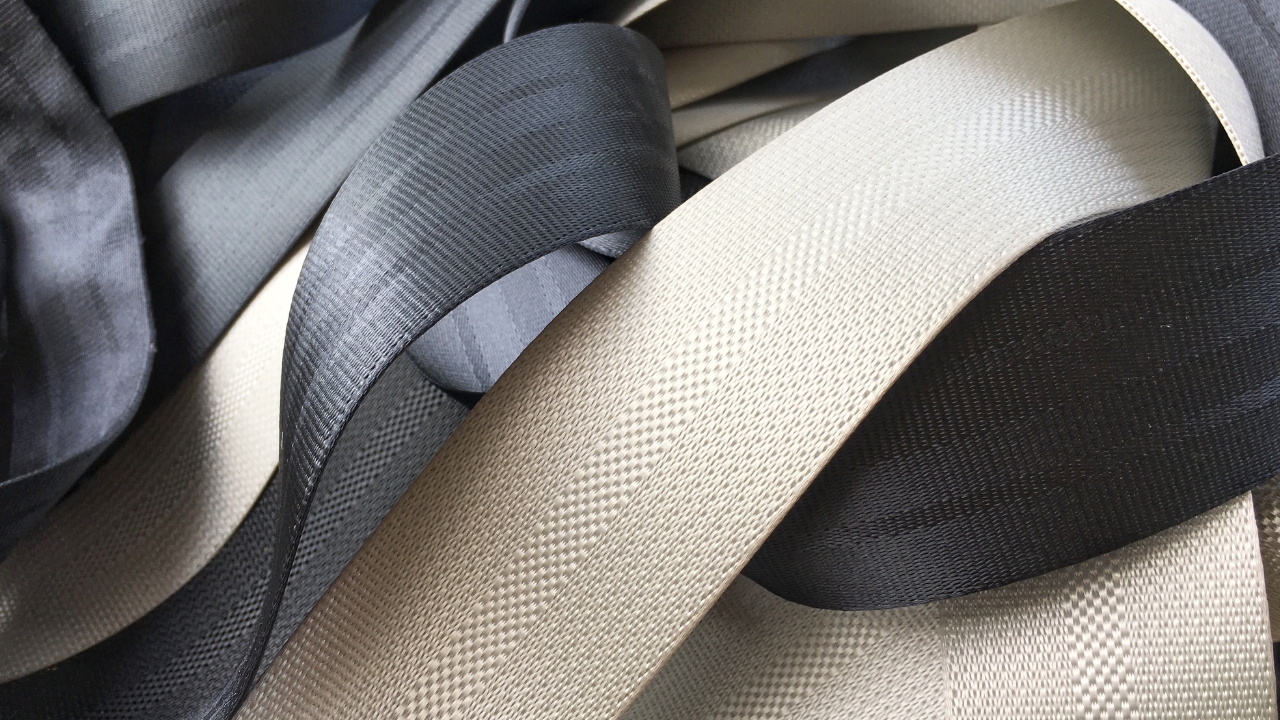
Automotive seat belts consist of multiple components such as webbing, buckles and retractors. Among them, webbing is the critical part that bears the main tensile load. Currently, automotive seat belt webbing is commonly made of high-strength polyester; other engineered fiber materials are used for certain special applications.
Common Materials
- Polyester: In the long-term service environment of vehicles, seat belt webbing is exposed to sunlight, high temperatures, humidity and repeated stretching. Therefore, seat belt manufacturers generally prefer polyester fiber with stable dimensional performance and weather resistance. In addition, polyester webbing features good heat resistance and UV resistance, allowing it to maintain excellent strength and performance even with prolonged exposure to sunlight or high temperatures inside vehicles. For this reason, polyester webbing has become the mainstream material for seat belt production.
- Nylon: Nylon webbing also delivers high strength, high toughness, wear resistance and low deformation tendency. However, compared with polyester webbing, nylon webbing is slightly inferior in heat resistance and UV resistance. As a result, polyester is more commonly used than nylon in modern automotive seat belts. Nevertheless, material selection must be comprehensively determined based on vehicle design requirements, performance needs and regulatory standards.
- Polypropylene: Thanks to its light weight, corrosion resistance and low water absorption, polypropylene is used for certain special webbing applications. It is not, however, the mainstream material for automotive occupant seat belt webbing.
- Other high-performance materials: High-strength fibers with superior impact resistance are adopted in fire rescue, aerial work, mountaineering and other scenarios. While these high-performance fibers offer greater strength, they are not the mainstream choice for webbing of ordinary passenger vehicle seat belts due to cost, processing methods and design requirements of automotive seat belt systems.

| Material | Advantages | Disadvantages | Application in Automotive Seat Belts |
| Polyester | High tensile strength, UV resistant, dimensionally stable | Slightly lower softness | Mainstream webbing material |
| Nylon | Flexible, good energy absorption | Hygroscopic, weak weather resistance | Special applications |
| Polypropylene | Lightweight, low cost | Insufficient strength and durability | Non-primary occupant seat belts |
How Do Different Materials Affect Seat Belt Performance?
Polyester: The Most Common Material for Automotive Seat Belts
Polyester features excellent:
- Tensile strength
- Abrasion resistance
- UV resistance
- Dimensional stability
It can adapt to the long-term operating environment of vehicles, making it the primary choice for webbing in modern automotive seat belts.
Nylon: Better Flexibility and Energy Absorption
Nylon has high toughness and wear resistance, offering advantages for applications requiring higher flexibility. Yet due to its hygroscopicity and weather characteristics, it is generally less stable than polyester for long-term use in automotive environments.
What Performance Requirements Must Automotive Seat Belt Materials Meet?
Knowing material types alone is insufficient to judge seat belt quality. Different materials must satisfy corresponding performance requirements to guarantee long-term reliability of seat belts.
Manufacturers and purchasers of automotive seat belts should pay attention to the following indicators:
- Tensile Strength: One of the core requirements for seat belts. Components including webbing, buckles and retractors must withstand forces generated during vehicle collisions, so materials need sufficient strength.
- Abrasion Resistance: During daily use, seat belts continuously rub against guide rings, retractors and buckles, which may wear the webbing surface. Good abrasion resistance is therefore vital to the service life of seat belts.
- UV Resistance: Though seat belts are installed inside vehicles, they are continuously exposed to ultraviolet rays from sunlight. Good UV resistance helps webbing retain its color, strength and structural stability. (Common automotive flame retardant test standards: FMVSS 302 / ISO 3795)
- Heat Resistance: Temperatures inside vehicles fluctuate widely, especially for parked cars under high heat. Materials must adapt to varying temperature conditions to prevent performance degradation caused by prolonged high temperatures.
- Flame Resistance: Certain special vehicles impose flame retardancy requirements on materials. Seat belt materials shall meet relevant safety standards according to regulations of target markets and vehicle requirements.
- Aging Resistance: Seat belts must maintain reliable performance over years of service. Materials therefore need to undergo relevant durability tests to assess performance changes during long-term use.
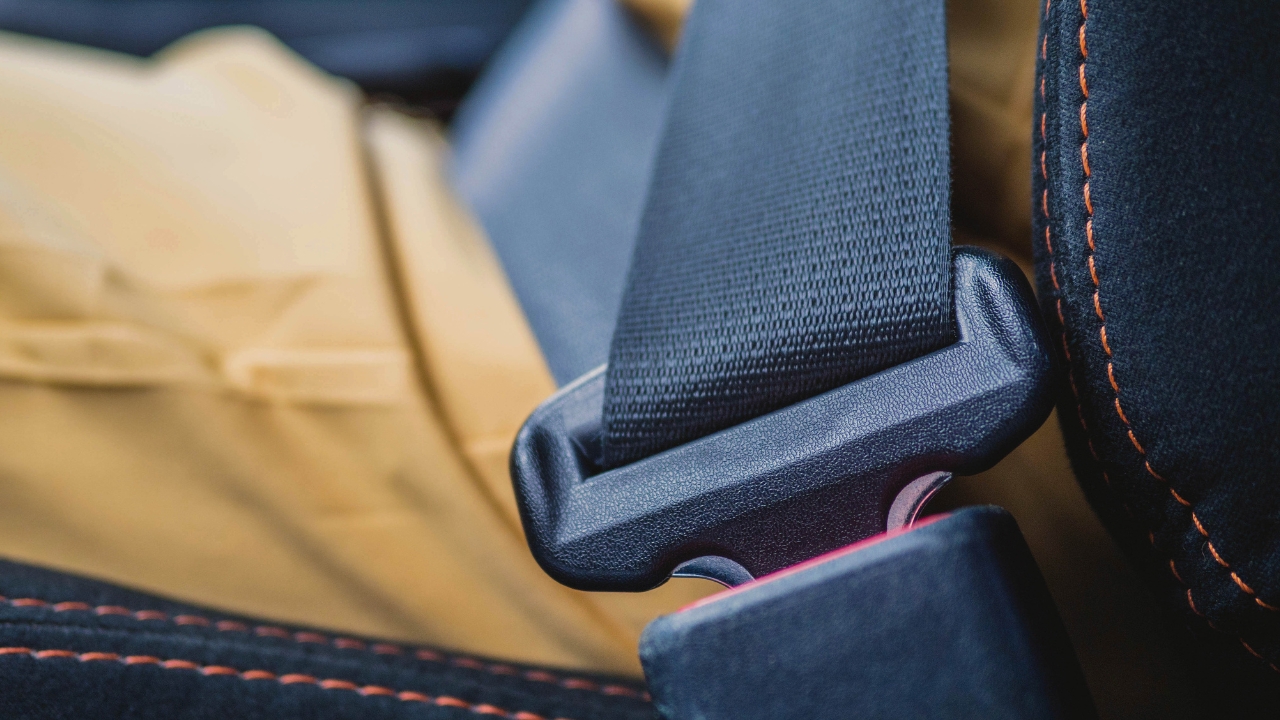 Materials for Other Components
Buckle
Buckles endure mechanical loads during locking and release, and are usually composed of:
- High-strength steel
- Engineering plastic
- Steel locking mechanism
- Injection-molded housing
- Spring assemblies
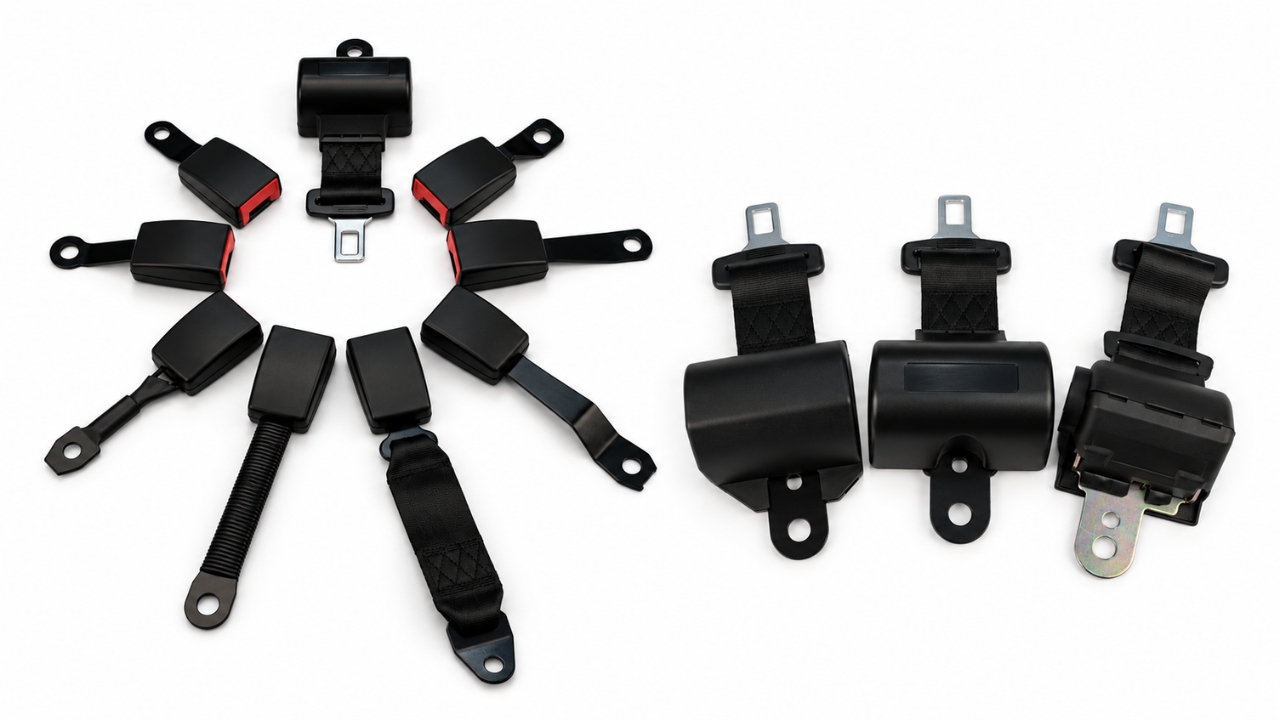
Retractor
The retractor controls webbing extension and retraction, and locks the seat belt when necessary. Its main materials include:
- Steel frame
- Spring steel
- Plastic housing
The internal locking mechanism of retractors generally adopts precision metal components to ensure timely locking in case of vehicle collisions or rapid webbing pulling.
 Material Factors to Consider When Purchasing Automotive Seat Belts
In actual procurement, understanding seat belt materials is not only about learning webbing composition, but also an important basis for assessing product quality and supplier capability.
Webbing Material Specification:
Confirm the following during procurement:
- Base material (e.g. Polyester)
- Webbing width and thickness
- Fiber specifications
- Color and surface treatment requirements
Clear material specifications help you judge product quality.
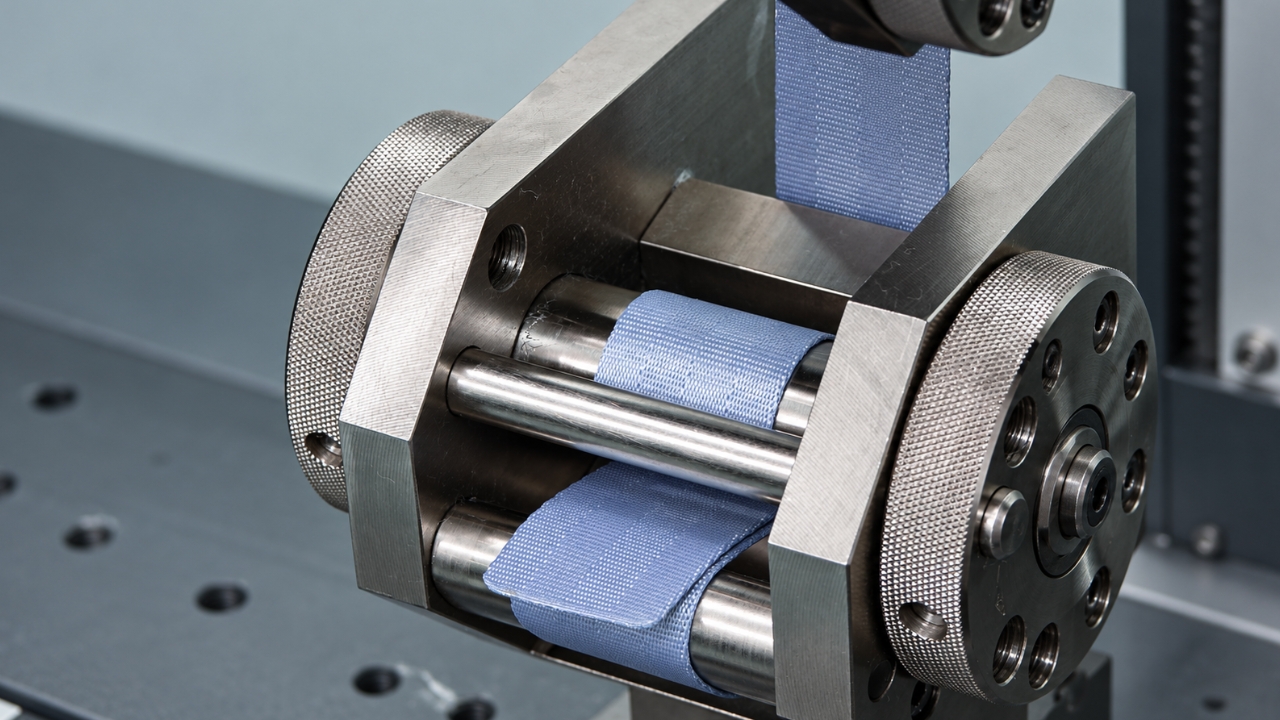
Tensile Strength Test Report:
Seat belts are safety-critical components. Safety performance cannot be judged merely by visual inspection.
Ask suppliers to provide:
- Tensile test data
- Strength test reports
- Product test records
These documents help you evaluate product reliability.
 Material Consistency:
For bulk procurement projects, stable quality across batches is essential.
Key points:
- Raw material sources
- Production process control
- Batch testing
Avoid instability caused by material discrepancies.
Compliance Documents:
Different countries and markets have varying requirements for automotive seat belts.
Suppliers shall provide the following documents during procurement:
- Test reports
- Certificate of conformity
- Certification documents
This reduces risks when launching products into target markets.
Supplier Testing Capability:
Qualified seat belt suppliers do not merely supply products; they must also have the capability to verify product performance.
Such capabilities include:
- Material testing
- Strength testing
- Durability testing
- Assembly performance testing
This helps purchasers assess whether suppliers possess stable production and quality control capabilities.
 FAQ
How Strong Is Automotive Seat Belt Webbing?
Automotive seat belt webbing is designed to withstand extremely high forces during vehicle crashes. Its ultimate strength depends on multiple factors, including material type, weave structure, width and manufacturing process.
What Factors Determine the Quality of Seat Belt Webbing?
The quality of seat belt webbing depends not only on material type, but also on the following factors:
- Fiber quality
- Weave structure
- Width and thickness
- Manufacturing process
- Test standards
Is Thicker Seat Belt Webbing Always Better?
No. Seat belt webbing needs to strike a balance among strength, flexibility, weight and comfort.
Excessive thickness may adversely affect:
- Retractor operation
- Installation compatibility
- User experience
Therefore, select appropriate specifications based on vehicle design.
What Certifications Are Required for Automotive Seat Belt Materials?
Requirements vary by market. Common certifications include:
- FMVSS requirements
- ECE regulations
- OEM specifications
Purchasers shall request relevant documents from suppliers according to target markets and vehicle applications.
Can Seat Belt Materials Affect Vehicle Safety?
Yes. Materials may influence:
- Load-bearing capacity
- Restraint performance in collisions
- Service life
- System reliability
Final Thoughts
Material selection for seat belts is critical. Understanding the characteristics of these materials helps you better evaluate seat belt quality and select suitable products.
If you have any questions regarding seat belt customization, material selection or certification testing (e.g. ECE R16 / FMVSS), feel free to contact our technical and sales team. We will provide you with professional solutions.