

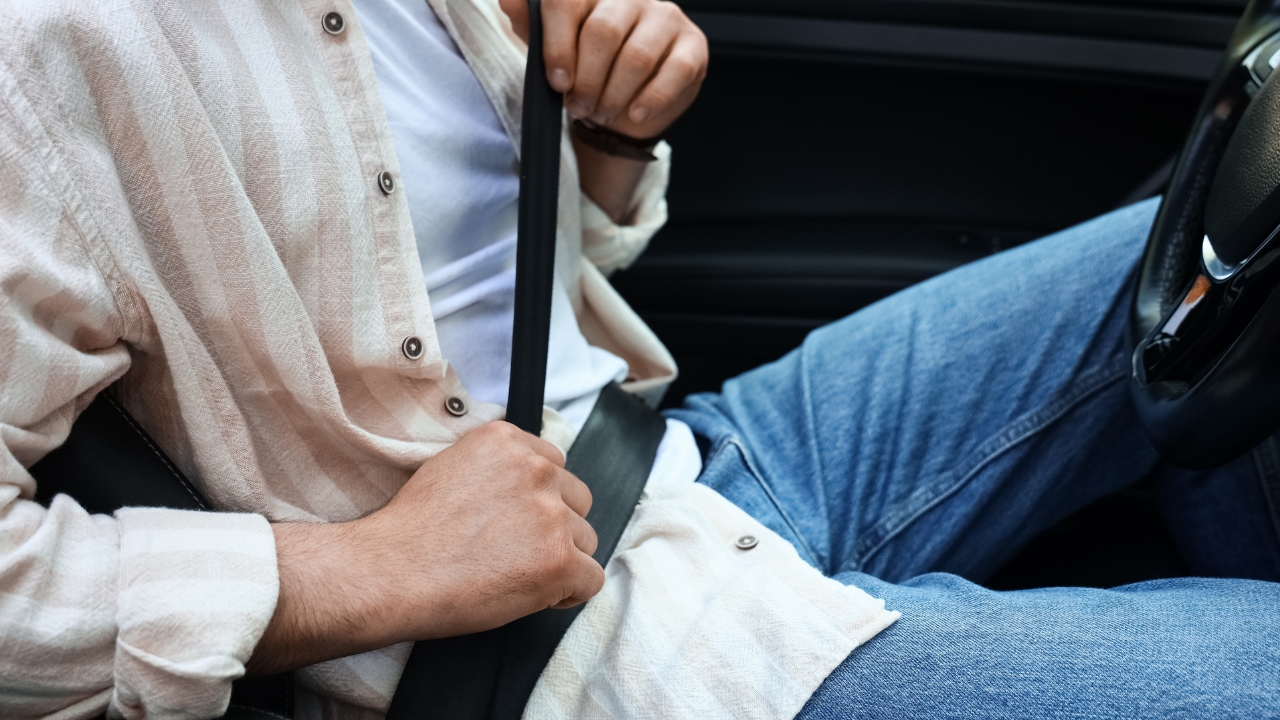
In modern vehicle occupant protection systems, Seat belts are not merely a secondary safety device to airbags. Seat belts control the occupant’s movement trajectory and deceleration process, while airbags provide additional cushioning on this basis. The seat belt restraint system serves as the fundamental restraint device within the vehicle’s occupant protection system.
A complete seat belt restraint system generally consists of webbing, retractor, buckle, pretensioner, load limiter, anchor points and mounting components. These components work together in a coordinated sequence during a collision to jointly control occupant movement and applied forces. This article introduces the working principle, core components, common types, relevant regulations and procurement considerations of automotive seat belt restraint systems.
Working Principle
Normal Driving Condition
A spring inside the retractor keeps slightly retracting the webbing, so the seat belt remains in contact with the occupant without becoming uncomfortably tight. The ELR (Emergency Locking Retractor) allows free webbing extraction for occupant mobility. At this stage, the pretensioner remains inactive and the load-limiting mechanism is not engaged.
Collision Occurs: Inertia Triggers Locking
When a collision takes place, vehicle speed drops rapidly, yet the occupant continues moving forward due to inertia. Many ELR retractors adopt webbing-sensing and vehicle deceleration-sensing mechanisms. When the webbing is pulled out abnormally fast, or when the vehicle undergoes significant deceleration, the locking mechanism activates and the retractor stops further outward webbing extraction.
Pretensioner Activation: Eliminate Seat Belt Slack
Clothing, sitting posture and normal wearing methods may create a certain amount of slack between the seat belt and the occupant’s body. Without the pretensioning function, the occupant may travel forward for a short distance before being restrained by the seat belt after a collision. The core function of a pretensioner is not simply to “pull the occupant back to the seat back”. Instead, it rapidly tightens the seat belt in the early stage of a collision to eliminate slack between the webbing and occupant, putting the occupant into effective restraint sooner.
Restraint and Load Limiting: Control Forces on Occupants
During the collision, the retractor locking mechanism prevents further webbing extraction and forms effective restraint on the occupant. As the occupant continues forward movement, the load on the seat belt gradually rises. Once the load reaches a preset level, the load limiter engages. It reduces the peak restraining force via controlled webbing displacement or mechanical deformation. A load limiter can be understood as a controlled load regulation mechanism. It does not disable the seat belt restraint; rather, it controls the peak load generated as the occupant moves forward while maintaining effective restraint.
 Core Components of the Seat Belt Restraint System
Seat Belt Webbing
Webbing is the critical component in the seat belt system that directly bears restraint loads from the occupant. It is typically manufactured from high-strength polyester fiber, delivering good wear resistance, durability and stability under large tensile loads. Tensile strength is not the only indicator for automotive seat belt webbing. Webbing width, thickness, elongation, wear resistance, UV resistance and long-term performance stability also affect real-world performance.
Retractor
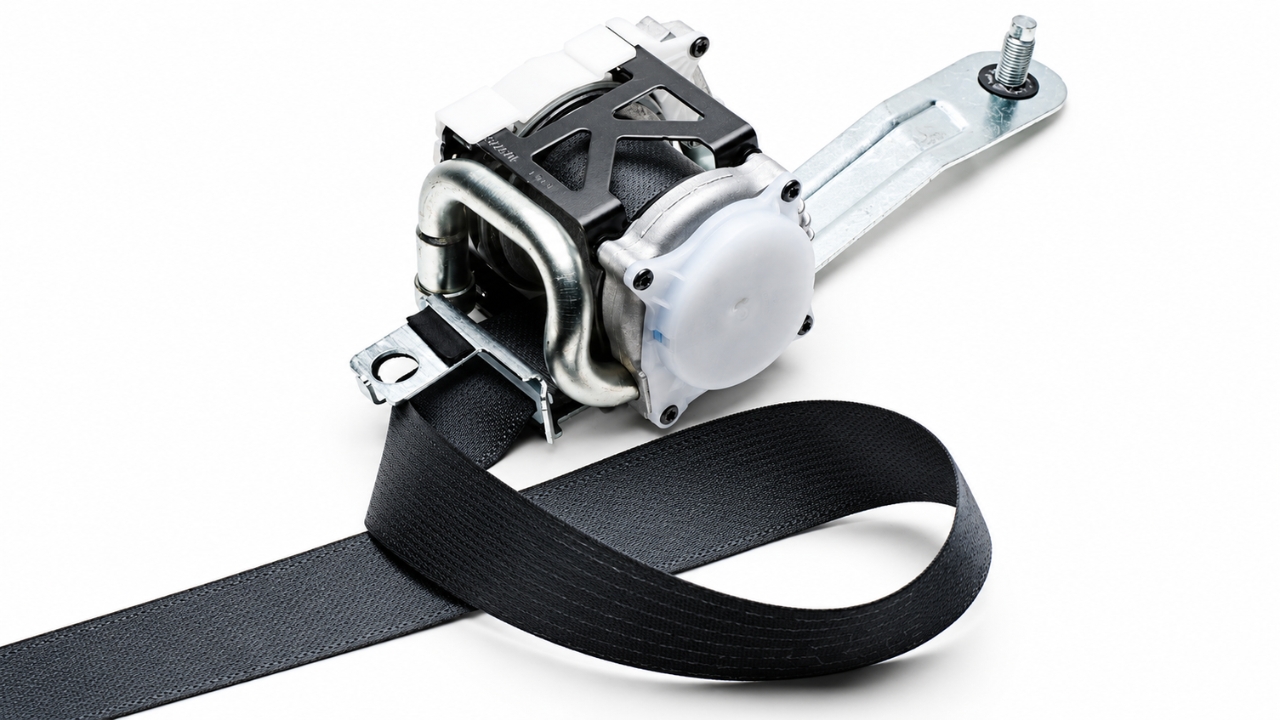
The retractor governs webbing retraction/extension and locks up during collisions, making it one of the core mechanical parts of the seat belt restraint system. Under normal driving conditions, the retractor allows the webbing to extend and retract with the occupant’s movements. When rapid webbing extraction or substantial vehicle deceleration is detected, the locking mechanism blocks further outward webbing pull-out.
Common Retractor Types:
- ELR (Emergency Locking Retractor): Allows free webbing extension and retraction under normal conditions; locks when rapid webbing extraction or significant vehicle deceleration is detected.
- ALR (Automatic Locking Retractor): Enters automatic locking status once the webbing is pulled to a specific position, commonly used for certain occupant restraint scenarios.
For buyers, retractor selection cannot rely solely on model numbers. Mounting orientation, webbing length, retraction force, locking performance and durability must be verified against the specific vehicle model and mounting position. Compatibility between the retractor, webbing and other components should also be checked.
 Pretensioner
s rapidly tighten seat belts in the early collision phase to reduce slack between webbing and occupants, enabling earlier effective restraint. They are generally co-designed with the vehicle airbag and other restraint systems. Pretensioners feature varied structures and triggering methods depending on system design. For bulk procurement, verify compatibility with the vehicle safety system, trigger type, mounting structure and applicable regulatory & testing requirements when selecting pretensioners. A pretensioner cannot be evaluated separately from the full seat belt assembly. Its performance must match the retractor, webbing and overall vehicle occupant restraint system.
Load Limiter
The load limiter mainly controls the peak load exerted by the seat belt on the occupant during a collision. Once the seat belt load hits the set threshold, the load-limiting mechanism permits controlled webbing displacement through predefined mechanical response to lower the peak restraining force on the occupant’s chest. Load limiter settings require integrated design matched with vehicle seats, seat belts, airbags and other restraint systems. During procurement, load limit parameters, mechanism stability and batch consistency are key factors for product development and quality control.
Seat Belt Buckle
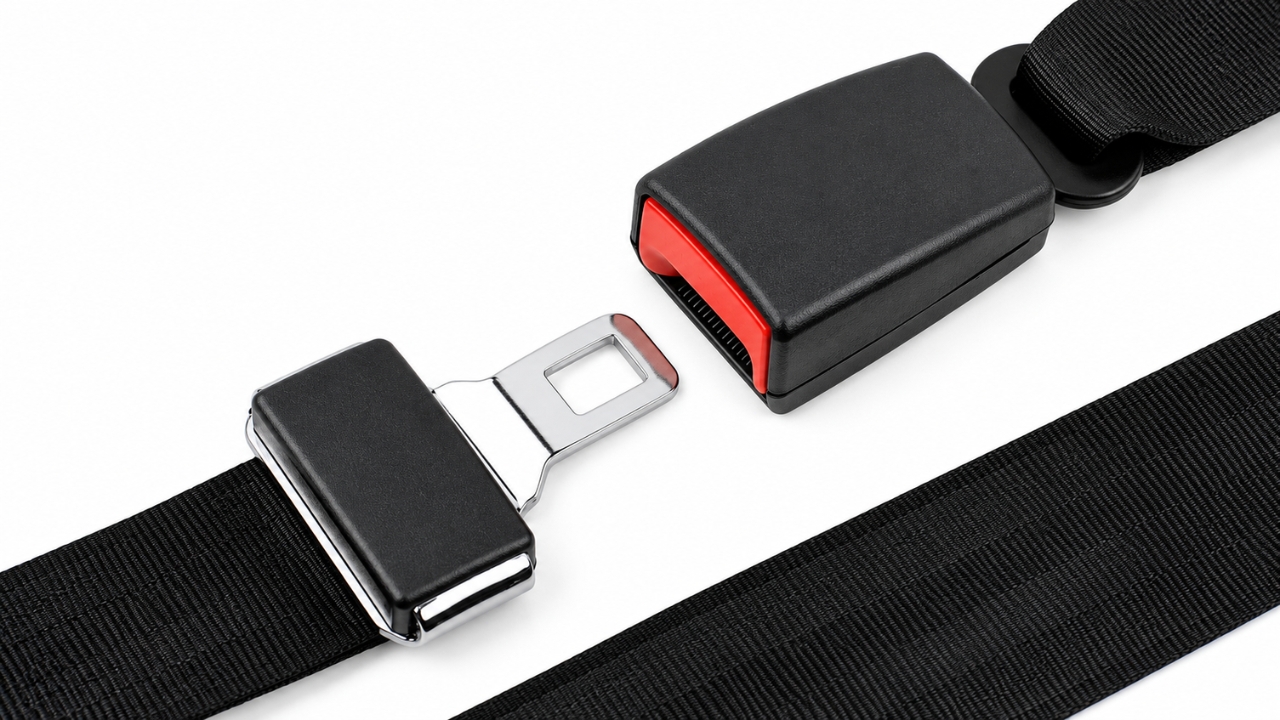
The seat belt buckle connects and releases the seat belt, acting as a vital connection component between the occupant and restraint system. Buckles must maintain reliable locking during use and release normally when required. Beyond locking reliability, automotive seat belt buckles also require consideration of insertion/extraction force, durability, structural strength and long-term operational stability. When selecting buckles, prioritize compatibility with webbing, tongue and vehicle seat structure instead of judging merely by appearance or a single dimension.
 Anchor Points and Mounting Components
Restraint force generated by seat belts is ultimately transferred to the vehicle body structure through anchor points. Anchors and mounting hardware are essential parts of the seat belt restraint system. Anchor point location, mounting method, fasteners and coordination with seats and body structure influence seat belt mounting angles and force conditions. Even if the webbing, retractor and buckle perform well, improper mounting positions or anchor structures can compromise the performance of the entire restraint system.
Components of the seat belt restraint system do not operate independently. Their specifications, performance and mounting methods must be mutually compatible. Therefore, when choosing seat belt products, do not only focus on the price or parameters of individual parts. Instead, comprehensively evaluate product compatibility, quality consistency, testing capability and the supplier’s overall manufacturing capacity.
Common Types of Automotive Seat Belts
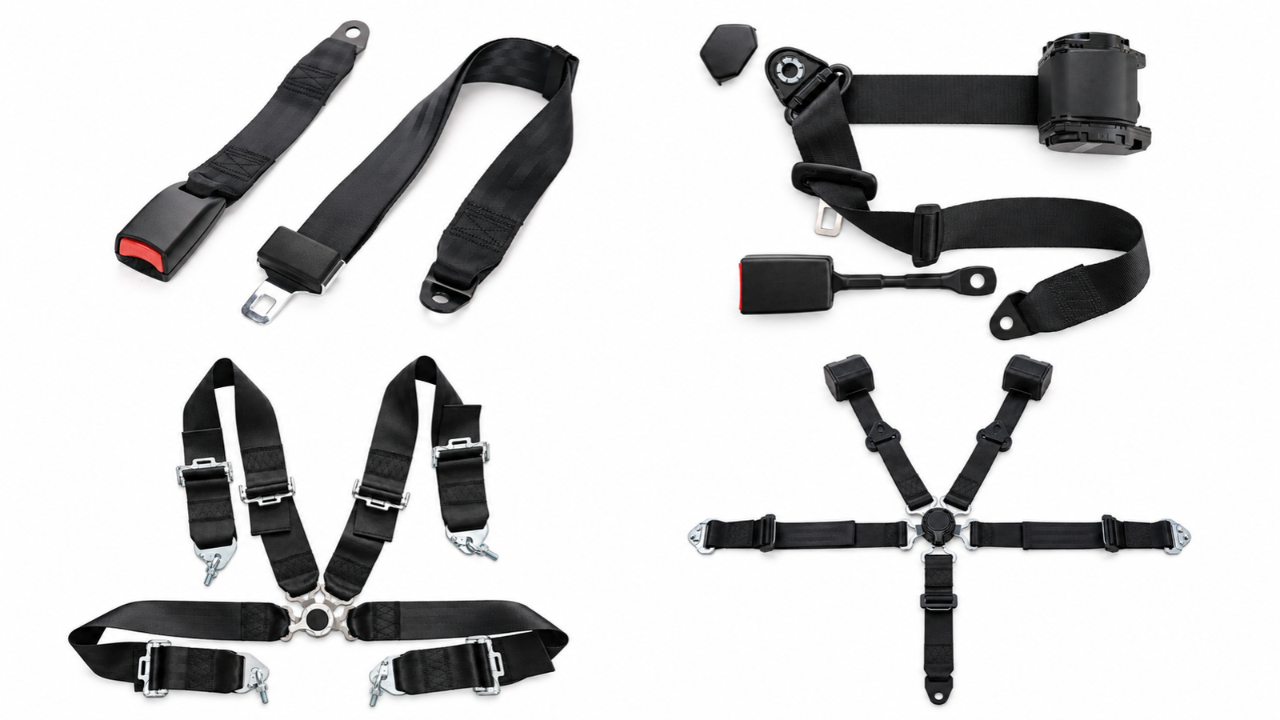
Automotive seat belt restraint systems can be categorized by occupant restraint method, vehicle application and retractor structure. Most passenger vehicles today adopt three-point seat belts, while different retractor types and functional assemblies are matched according to seat positions and vehicle design.
Two-Point Seat Belt
The two-point seat belt restrains the occupant mainly at the waist with a relatively simple structure, commonly seen on some special seats or specific vehicle applications.
Three-Point Seat Belt
The three-point seat belt restrains both the occupant’s pelvis and upper body, forming a complete restraint path via shoulder and lap straps. It is widely adopted in seats of modern passenger cars and other vehicles.
Four-Point and Five-Point Seat Belts
Four-point and five-point seat belts further limit occupant movement by adding restraint anchor points. They are mainly used for special vehicles, professional driving and unique application scenarios. Their design and installation requirements differ significantly from three-point seat belts for ordinary passenger cars.
Besides restraint configuration, seat belt systems can also be classified by functional assemblies including retractors, pretensioners and load limiters. Different configurations are deployed according to seat positions and the vehicle’s overall restraint strategy.
 How to Select a Suitable Automotive Seat Belt Restraint System
| Selection Factors | Content to Verify | Key Procurement Focus |
| Vehicle Application | Passenger vehicles, commercial vehicles, buses, special-purpose vehicles | Seat structure, operating environment and safety requirements vary for different vehicle types |
| Seat Position | Front row, rear row, driver seat, passenger seat | Different mounting positions may require distinct seat belt configurations |
| Retractor | ELR, ALR, mounting orientation, webbing length, retraction force, locking performance | Select suitable retractors based on vehicle model, mounting position and webbing specifications |
| Webbing Specifications | Width, thickness, tensile strength, length, elongation | Also check wear resistance, color consistency and batch stability |
| Pretensioner & Load Limiter | Availability, trigger method, load limiting parameters | Must match retractor, webbing, airbags and the overall vehicle restraint strategy |
| Regulations & Testing | FMVSS, UN R16 and other applicable requirements | Confirm applicable standards and test documents based on target market and specific application |
| Customization Requirements | Webbing length, color, retractor structure, mounting method, buckle style | Verify the supplier’s capacity for development, sampling and mass production |
| Supplier Capability | Production capacity, quality control, testing capability, delivery capacity | Focus on batch consistency, quality management system and long-term supply stability |
Regulatory and Testing Requirements for Automotive Seat Belts
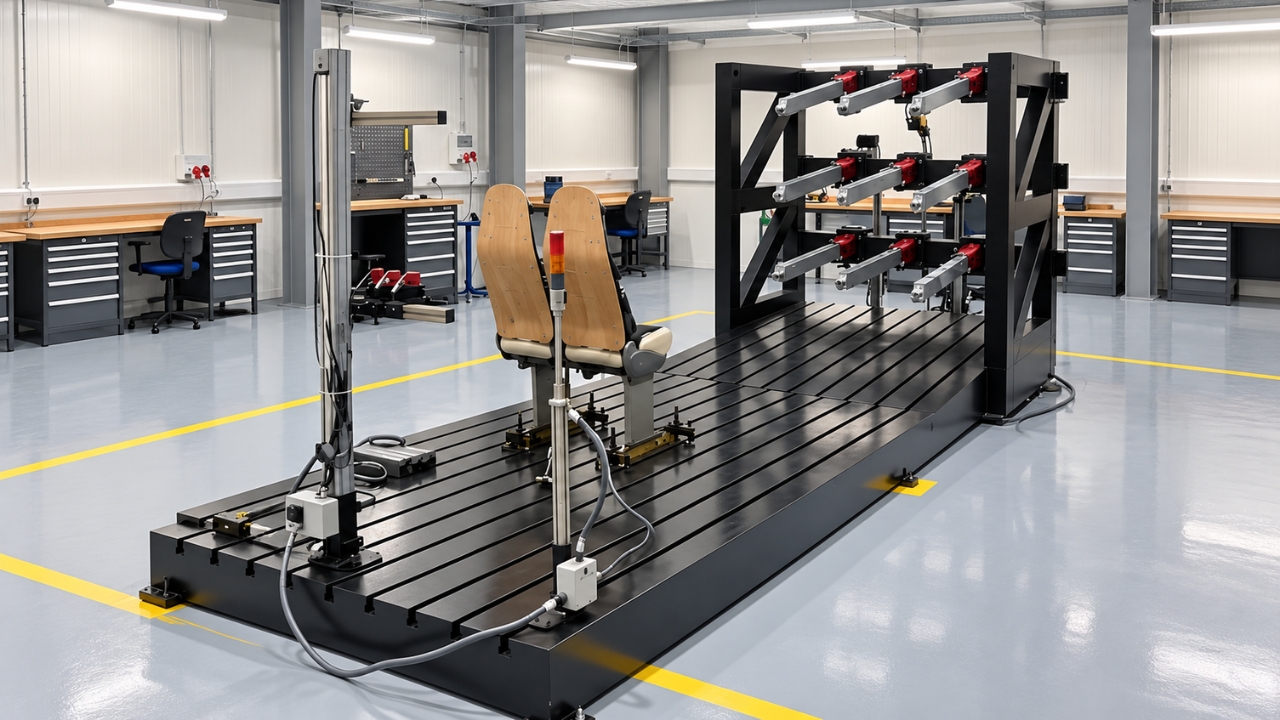
Regulatory requirements for seat belts and their restraint systems vary across markets. Products for the US market generally need to comply with FMVSS requirements, while products for Europe and other markets adopting UNECE regulations must meet UN/ECE R16 and related standards. The applicable specific standards shall be confirmed according to vehicle type, seat position and product usage.
Test Items
- Tensile strength
- Locking performance
- Retractor durability
- Buckle performance
- Webbing durability
- Corrosion resistance
- Environmental testing
Before procurement and supplier selection, confirm whether products have passed tests corresponding to the target market and specific application, and ask suppliers to provide necessary testing and compliance documents.
 FAQ
Should I Purchase a Complete Seat Belt Assembly or Individual Components?
It depends on your project requirements. If full system coordination is needed, purchasing complete seat belt assemblies is recommended. If you already have some components and only need replacements or supporting parts, you may buy webbing, retractors, buckles and other components separately. When sourcing different parts individually, pay special attention to dimensional, performance and mounting compatibility between components.
For My First Bulk Purchase of Automotive Seat Belts, Which Parameters Should I Confirm First?
For bulk procurement, besides basic product specifications, focus on webbing tensile strength, width & thickness, retractor locking performance and retraction force, buckle durability and product batch consistency. Meanwhile, confirm whether the supplier has stable production capacity and a sound quality control system.
How to Verify That Seat Belt Products Comply with Regulatory Requirements in My Target Market?
Requirements for automotive seat belts and restraint systems differ by market. Before procurement, first confirm the target market and specific vehicle usage, then check with the supplier on applicable regulations, testing requirements and available test & compliance documents.
Can I Get Samples for Testing Before Mass Production?
Sample supply and testing arrangements can be confirmed prior to formal mass production. At the sample stage, prioritize verification of product dimensions, mounting method, webbing specifications, retractor and buckle functions, as well as compatibility with the vehicle structure. Final product specifications and quality requirements need further confirmation before mass manufacturing.
For Long-Term Repeated Procurement of the Same Seat Belt Model, How to Guarantee Consistent Specifications Across Batches?
Batch consistency is closely related to the supplier’s raw material control, production workflow, quality inspection and outgoing inspection. During procurement, inquire about the supplier’s quality control procedures, product test items and batch inspection methods, and confirm final product standards before mass production.
Quotes from Two Seat Belt Suppliers Vary Greatly. How Should I Make Comparisons?
Beyond price, comprehensively compare product quality, batch consistency, testing capability, production capacity, customization capability, delivery stability, and support for regulatory & technical documentation. Choosing the lowest quotation alone is not always the optimal procurement solution.
Final Thoughts
Choosing the right seat belt involves more than checking product specifications. It also means making sure the product fits your vehicle and application requirements.
Should you have any questions about seat belt restraint systems, please feel free to contact our team. We will provide you with professional solutions.