


Improperly adjusted harnesses may cause work-related accidents, resulting in high costs for work injury compensation, regulatory penalties, and safety audit failures. This article will introduce the correct steps for checking and adjusting the harness and common harness-wearing mistakes, helping you establish correct harness inspection standards.
Why Proper Harness Adjustment Matters for OSHA Harness Compliance?
Harnesses play a crucial role in the fall prevention system, but they can only provide the necessary protection when all components are in a safe working condition. If the harness is not adjusted properly, it not only affects comfort but also restricts movement.
Regular inspections can promptly identify signs of wear or damage, ensuring the safety of workers and also preventing you from incurring hefty fines due to violations of the Occupational Safety and Health Administration (OSHA) regulations.
A Complete Step-by-Step Harness Adjustment Test for Industrial Use
Proper adjustment of harnesses is of vital importance for the comfort and safety of work at heights. It not only complies with regulatory requirements but also ensures the long-term health and safety of your employees. You can follow the steps below to check and adjust whether employees are wearing the harnesses correctly.
 Preparatory Steps
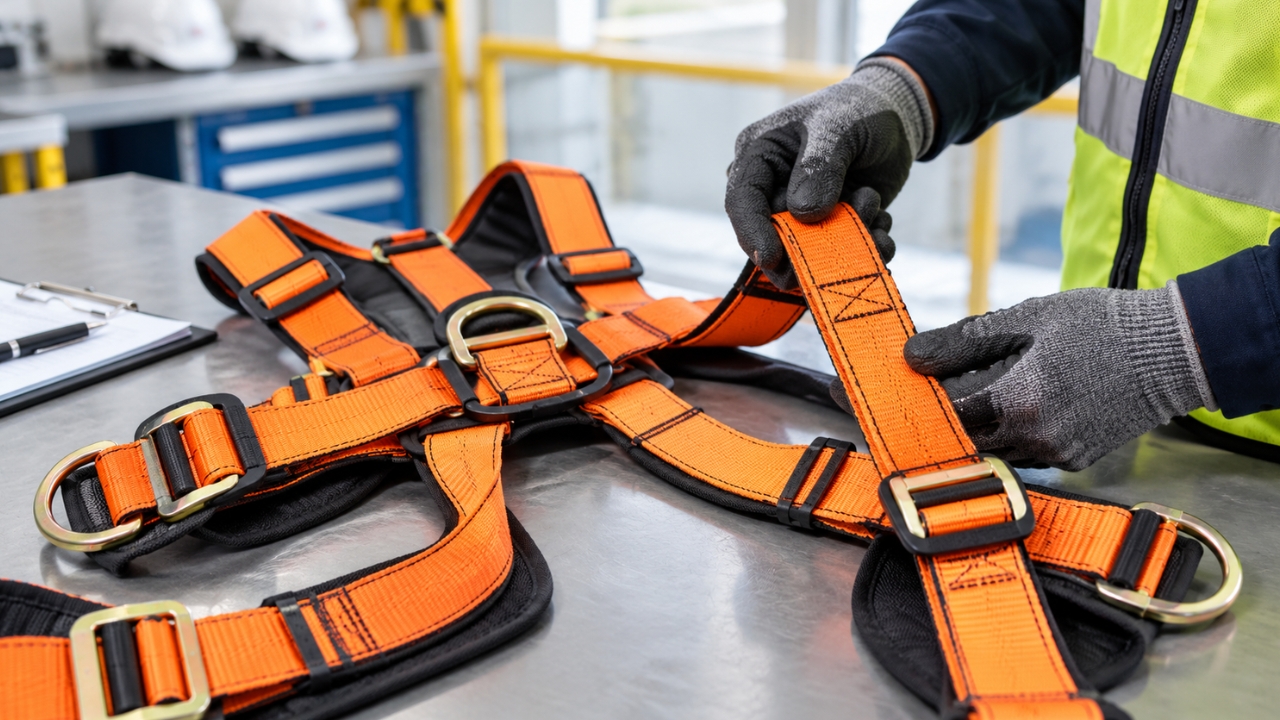
Before adjusting the harness, you need to carefully read the specific usage guide provided by the supplier. This guide usually contains the correct adjustment methods.
After thoroughly understanding the specifications of your harness, the most important thing is that you need to conduct a pre-use harness inspection checklist to ensure all components are free of wear or damage.
The following are the components that you need to pay particular attention to when checking the harness:
| Component | Checklist |
| Webbing | Cuts, frays, abrasion, burns, weld spatter, chemical stiffness or discoloration, UV fading and chalkiness |
| D-rings | Metal cracks, pitting, corrosion, deformation, bending, rough surface, sharp edges |
| Back Plate | Minor cracks, stress marks, discoloration, brittleness. |
| Load Indicator | Broken or separated stitching, colored warning fabric, visible structural damage |
| Labels | All tags present and legible: model, capacity, standards, date of manufacture. Unreadable labels fail the inspection |
| Buckle & Adjusters | Bent tongues, cracked frames, missing rollers, slipping adjustment, grommets pulled through the webbing |
If it is discovered that your harness and components fall under any of the above circumstances, we strongly recommend that you immediately stop using it and conduct a more professional harness inspection to prevent accidents and avoid delaying your project schedule.
Static Fit Check: Core Static Harness Fit Test Criteria
After putting on the harness, it must be adjusted to fit your body shape perfectly. If the harness is too loose, it won’t provide protection. But if it’s too tight, it will cause discomfort or even injury.
You can use the buckles on the harness to tighten or loosen the webbing, making it fit snugly to your body. While keeping your body straight and your muscles relaxed, the chest strap, shoulder strap, and leg strap of the harness should not be loose or knotted, and the twisting angle of all the webbing on your body should not exceed 90°. Finally, you need to fix all the excess ends of the webbing in the fixed buckles of the harness.
- Shoulder Straps: Ensure that the hardware pieces are flat and securely attached without any distortion or slack. They should also allow full range of motion.
- Leg Straps: After adjusting the tightness of each leg strap, you can insert your palm under the strap. If your palm can fit snugly between the strap and the leg but not extend into your fist, it indicates that the harness is properly adjusted.
- Sternal D-ring: The sternal D-ring must be located in the middle of the sternum, not too close to the navel or too high to avoid hitting the chin. At the same time, make sure that the height difference between the chest straps does not exceed 0.8 inches (2 cm) and keep them aligned horizontally.
- Back D-ring Height: The back D-ring must sit centered between your shoulder blades, with a deviation of no more than 2 inches (5 cm) to either side. It should neither be too high nor too low; otherwise, it may change the angle during a fall.
- Waist Strap: Position the waist strap snugly above the hip bones, not across the soft abdomen, to prevent the harness from riding up during a fall and maintain proper load distribution.
If you are wearing loose clothing, please stuff the excess garments into your pants and fasten or zip up all the open garments. Additionally, if your shirt or pants pockets are filled with items, please remove these items during high-altitude work and store them properly.
If the harness cannot be adjusted to the position specified by the manufacturer, please replace it with a harness of a different size or model.
 Dynamic Lock & Movement Verification: Dynamic Harness Lock Test
After ensuring that the harness is adjusted to fit your body properly, you also need to conduct dynamic locking and movement tests to check whether the harness buckle and adjustment parts can remain securely locked when subjected to force.
Buckle Slide Load Test
First, check if the buckle is loose. You can hold each shoulder strap and leg strap separately, then pull them forcefully and rapidly. The buckle and adjustment parts must not slip under dynamic load. If the latch moves or the webbing slips during the rapid pull, you must re-secure the webbing and pull it tightly.
Self-Retracting Lifeline (SRL) Lock Test
If your fall protection system includes a self-retracting lifeline (SRL), the SRL must limit fall arrest distance within 6 inches (1.8 meters). Slowly pull out the webbing, and it should slide smoothly. Then, pull it forcefully and rapidly. The equipment must be able to lock immediately.
Simulate Actual On-Site Operation Movements
Bend over, twist your body, raise your arms, and change your posture as you would in your daily work. Observe if the webbing is distorted, lifted upwards, or presses against your body, causing discomfort. The properly adjusted harness should always remain in the centered position. The chest strap should not press upwards on your throat, and the leg strap should not come loose. If you find the harness is loose or shifted during these movements, it indicates that the adjustment is not proper. You need to make further fine-tuning.
 Suspension Trauma Risk Verification: Suspension Trauma Harness Fit Checks
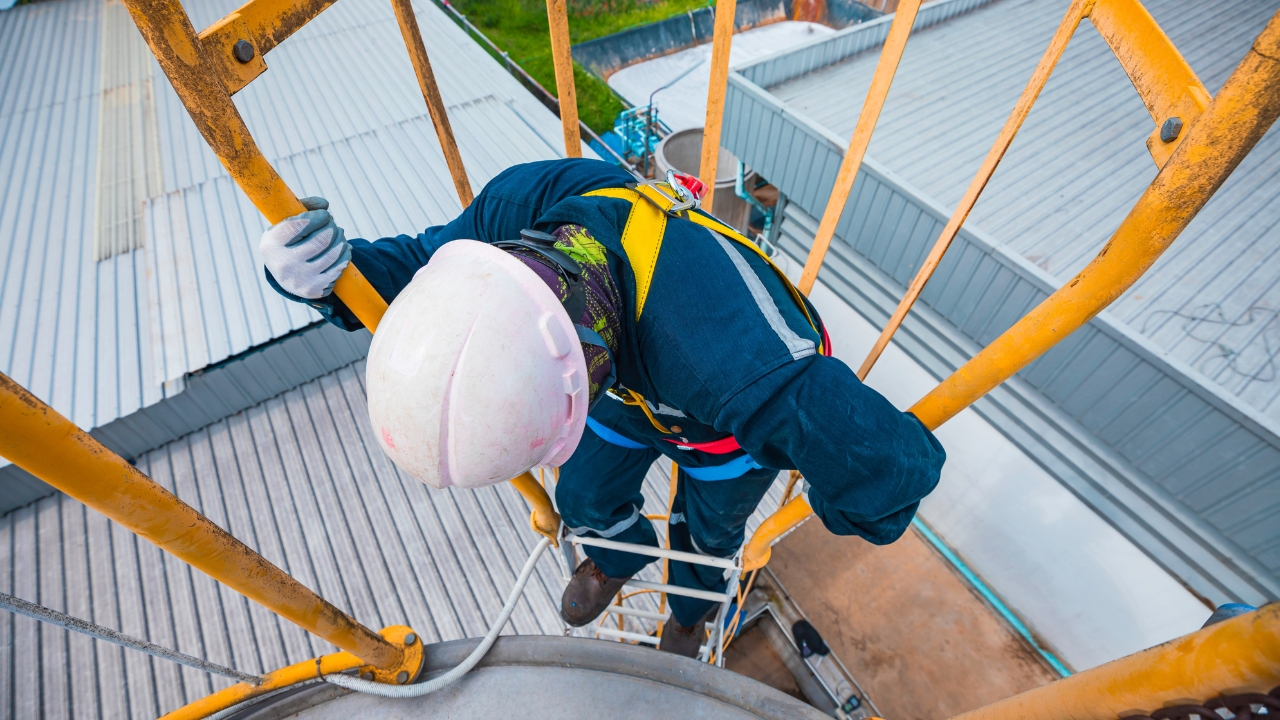
The research conducted by the National Institute for Occupational Safety and Health (NIOSH) of the United States indicates that when workers are suspended in the air and remain stationary, blood accumulates in their lower limbs. The early symptoms of suspension trauma can appear within 5 to 10 minutes, and prolonged suspension may pose a life-threatening risk.
Therefore, after the test subjects have put on and adjusted the harnesses correctly, you can ask them to assume a controllable forward-leaning position while transferring their weight to the harness, simulating the pressure experienced in a suspended position. This will help test the fit of the harness.
If the harness is adjusted correctly, there should be no obvious pressure on the chest, ribs, or abdomen of the test subject. If there is a squeezing or tightening sensation in the trunk, re-adjust the waist strap and leg strap until the force distribution is normal.
Common Improper Harness Adjustment Risks & Business Impacts
Wearing or adjusting the fall protection harness incorrectly may lead to serious accidents, causing unplanned downtime for your project and increasing your additional expenses. Therefore, you must take preventive measures against the following related errors of the fall protection harness in advance.
Too Tight / Loose Harness
If the harness is too tight or too loose, it will affect the dispersion effect of the impact force, thereby increasing the probability of your employees getting injured and raising your compensation costs for work-related injuries. Therefore, before starting work, you must conduct a check and strictly follow the one flat palm rule for leg straps, and unify the wearing standards of the team.
Incorrect Harness Anchor Point
The position of the harness anchor point is of vital importance for the effectiveness of the fall prevention device. The D-ring is the core component of the fall prevention device and must be kept in the center of the shoulder blades and in a horizontal alignment. If the D-ring is tilted, it will cause the body to rotate during the fall braking, increasing the risk of spinal and neck injuries and increasing your liability risk.
 Insufficient Inspection Procedures
Before use, you must not omit the component inspection. Otherwise, you may encounter sudden equipment failures due to overlooking minor defects, which will increase your unplanned downtime costs and even lead to penalties. Therefore, you must check whether the safety belt and its components are worn, deformed or have any other defects.
Ignoring Supplier’s Instructions
Each harness comes with specific installation and maintenance instructions. If you ignore these instructions, you may unintentionally take actions that endanger safety. Therefore, before inspecting the harness, you must carefully read the provided documents, especially the customized harness.
Improper Harness Storage
Do not expose the harness and its components to ultraviolet radiation and chemicals, as this will cause the harness fabric to become brittle and prone to breakage. Also, it is best not to place it in a messy toolbox, as the collisions between tools may cause the fabric to wear and the lock to crack. We recommend that you store the harness in a clean, dry area free of chemicals and sharp objects, and hang the harness using the D-ring.
FAQ
When Should You Replace Your Harness?
If any of the following situations occur with your harness, you should replace it immediately:
- The harness has been in a fall accident.
- There are cuts or tears on the fabric.
- The hardware components have cracks.
- The label on the harness is missing.
- The harness has reached the end of the supplier’s stated service life.
- Webbing edges show fraying that exposes core load-bearing fibers
How Often Should You Inspect Your Harness?
Per OSHA harness inspection frequency requirements, all workers must undergo a quick visual and tactile inspection before each shift. Qualified personnel must conduct a formal and detailed inspection at least once every six months; for high-use environments such as construction or tower work, the inspection frequency should be increased to quarterly or monthly. Additionally, it is recommended to conduct a third-party inspection once a year and record all inspection results.
Can You Wear a Heavy Jacket Over Your Harness?
No. We don’t suggest that you wear jackets or other thick coats over the harness. Some jackets can impair the harness’s tension or fit, potentially affecting its function during a fall. Best practices suggest wearing the harness directly over clothing to guarantee optimal effectiveness and compliance with safety standards.
 Can a Harness With Minor Frayed Webbing Edges Still Be Adjusted Properly and Used Safely?
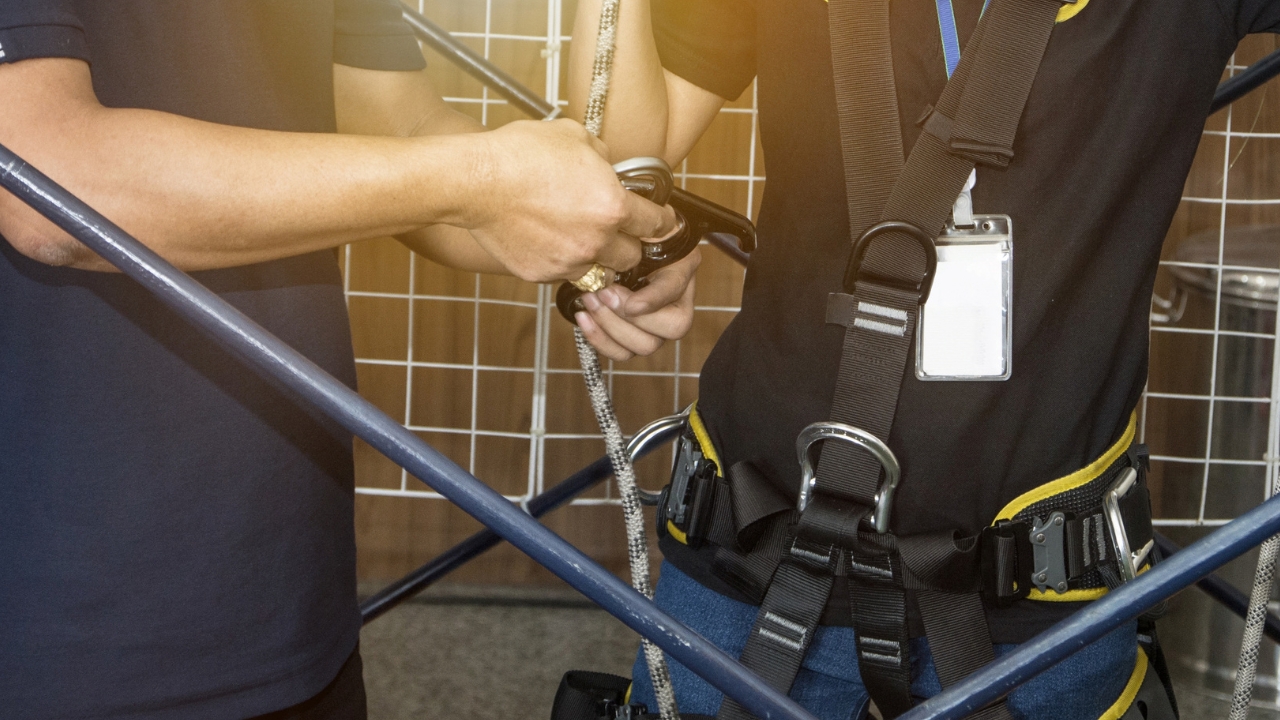
Minor surface fuzzing on webbing edges does not automatically condemn a harness, and it can still be adjusted for safe use. It must be assessed and documented by a competent person, and monitored for progression at each pre-use check. If core fibers are broken, remove the harness from service immediately.
What Is the Safe Adjustment Test Standard for Pregnant Workers Using an Industrial Safety Harness?
There is no unified specific regulatory standard for adjusting harnesses for pregnant women. However, OSHA and EN 361 indicate that pregnant employees should place the waist strap low across the hip bones when wearing the harness, slightly loosen the chest strap to avoid abdominal pressure, and ensure that the shoulder strap is centered and not tightened. At the same time, it is best to invite a qualified safety specialist to conduct a personalized fitting test for them, and try to place the pregnant person in a lower position to reduce the risk of falling.
Final Thoughts
Proper fit and adjusting harnesses correctly is of vital importance for protecting your workforce and ensuring the compliance of your business operations. Should you be in search of compliant harnesses or technical guidance for adjusting them, Bxseatbelts can offer you customized solutions.