

A seat belt is one of the essential safety protection devices in various types of vehicles. The various parts of the seat belt work together to provide protection. This article will provide a detailed introduction to the working principle and composition of seat belts, as well as the functions of each component, to help you choose the most suitable seat belt and accessories.
The Working Principle Of Seat Belts
The operating mechanism of seat belts is different between normal driving and emergency situations.
Normal driving: During normal driving of the vehicle, the seat belt only serves to secure the passenger in place. At this time, the spiral return spring inside the retractor stays under tension, allowing the webbing to extend and retract freely according to the occupant’s sitting posture and position changes. Passengers will not feel a strong sense of restraint and can engage in normal activities. Seat belts will maximize the flexibility of passengers during driving.
State of emergency: When the vehicle brakes urgently or a collision occurs, the seat belt will quickly engage. The built-in inertial sensing device of the retractor will quickly lock, instantly fixing the length of the webbing and firmly securing the passenger in the seat.
This protective effect follows the physics of inertia: occupants continue moving forward in a crash, and the locked seat belt controls body displacement to restrain the occupant.
Advanced systems integrate both pretensioners and load limiters. A pretensioner instantly takes up webbing slack upon crash detection, while a load limiter releases controlled webbing travel to cap peak force and avoid rib‑cage injury caused by excessive belt tension.
This linkage mechanism is the key to achieving safety protection for seat belts, and it is also a core testing item for international certification standards such as ECE R16 and SFI.
 What Are The Components Of A Seat Belt? What Is Their Function?
Seat Belt Webbing
Webbing is the most essential component of seat belts. It comes into direct contact with the human body and is the core component that withstands impact and tension. It constrains passengers during normal driving and pulls on the human body in the event of a collision, dispersing the impact force. High-quality webbing should have the characteristics of high strength, high toughness, wear resistance, aging resistance, low-temperature resistance, etc.
Seat Belt Retractor
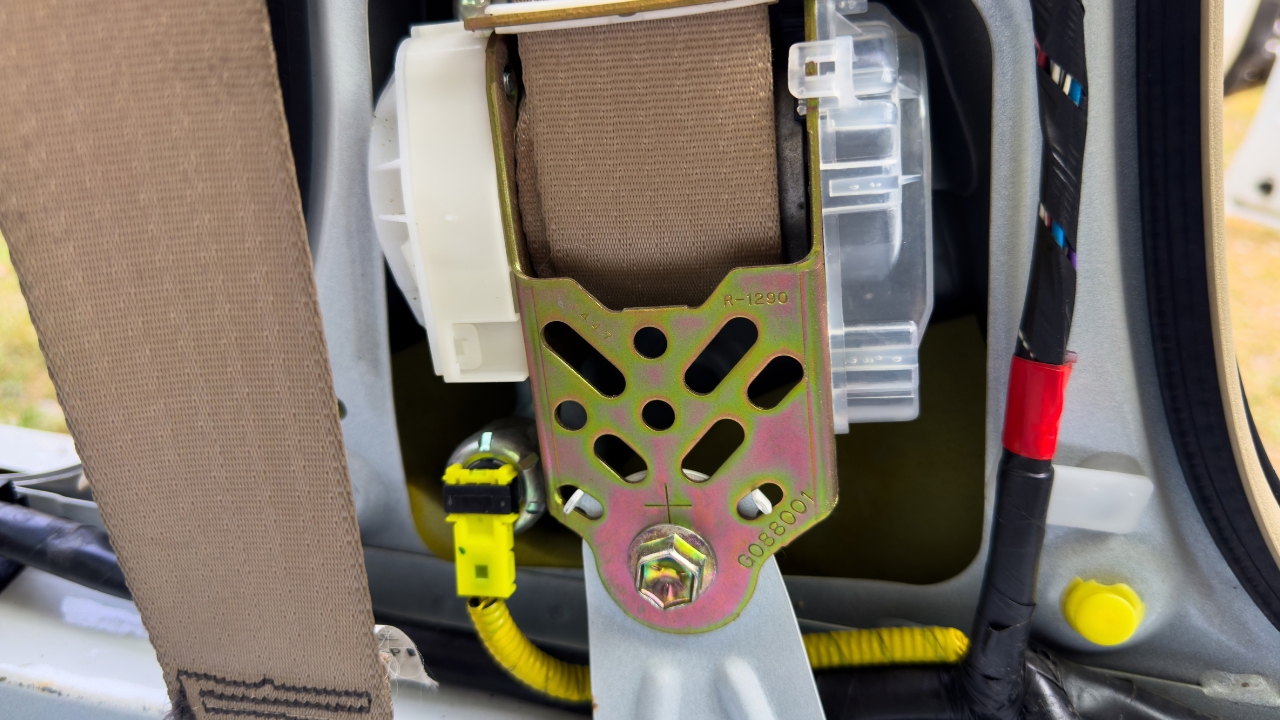
The retractor is responsible for controlling the stretching, retrieval, and emergency locking of the webbing. It is the most critical component in the entire seat belt. The mainstream retractors are divided into two categories: ELR and ALR, which are suitable for different application scenarios.
If you choose a low-quality retractor, it may lead to issues such as insensitive locking, lagging rebound, and long-term use failure. In serious cases, it may cause safety accidents.
BXseatbelt has extensive experience in the research and manufacturing of retractors. Our retractors are reliable in quality and easy to install, suitable for most cars, school buses, buses, etc.
 Seat Belt Buckle
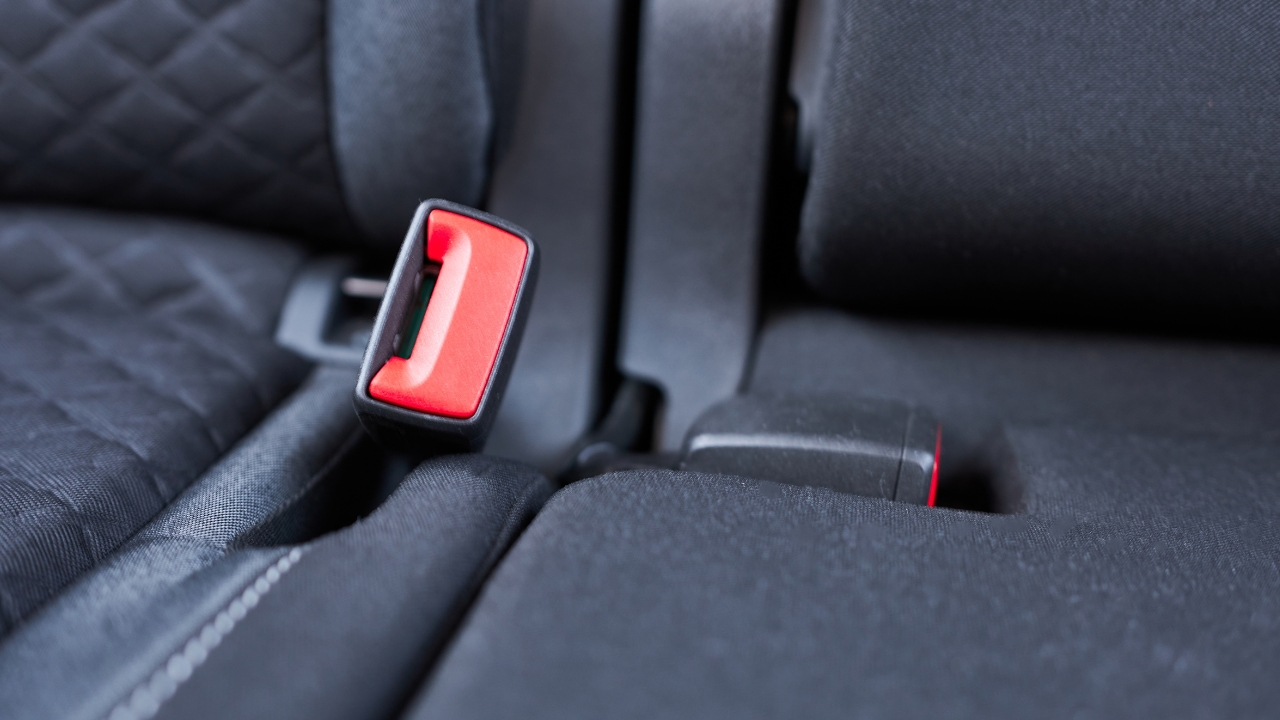
The buckle is the opening and closing fixed structure of the seat belt. It is responsible for locking the seat belt and quickly releasing it when the passenger presses the release button.
A qualified lock buckle requires smooth insertion and extraction, tight locking, convenient unlocking, impact resistance, and resistance to detachment. Poor-quality locks are prone to problems such as looseness, jamming, and detachment due to impact. Poor-quality buckles can affect the protective effect of seat belts.
We supply multiple buckle and tongue configurations, including push‑button release buckles, lift‑release buckles, and specialty‑application hardware. Key load‑bearing parts adopt grade‑45 steel paired with high‑quality ABS housing for consistent reliability
 How To Choose A Seat Belt?
Application Scenarios
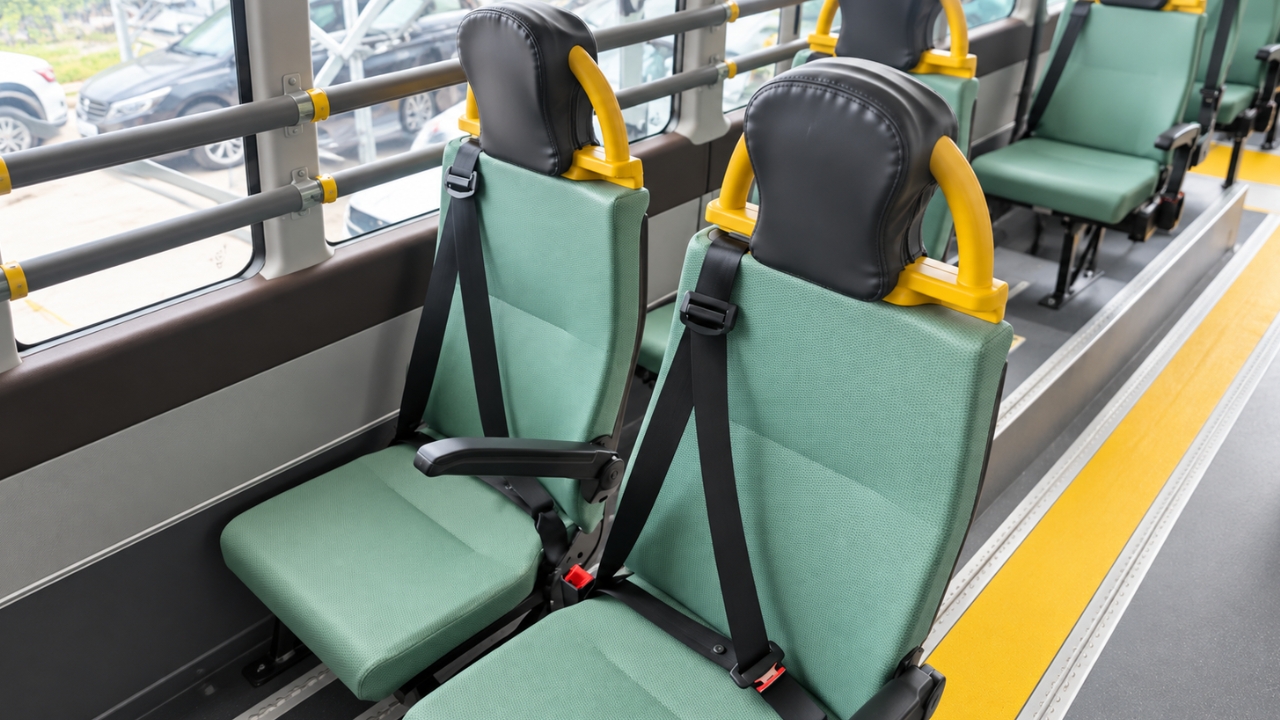
There are many types of seat belts, and before choosing a specific style, you need to clarify your application scenario. The requirements vary in different scenarios. For example, regular cars can choose three-point seat belts, but racing cars usually need to choose five-point or six-point seat belts.
If you neglect the selection of application scenarios, it may lead to a series of unnecessary losses.
| Type | Principle | Application |
| 2-Point Seat Belt | Single belt or single shoulder strap structure | Airplane seats, forklifts, golf carts, medical beds |
| 3-Point Seat Belt | Integrated waist and shoulder webbing | Private cars, buses, trucks, and conventional construction vehicles |
| 4-Point Harness | Shoulder straps+double waist belts | UTVs, ATVs, off-road karts, and light modified vehicles |
| 5-Point Harness | Shoulders+double waist+single center crotch strap | Karting, children’s racing UTV, vehicle-use child safety seats |
| 6-Point Harness | Shoulders+waist+independent crotch straps | Professional track racing, rally racing |
 Seat Belt Configuration
You should choose a seat belt that is suitable for you based on the installation structure, space size, and frequency of use of the device.
For example, high-frequency industrial equipment has limited options for smooth, durable, and low-failure-rate products. If it is a high-risk work scenario or competitive equipment, high-strength multi-point safety belts should be selected first.
Webbing
The webbing is the most essential component of a seat belt, and when choosing a seat belt, you need to focus on the material and craftsmanship of the seat belt.
In outdoor, industrial, high-temperature, and humid environments, high-quality webbing with anti-aging, wear-resistant, waterproof, and anti-corrosion properties must be selected.
If it is a high-end device, the performance requirements for seat belts are relatively high, and customized webbing with flame-retardant, anti-static, and high tensile strength can be chosen.
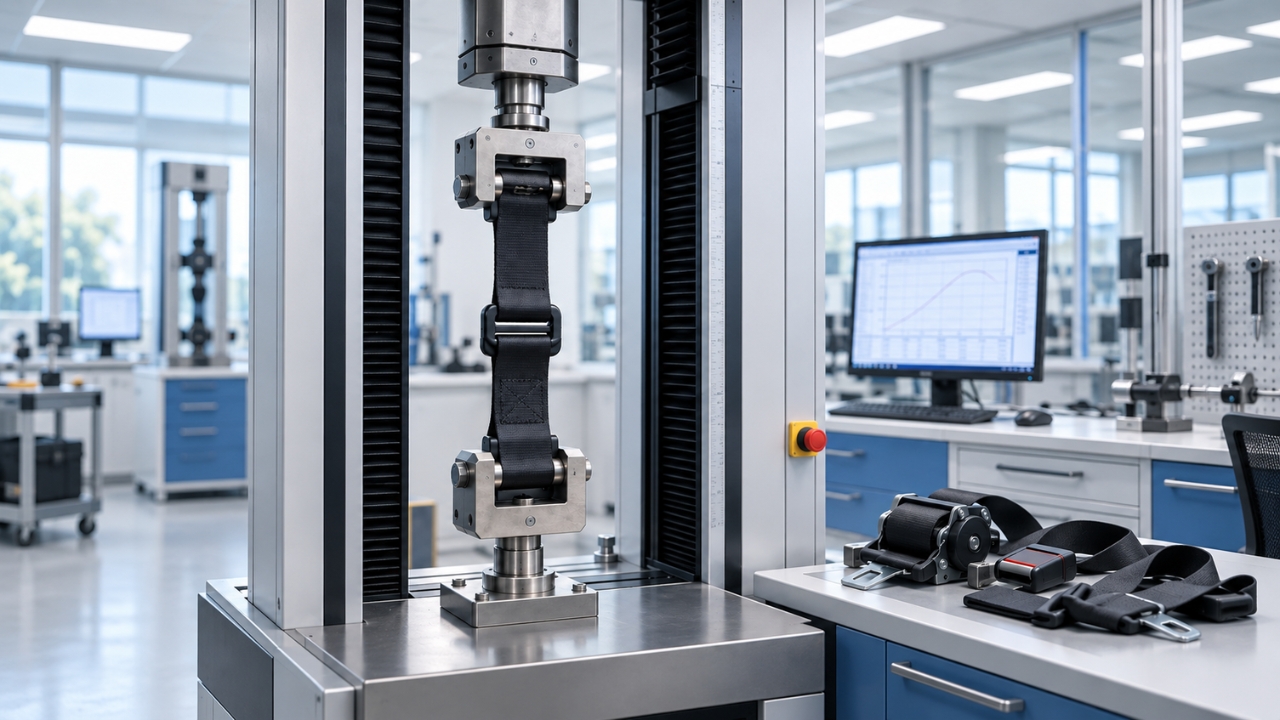
Standards And Testing
Different industries and regions have different certification requirements. You need to confirm the certification requirements of your product before choosing a seat belt.
For example, road‑going vehicles exported to Europe must meet ECE R16 requirements, while North American road applications follow FMVSS 209. SFI standards apply specifically to motorsport and racing‑harness products.
If unverified or incorrectly certified products are selected, it may result in the inability to clear customs and be listed for sale. To avoid such losses, we suggest that you conduct detailed research before purchasing products. If you are unsure about which standards your product should meet, you can consult us. We can recommend products based on your needs.
 Supplier
A reliable supplier can help you save a lot of unnecessary trouble. The strength of the supplier directly determines the quality of the product. You need to choose suppliers with mature production qualifications and mature systems.
When evaluating suppliers, you need to focus on their research and development, production, and testing capabilities to minimize quality instability as much as possible.
BXseatbelt has been engaged in the research and manufacturing of seat belts for many years, with a complete production system and an after-sales service system. We also support customized services and can develop and design products for you according to your needs. Our product quality is guaranteed and can help you enhance your brand image.
FAQ
What Is The Difference Between ELR And ALR Retractors?
The difference between ELR and ALR lies in their locking triggering logic.
- The full name of ELR is Emergency Locking Retractor. It can be freely pulled out and retracted under normal conditions, without restricting the wearer’s movement.
ELR retractors may adopt vehicle‑sensitive triggering via pendulum or steel‑ball inertia mass, webbing‑sensitive triggering through centrifugal fly‑weight mechanism, or dual‑sensor combining both modes.
It will only lock the webbing and prevent it from continuing to pull out when it detects sudden deceleration of the vehicle and rapid pulling of the webbing. It is the most commonly used type of passenger car, balancing comfort and collision protection.
- The full name of ALR is Automatic Locking Retractor. After it is pulled to a certain length, once the webbing starts to roll back, it will lock automatically.
ALR is commonly used for securing child safety seats, as it can firmly fix the child seat. After it is locked, passengers cannot move freely, and it is not suitable for use as an adult seat belt.
What Is The Reason Why The Seatbelt Buckle Stops Working?
There are many reasons for lock failure. It may be due to dust or foreign objects getting stuck inside the lock, or it may be due to long-term insertion and removal causing wear on the internal springs and claws. In addition, it may also be due to collisions, salt spray, or high-temperature environments that cause deformation and corrosion of parts.
If you encounter a situation where the lock buckle fails, we do not recommend that you disassemble and repair it yourself. The internal structure of the lock buckle is relatively precise, and self-maintenance can easily cause it to lose its safety performance. You should replace the components in a timely manner.
Can Seat Belt Buckles And Retractors Be Replaced Separately?
It depends on application scenarios. The entire system of seat belts consists of modular components, with locking buckles, inserts, retractors, and webbing being independent of each other. When the accessory model, installation hole position, and load specification match, the components can be replaced separately without the need for a complete replacement.
However, for production‑grade passenger vehicles fitted with pyrotechnic pretensioners linked to the vehicle ECU, the whole certified seat‑belt assembly should be replaced following OEM specifications. Individual component swaps may break original system certification and cause mismatches with airbag control logic.
Can The Same Seat Belt System Be Applied To Different Types Of Vehicles?
It cannot be directly used universally. If you want to use the same set of seat belts on different types of vehicles, you need to evaluate the working conditions, regulations, and installation structure in advance. Only when the load, installation point, and certification standards are met can the same seat belt be adapted to multiple vehicles or equipment with similar structures.
If you are unsure if your product is compatible with the corresponding seat belt, you can contact us. BXseatbelt has a professional team of engineers who can evaluate the compatibility of seat belts for your equipment and provide installation advice.
Does BXseatbelt Support Customization Of Its Products?
Yes. We have rich experience in product customization and can customize products for you according to your needs. Our customized services include the following aspects.
- Webbing customization: You can customize the color, width, thickness, and printed logo of the webbing.
- Accessories customization: We can customize the color of the lock shell, lock logo, and plug shape for you, and modify the installation hole position according to your drawings.
- Packaging customization: We can customize exclusive packaging for you.
BXseatbelt offers a wide range of product styles, and almost all products can be customized. If you want to purchase or customize products, please feel free to contact us.
Final Thought
The choice of seat belt directly affects product quality and brand reputation. Understanding the working principle of seat belts can help you better choose the one that suits you. If you want to purchase high-quality seat belts or seat belt accessories, please feel free to contact us. We can recommend products for you based on your application scenarios and needs.