


A stuck seat belt brings plenty of trouble in daily vehicle use. When this happens, do not pull it forcefully. The issue may be caused by twisted webbing, retractor failure or locking mechanism malfunction. Before attempting to repair a stuck seat belt, inspect for visible faults. If jamming persists, professional servicing is required.
Common Causes of a Stuck Seat Belt
- When the seat belt webbing is twisted, folded or trapped at the guide position, it may fail to pull out or retract smoothly due to physical blockage.
- The seat belt retractor will activate its locking function under vehicle deceleration or rapid webbing extraction. This is a normal safety design and not necessarily a fault. There is a distinction between normal locking and persistent jamming. Normal locking is usually triggered by vehicle deceleration, fast webbing pull or the sensing mechanism inside the retractor. If the webbing still cannot be pulled out under normal operating conditions, or abnormal locking recurs frequently, further inspection is needed. Persistent jamming indicates mechanical or electronic failure. Even if the lock is released, the belt may jam again shortly. Do not force it open, to avoid component damage.
- The webbing may be pinched by the seat, interior trim or other parts, restricting its movement. Check for external obstructions and verify whether webbing routing is affected after seat adjustment.
- Worn, frayed, deformed or contaminated webbing can hinder normal operation. If the belt can be pulled out smoothly, wipe the webbing repeatedly with a damp cloth (neutral detergent preferred) to clean dirt. Do not retract it immediately after cleaning. Dry it with a dry cloth or air-dry naturally, to prevent rusting of metal parts caused by moisture. If wear and fraying are severe and affect webbing movement, stop using the belt and replace it.
- After a traffic collision, the seat belt retractor, pretensioner or other components may be damaged. Even with no obvious external damage, the restraint system may not function properly. Follow the vehicle manufacturer’s service manual; do not disassemble or reset it by yourself.
- With long vehicle service life, internal spring fatigue or mechanical wear of the seat belt may reduce retraction force. The retractor spring may be repaired or replaced by qualified technicians. Inspect seat belt condition regularly.
- If the seat belt can be pulled out normally but fails to retract smoothly, the problem may relate to the return spring, spool or other internal mechanisms. This symptom alone cannot identify the faulty component. Since the retractor controls webbing retraction and locking protection, self-disassembly or replacement of internal parts is not recommended. Qualified technicians shall inspect the assembly per the vehicle manufacturer’s service requirements and decide whether repair or replacement of the relevant assembly is needed.
 My Recommendations
Check whether the webbing is twisted, pinched by the seat or visibly contaminated. If the retractor remains locked, fails to retract normally, or the fault occurs after a collision, stop using the seat belt for that seating position and handle it per the vehicle manufacturer’s service requirements.
Do not yank violently (forceful pulling on a jammed seat belt can damage internal components). Avoid prying off covers arbitrarily (B-pillar trim clips are fragile and prone to breaking under brute force). Also inspect the buckle; accumulated dust in the seat belt buckle can also cause sticking. Clean gaps of the tongue periodically.
How to Identify Faults of Different Components
Seat Belt Retractor
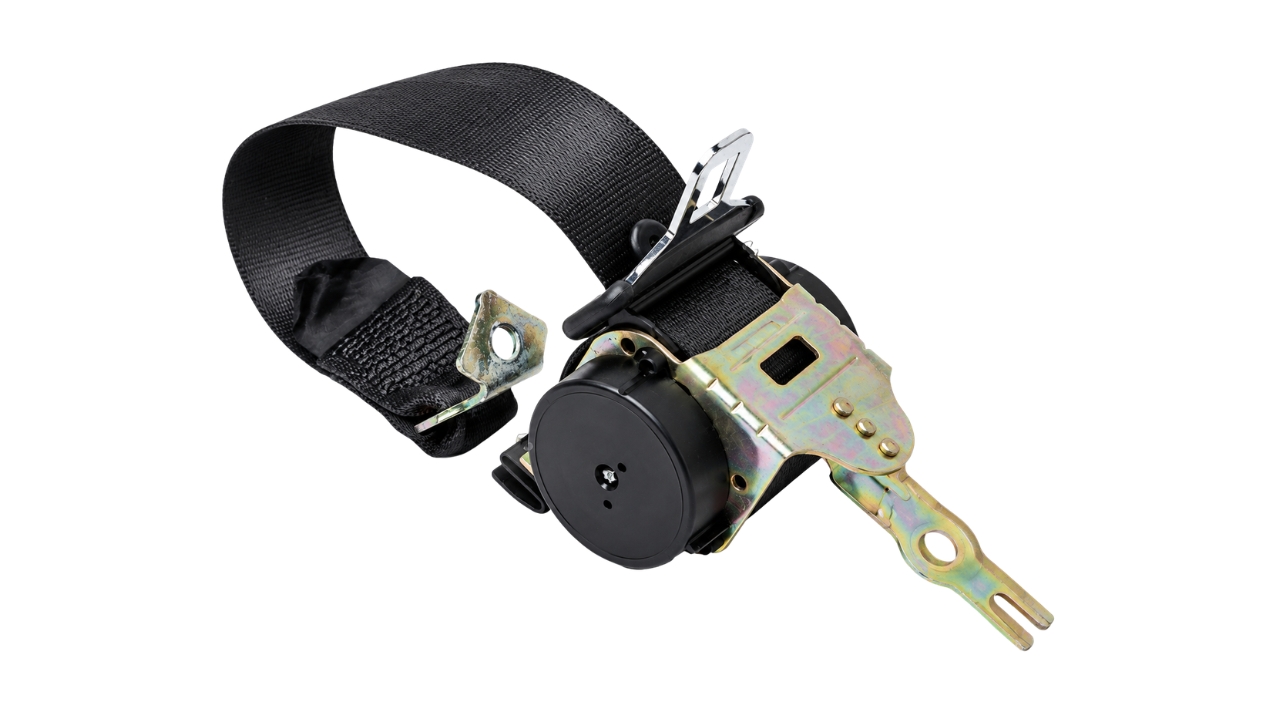
The seat belt retractor acts as the automatic winding and unwinding device for the seat belt. Its functions:
- Webbing retraction: The return spring supplies retraction force to wind the webbing back into the retractor after release.
- Webbing extraction: Allows occupants to pull out webbing of proper length as required.
- Locking protection: The locking mechanism stops further webbing payout under specified conditions to restrain occupants during emergencies.
(The return spring mainly retracts the webbing; locking is normally performed by an independent locking mechanism inside the retractor.)
Why the Retractor Causes Seat Belt Jamming
- Malfunction of return spring or retraction mechanism The seat belt can be pulled out normally but cannot retract smoothly. This may relate to the return spring, spool or webbing friction. (The spring may not be broken.)
- Locking mechanism remains engaged The retractor may lock due to fast pulling, vehicle deceleration or its built-in sensing mechanism. If the webbing still cannot be pulled out under normal use, inspect the locking mechanism and internal components for failure.
- Damage or abnormal wear of internal mechanisms Damage to the spool or other internal parts may impair webbing extraction, retraction or locking functions. (Handle jamming after collisions with caution. It is best to entrust repair to professional technicians.)
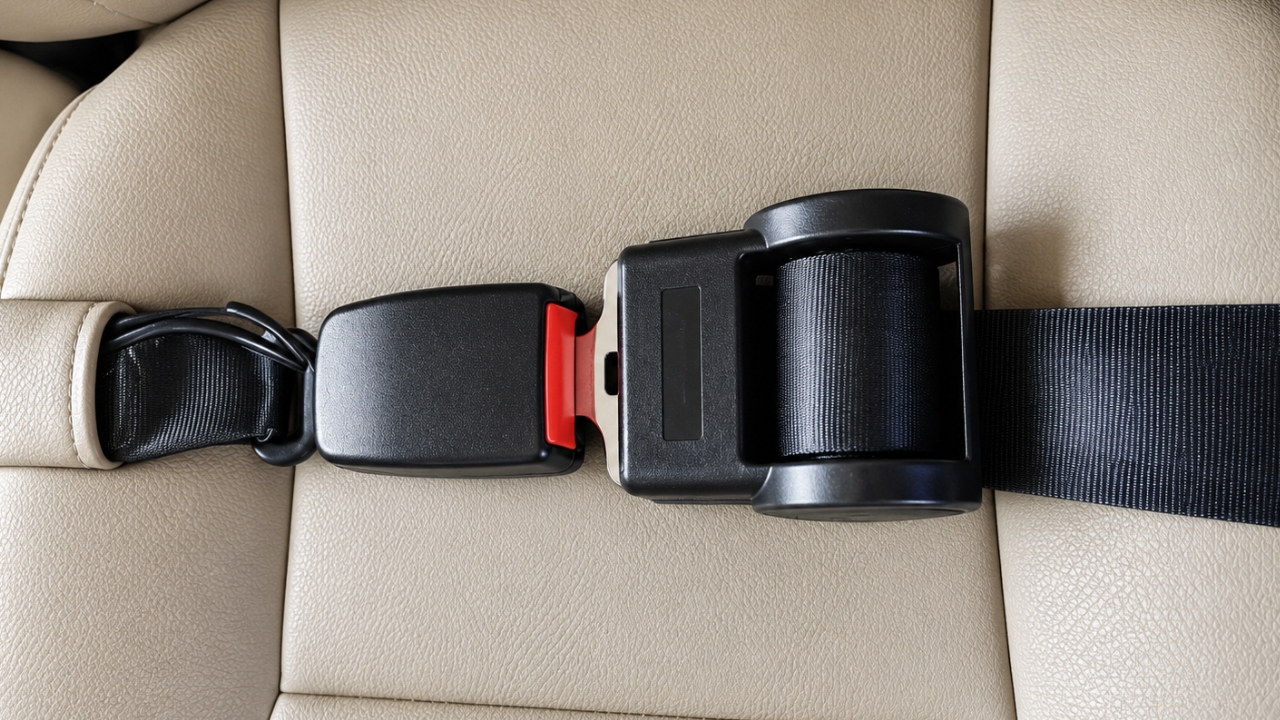 Seat Belt Buckle and Tongue
(These two components are often confused, yet they work as a matching pair.)
- Buckle: Usually fixed beside the seat. It contains an internal locking mechanism to engage the tongue and release the lock via the release button.
- Tongue (latch plate): Attached to the seat belt webbing. When inserted into the buckle, the two parts connect properly and form a secure lock.
Symptoms of Faulty Buckle and Tongue
表格
| Fault Symptoms | Possible Causes |
| Tongue cannot be inserted smoothly into the buckle | Foreign debris, deformed tongue or internal buckle malfunction |
| Fails to lock reliably after insertion | Faulty buckle locking mechanism, damaged parts |
| Cannot be unbuckled after pressing the release button | Stuck release mechanism, internal damage or abnormal stress |
| Buckle works normally, yet webbing cannot be pulled out | More likely related to retractor locking or webbing obstruction |
Recommended Inspections
- Check for obvious foreign objects at the buckle opening.
- Inspect the tongue for bending, cracks or visible damage.
- Check the buckle housing and release button for abnormalities.
- If the buckle fails to lock, releases accidentally or cannot be unlocked, discontinue use and follow the vehicle manufacturer’s service requirements.
Operations Not Recommended for Readers
- Spray lubricants randomly inside the buckle.
- Disassemble the buckle and adjust internal parts by yourself.
- Bend the tongue for reinsertion.
- Pry the internal locking mechanism with tools.
You may perform basic checks including webbing inspection, external obstruction check and normal locking verification. Examine webbing for twists, folds and wear, or check if it jams near the guide ring.
Basic visual inspections help detect visible issues. However, faults within the retractor, locking mechanism or buckle require professional ha ndling.
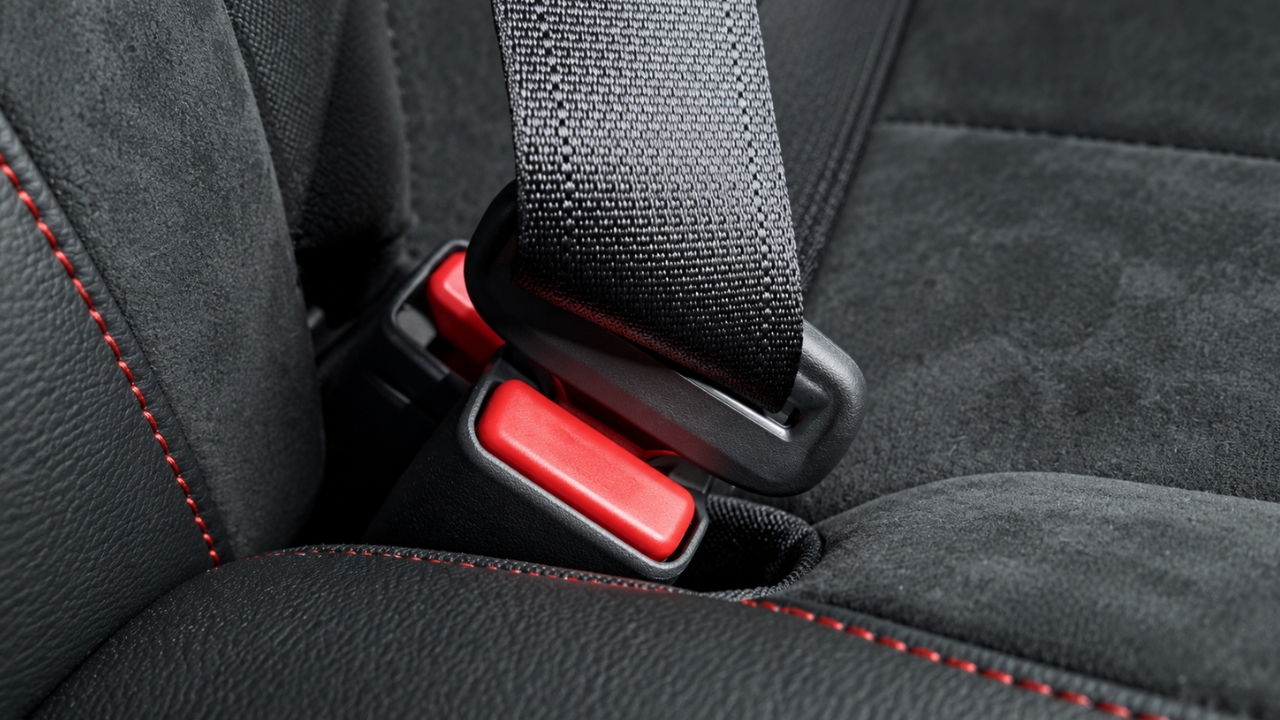 Pretensioner
A seat belt pretensioner is a passive automotive safety component. Primary function: It triggers under specific conditions such as collisions, rapidly tightening the seat belt to eliminate slack between occupant and webbing.
It is normally integrated or works in conjunction with seat belt retractors or buckles; the specific structure depends on vehicle design. A pretensioner differs from the regular retraction function of a retractor. The return spring handles daily webbing retraction, while the pretensioner tightens the seat belt only under specific crash conditions.
How a Pretensioner May Relate to Seat Belt Jamming
Two scenarios:
- Pretensioner deployed after collision After impact, if the pretensioner has fired, the seat belt system may become locked, suffer abnormal webbing movement or other functional changes. The exact symptoms depend on pretensioner type and the overall restraint system design.
- Collision damage to associated parts Even if the pretensioner shows no visible external damage, the crash may impair the retractor, buckle or other restraint system components. Therefore, do not assume the seat belt remains safe for continued use merely because the webbing can still be pulled out and inserted into the buckle after an accident.
Note: A stuck seat belt does not always mean the pretensioner has deployed. If no collision has occurred, consider webbing obstruction, retractor locking or other mechanical faults.
 FAQ (Recommendations for Buyers)
Why Does My Seat Belt Lock When I Lean Forward?
The seat belt may lock when you lean forward, as the retractor is designed to respond to specific movements or changes in webbing tension. However, if the belt locks frequently during normal movement or cannot be pulled out smoothly, inspect the retractor and webbing path. Do not pull the seat belt forcibly. If normal movement is continuously restricted, service the system per the vehicle manufacturer’s maintenance requirements.
Do I Need to Replace the Complete Seat Belt Assembly?
Not all seat belt faults require full assembly replacement. Replacement depends on vehicle structure, faulty components and manufacturer-approved service procedures. Before purchasing replacement parts, confirm whether you need a full assembly or individual replaceable components approved by the OEM. Even if a replacement part looks similar to the original, compatibility cannot be assumed. Always verify the part number matches your vehicle model.
What Should I Verify When Purchasing Replacement Seat Belts?
- Vehicle Compatibility: Confirm applicable models, production years, mounting positions and connection methods.
- Product Specifications:Verify webbing dimensions, buckle structure, retractor configuration and whether pretensioner or other components are integrated.
- Quality & Performance: Understand applicable test requirements and inspection status for webbing, buckle, retractor and the full assembly.
- Supporting Documents: Confirm whether the supplier can provide product datasheets, test reports and relevant documentation required for your target market.
Checking these documents before order placement helps confirm product specifications, test results and compliance with procurement requirements. For market access rules of your target region, further verification against applicable regulations is necessary.
 What Compliance Documents Should I Request from the Seat Belt Supplier?
Required documentation varies by target sales market, vehicle application, seat belt product category and supply form.
During procurement, first request product datasheets and applicable test reports from your supplier. Then confirm whether certification, approval documents or other compliance materials are required per regulations of your target market. Verify applicable requirements separately for OEM original parts and aftermarket replacement parts.
After receiving documents, do not merely check certificate availability. Cross-check the product model, scope of application and issuance information to confirm they correspond to the products you intend to purchase. Where necessary, validate document authenticity with relevant certification bodies or authorities.
Are Qeplacement Seat Belts Universal Across Different Vehicle Models?
No. Seat belts for different vehicle models differ in mounting points, webbing length, buckle structure and retractor configuration. Even if two seat belts look alike, they are not necessarily interchangeable.
Before replacement, confirm compatibility using the vehicle manufacturer’s fitment information or part numbers.
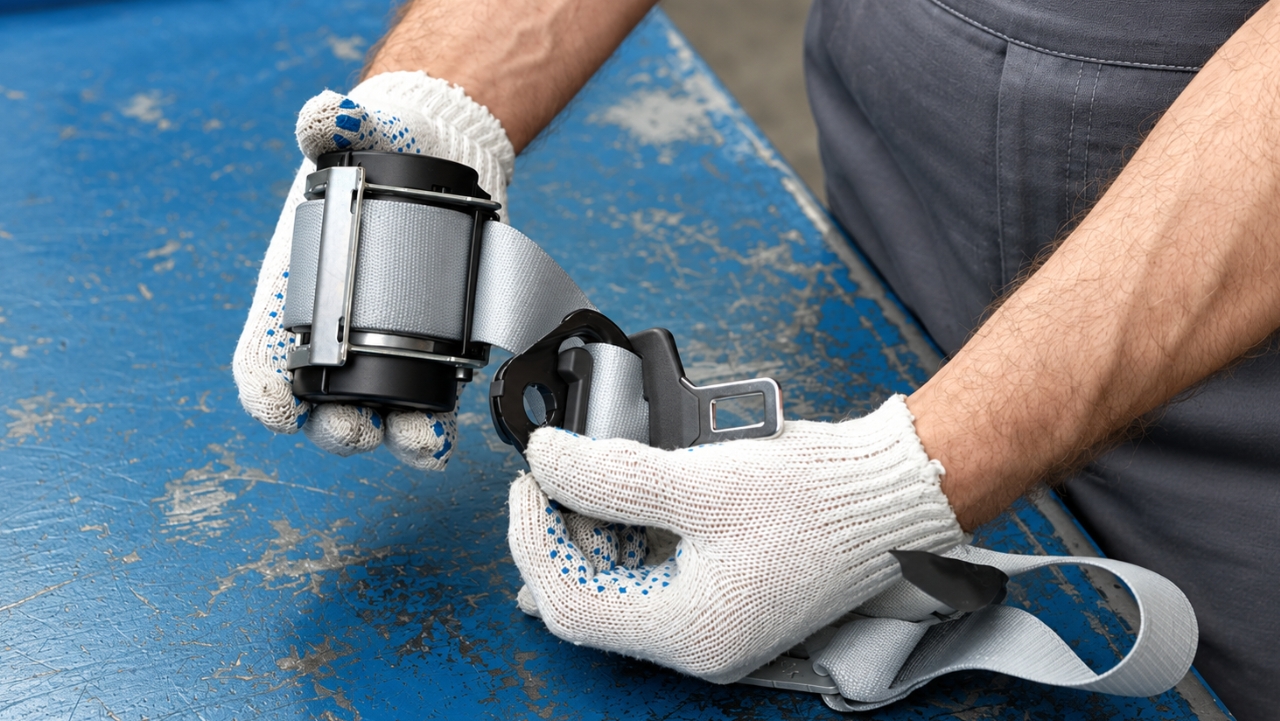
How to Verify the Quality of Replacement Seat Belts Before Bulk Ordering?
Before mass procurement, it is recommended to evaluate samples and define required technical specifications, test standards and acceptance criteria clearly.
Typical inspection items:
- Webbing: Check appearance, dimensions, wear and relevant strength test results.
- Buckle: Verify proper latching, locking and release functions.
- Retractor: Test webbing extraction, retraction and locking performance under specified conditions.
- Full Assembly: Verify matching of all components and applicable overall performance test results.
Besides sample testing, request batch inspection records from your supplier. For critical performance items, confirm test methods and acceptance criteria comply with applicable requirements for the product. Do not approve an entire batch merely based on visual inspection or a small number of samples.
Final Thoughts
The seat belt is the primary safeguard for driving safety. When stuck, timely fault detection and proper handling help maximize safety. Visual defects can be checked by yourself, while mechanical faults should be handled by professionals. Verify replacement parts carefully; safety always comes first.
If you need further information or have any questions, please feel free to contact us. Wish you safe travels for every mile.