


Seat belt alerts are typically used to determine whether occupants have fastened their seat belts properly, but sometimes the alert continues to sound even when the seat belts are already fastened. This article will explain the basic operating principles of the seat belt alert system, as well as how to reset it and troubleshoot any issues.
How Does the Seat Belt Alarm System Work?
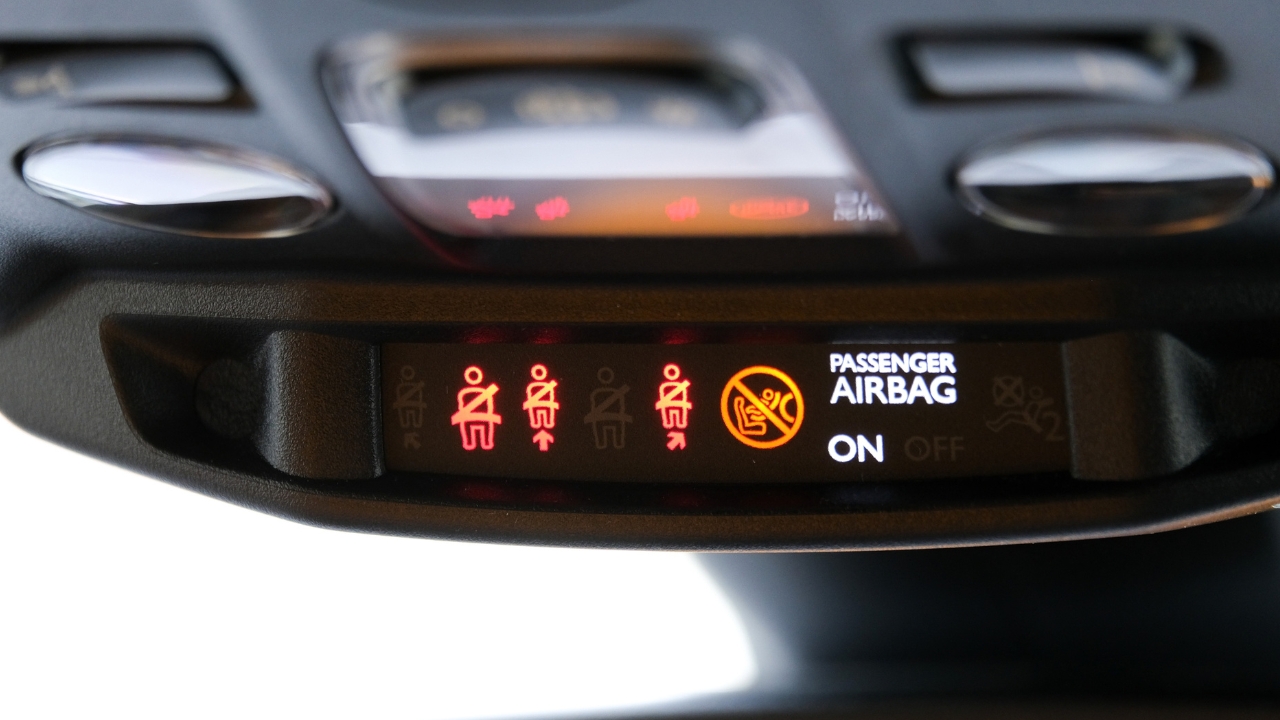
Modern vehicles typically use seat occupancy sensors, seat belt buckle sensors or switches, warning lights, audible alarms, and associated wiring and control modules to determine the status of the seat belts, maintaining a signal link with the vehicle’s restraint system and SRS system.
Seat occupancy sensors are usually installed beneath the seat surface to detect whether someone is seated in the seat. Seat occupancy sensors detect whether a seat is occupied by monitoring pressure, weight, or other signals, depending on the vehicle’s occupant detection system.
The passenger’s weight exerts pressure on the sensor, generating a corresponding signal that is then transmitted to the vehicle’s control system. Some vehicles use force-sensitive resistors, which are typically integrated into the seat cushion.
After the vehicle is started, the system first checks whether the seat is occupied and whether the seat belt is fastened. If the seat is occupied but the seat belt is not properly fastened, the vehicle may trigger a warning light and an audible alarm once the vehicle reaches a specified speed, distance, or other manufacturer-defined condition.
 Why Does the Seat Belt Alarm Keep Beeping?
Faulty Seat Belt Buckle Sensor or Switch
A malfunctioning seat belt buckle sensor or switch is a key component to check when the warning light stays on. If the sensor fails to correctly detect that the seat belt is fastened, the vehicle’s control system may still receive a “seat belt not fastened” signal, causing the warning light or buzzer to remain active.
The seat belt buckle may show signs of wear after prolonged use, and dust and debris accumulated inside may also interfere with the sensor’s normal operation. Sometimes, water, food, or food particles inside the latch can cause the sensor or microswitch to stick. You can start by cleaning the inside of the latch with an electronic contact cleaner (contact cleaner), making sure the cleaner is safe for use on the relevant electrical components.
After that, check the seat belt wiring harness connector at the bottom, unplug and replug it, and inspect the terminals for oxidation, looseness, or pin disengagement.
Faulty Seat Occupancy Sensor
If the seat occupancy sensor malfunctions, the vehicle may be unable to accurately determine whether someone is sitting in the seat. For example, if the system fails to recognize that a passenger is already seated, the corresponding warning may not be triggered properly even if the passenger is not wearing a seat belt.
Another scenario is the exact opposite. Objects on the seat may apply pressure to the occupancy sensor, causing the system to mistakenly detect that the seat is occupied. In this case, if the seat belt is not fastened, a continuous warning may sound.
If the warning is related to a passenger seat, do not overlook the seat occupancy sensor during inspection. The problem could lie either with the sensor itself or with the signal connection between the sensor and the vehicle’s control system.
Damaged Wiring or Loose Connectors
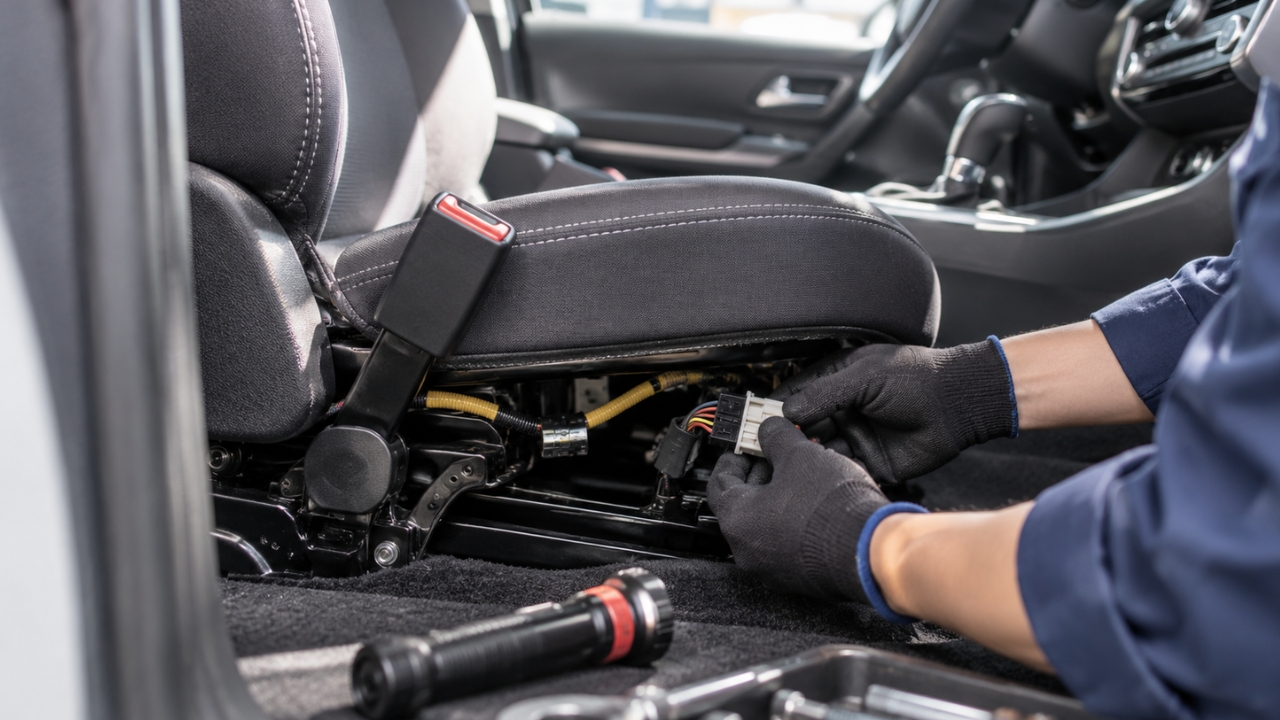
The wiring harnesses and connectors under the seats are also inspection points that are often overlooked. Repeated movement of the seats, combined with vibrations while the vehicle is in motion, can cause connectors to become loose or wires to be damaged. Splashed liquids or water ingress can lead to corrosion of the connectors and wiring.
These types of issues do not always manifest as a continuous warning; instead, the warning may appear intermittently. Therefore, if you notice intermittent abnormalities with the seat belt warning, you should focus on checking the wiring harnesses and connectors beneath the seats for looseness or broken wires.
Issues After Seat or Seat Belt Replacement
If the seat belt warning malfunctions suddenly after replacing a seat or seat belt, you should first inspect the sensors and wiring involved in the replacement process. The seat occupancy sensor, the wiring harness under the seat, and the connectors can all affect the seat belt warning system. Start by confirming that the seat occupancy sensor is installed correctly and that all related connections are secure.
- If you replaced the seat belt, check whether the seat belt buckle sensor or switch is properly connected. When seat belt-related components malfunction, the vehicle may be unable to correctly detect whether the seat belt is fastened, causing the warning light or buzzer to remain active.
- You should also pay attention to the SRS system. Other SRS components, such as seat belt pretensioners, may share some signals or control logic. If an SRS warning appears simultaneously after the replacement, use a diagnostic tool to check for relevant trouble codes.
- Once the specific fault has been identified, repair or replace the affected component according to the vehicle manufacturer’s service procedures. After completing the repair, recheck the seat belt status, warning lights, and audible alerts to confirm that the system has returned to normal operation.
 How to Turn Off a Seat Belt Alarm
Critical Safety Warning
Before inspecting, disconnecting, or cleaning any yellow wiring harness connectors under the seats, always disconnect the vehicle’s negative battery cable and wait at least 5 to 10 minutes to completely discharge the SRS system backup power. Failure to do so may trigger an unexpected airbag deployment or seat belt pretensioner activation.
Try a Seat Belt Alarm Reset
If the seat belt is already fastened correctly but the beeping continues, you can first try unfastening and refastening the seat belt to ensure the system correctly recognizes the seat belt buckle. For some vehicle models, you can also reset the seat belt warning using the vehicle’s built-in procedure.
Some models support a specific manual reset procedure, such as switching the vehicle’s ignition to the “ON” position and repeatedly unbuckling and buckling the seat belt within a specified time frame. For specific steps and whether this method is effective, refer to the vehicle manufacturer’s instructions. On some models, resetting the system may only stop the audible alert; the seat belt warning light may remain on, and the alert may reappear after a few driving cycles.
If the warning light remains on after the reset, you should read the trouble codes and inspect the seat belt buckle sensor and the SRS system, rather than repeatedly performing the reset procedure.
Use a Diagnostic Scanner
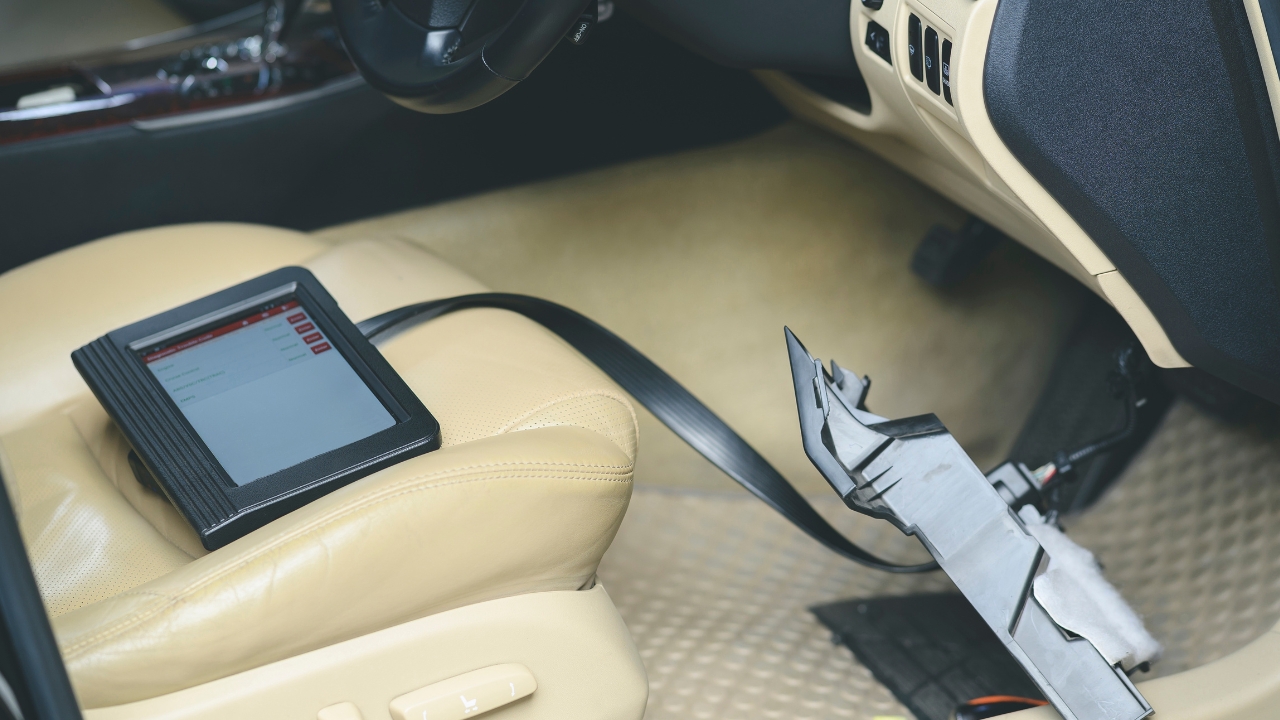
You can use a diagnostic scan tool to read the trouble codes stored in the vehicle’s control module. By analyzing these trouble codes, you can further determine whether there are any abnormalities in the seat belt buckle sensor circuit or the related SRS system—this is more reliable than simply relying on the beeping sound to pinpoint the fault location.
Software scanning tools such as FORScan can read and clear diagnostic information and, on supported vehicles, perform certain module configuration or service functions. For persistent warning issues, reading the fault codes first before deciding whether to replace parts can prevent the unnecessary replacement of seat belts or sensors based solely on symptoms.
Once you’ve identified the problem, complete the necessary repairs or connector maintenance, then use a diagnostic tool to clear the stored trouble codes and restart the vehicle. Doing this usually turns off the seat belt alarm.
 FAQ
Does the Seat Belt Pretensioner Affect the Seat Belt Warning System?
Seat belt pretensioners are primarily used to quickly tighten the seat belt in the event of a collision, reducing slack in the webbing and helping to keep occupants securely in place. They are a critical component of the safety restraint system.
Pretensioners and their associated circuits may share signals with the SRS system; therefore, if a pretensioner or related wiring fails, some vehicle models may simultaneously display an SRS warning or generate a related fault code.
Does the ODS Need to Be Recalibrated After Seat Replacement?
This is required on certain vehicle models. After replacing a seat or related occupant-sensing components, the Occupancy Detection System (ODS) may require a zero-point calibration to ensure the system can correctly detect the seat’s occupancy status.
Whether calibration is necessary and how to perform it should be confirmed based on the vehicle manufacturer’s service requirements and the prompts from the diagnostic tool.
What DTCs Can Be Related to Seat Belt System Faults?
When a seat belt warning is triggered, the diagnostic tool may read fault codes related to the seat belt buckle, SRS, or occupant detection system. The definitions of DTCs vary slightly among manufacturers.
DTC definitions vary by manufacturer and vehicle model, so the code number alone should not be used to identify the faulty component. During diagnosis, the code description, wiring, sensor data, and vehicle-specific service information should be considered together.
How Much Weight Sets Off a Seat Belt Alarm?
The settings for seat occupancy detection systems vary by vehicle model, so there is no single weight standard that applies to all vehicles. The system typically determines whether a seat is occupied based on pressure or weight signals detected by the seat occupancy sensors.
If you notice that placing an object on an empty seat triggers the seat belt warning, you should check the occupancy detection logic for that specific model and verify that the sensors are functioning properly.
Final Thought
If the seat belt warning system malfunctions, your goal should be to restore the warning system to normal operation, rather than permanently bypassing the seat belt reminder feature. If you’re looking for solutions related to seat belts, feel free to contact Bxseatbelts—we have extensive experience in this area.