


Polyester and nylon are two commonly used materials in webbing. The performance difference between these two materials is huge. If the wrong material is selected, it may affect the service life and effectiveness of the product. This article will give you a detailed introduction to the differences between these two types of webbing and help you choose the most suitable product for you.
What Is Webbing?
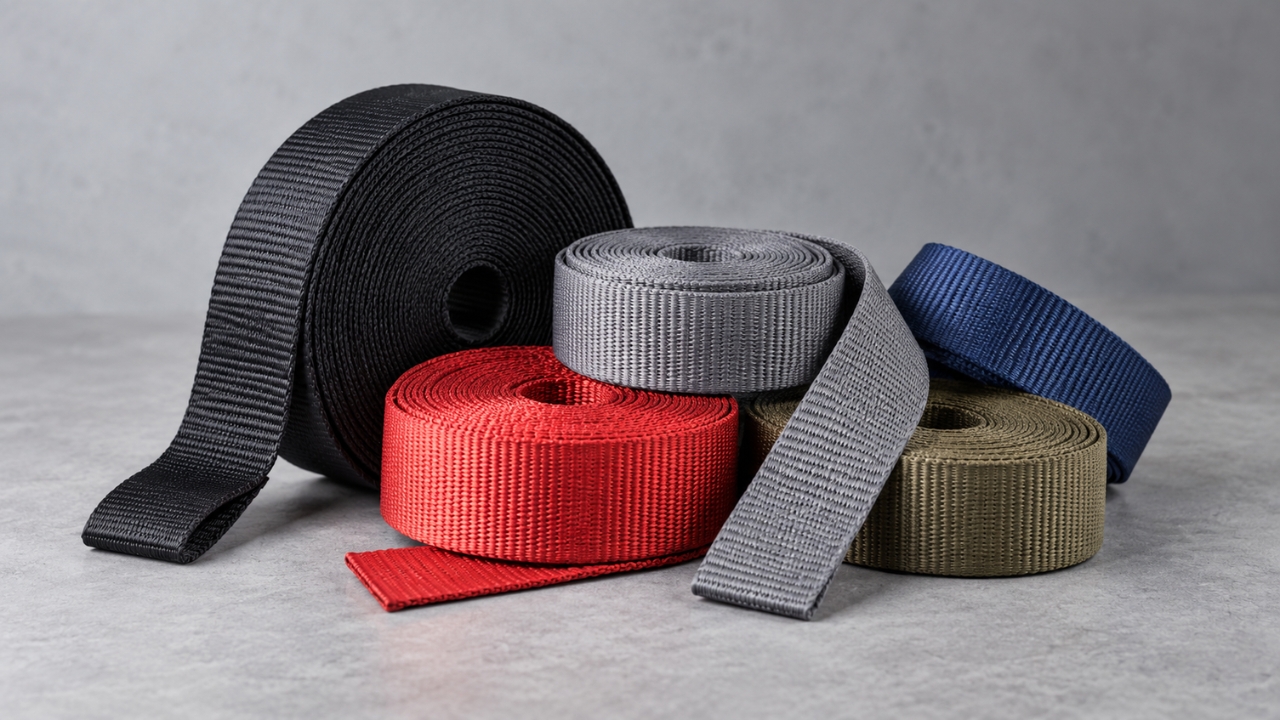
Webbing is a flat strip of fabric made through weaving techniques such as plain weave and diagonal weave. It is usually made from synthetic fiber yarns such as polyester and nylon. Webbing has good strength, flexibility, and processability.
The common application scenarios of Webbing include car seat belts, safety harnesses, bag straps, pet leashes, etc. Its application range is very wide. Webbing for different purposes has different performance requirements, so the raw materials used may vary.
 Polyester Vs Nylon Webbing: Key Differences
Quick Comparison Table
| Aspect | Polyester Webbing | Nylon Webbing |
| Intensity | Stable wet-dry strength and excellent overall tensile strength | The dry strength is higher, but the strength decreases significantly after absorbing water |
| Ductility | Low elongation, not easily stretched or deformed under stress | High ductility, stretchable under stress, and stronger cushioning |
| Elasticity | Weak elasticity, difficult to rebound after deformation | Excellent elasticity and good rebound effect |
| Wear resistance | Medium wear resistance, stable long-term friction loss | Excellent dry wear resistance, reduced wear resistance in humid environments |
| UV resistance performance | Comes with UV resistance, sun, and aging resistance | No UV-resistant, prone to aging, brittleness, and fading when exposed to direct sunlight |
| Stability | Excellent, not easily deformed or creep due to temperature and humidity changes | Generally, it is prone to slight deformation and relaxation due to moisture and high temperature |
| Chemical resistance | Resistant to grease, weak acid, car cleaner, and corrosion | Resistant to alkali but not strong acid, prone to mold growth in high humidity environments |
Intensity
Nylon has higher strength than polyester. The unique molecular structure of nylon gives it higher tensile strength and the ability to absorb more energy when subjected to impact. Therefore, in scenarios of overloading and dynamic force, its performance is better. But nylon’s strength will decrease when it gets wet. And its size will also be affected.
Although the strength of polyester is not as high as that of nylon, its strength is stable in both dry and wet states. If your product is mainly used in humid environments, polyester may be a better choice.
Extension Length
Ductility refers to the degree of stretching of a material after being subjected to force. Nylon has better ductility than polyester. However, ductility does not necessarily indicate the quality of the product. Some scenarios require materials with strong extensibility, while others require materials with weak extensibility.
For example, pet leashes are usually made of nylon webbing because it can provide cushioning when the pet suddenly pulls. And products such as car seat belts and child safety seats usually use webbing made of polyester. Because the greater the extensibility, the greater the displacement distance of the passenger’s body during collision, and the worse the protective effect that the webbing can provide.
Elasticity
Elasticity refers to the ability of a web to restore its original state after removing external forces. Nylon has good elasticity and can rebound and reset well after repeated stretching. Polyester has almost no elasticity and cannot rebound after stretching.
While nylon tends to relax and deform under long‑term tension, polyester resists creep and will not easily stretch out under sustained load. If your product requires repeated stretching and maintains a good fit, then nylon is more suitable for you.
Wear Resistance
Wear resistance is closely related to the service life of webbing. Nylon is one of the most wear-resistant types of synthetic fibers. Its wear resistance is better than polyester. If your product requires long-term contact and friction with hard objects or metal parts, it is recommended that you choose nylon. Heavy‑duty nylon webbing performs exceptionally well under high‑load, high‑friction dry conditions.
Although the wear resistance of polyester is not as good as nylon, it is still sufficient for daily use.
 UV Resistance Performance
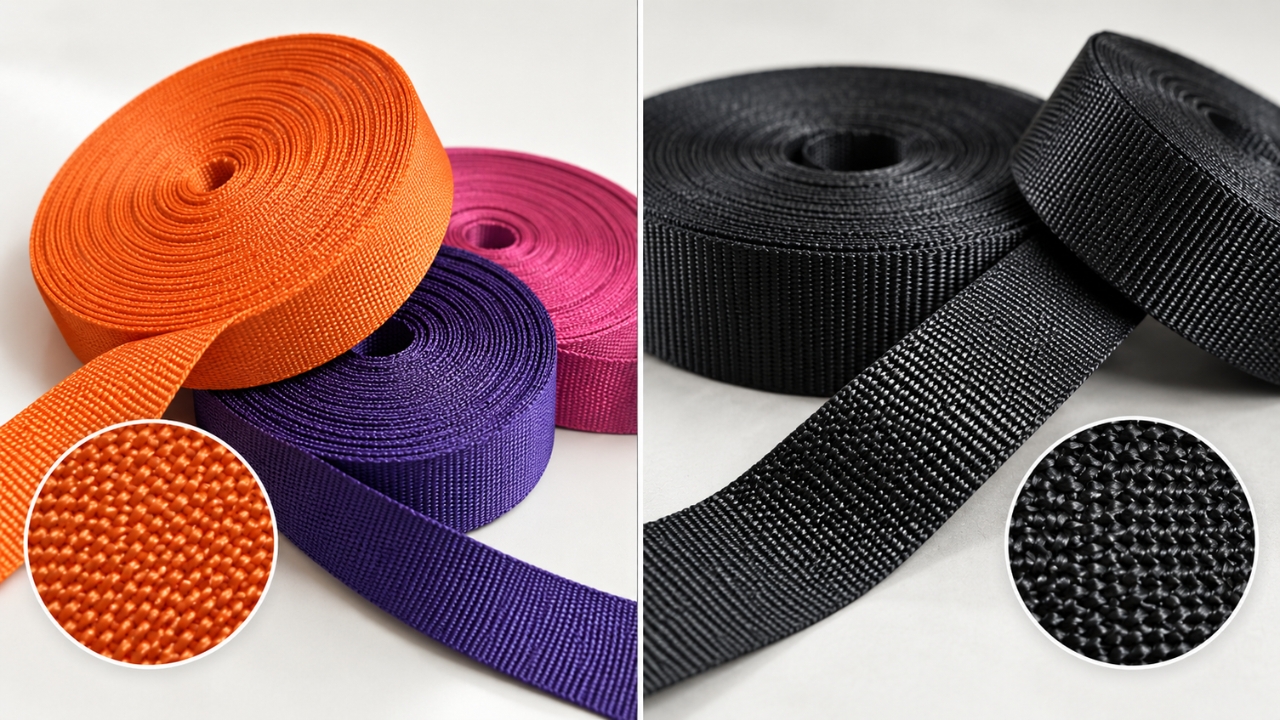
UV resistance is one of the most significant differences between nylon and polyester. The molecular structure of polyester gives it strong resistance to ultraviolet radiation. It can still maintain most of its original strength after long-term outdoor exposure.
Nylon undergoes molecular chain degradation under long-term exposure to ultraviolet radiation. Specifically manifested as a decrease in strength, yellowing of color, and surface brittleness.
If your product requires long-term exposure to sunlight, such as outdoor backpack straps, pet leashes, camping equipment, etc., then you should choose polyester.
Chemical Resistance
Nylon and polyester have different emphases on chemical resistance. Polyester has good resistance to most acidic substances and common chemicals, but performs poorly in strong alkaline environments. Nylon has good resistance to strong alkalinity, but is sensitive to acidic substances and bleaching agents.
If your product may come into contact with chemicals, then you need to choose materials based on the actual medium of contact.
How To Choose Between Polyester And Nylon Webbing?
Application Scenarios
Webbing has a wide range of application scenarios, and different products are suitable for different materials of Webbing. If you are unsure how to choose, the following examples can be used for your reference.
| Material | Application | Reason |
| Nylon Webbing | Luggage/bag straps | No high-strength safety requirements, nylon has a soft touch, better color, and high cost-effectiveness, suitable for daily products |
| Pet leash | Elastic cushioning can alleviate sudden pulling and impact, and the material is flexible and does not harm the pet’s neck | |
| Pet chest harness | Good fit, slightly deformable to fit body shape, no compression sensation when worn, excellent durability | |
| Polyester Webbing | Seat belt | Prohibition of nylon material. Nylon is prone to failure due to moisture and aging, and cannot pass the car safety certification. It is a commonly used polyester standard in the industry |
| Outdoor high-altitude safety harness | Outdoor UV exposure, large temperature difference, strong weather resistance of polyester, eliminating the risk of long-term use and breakage | |
| Fixed safety belt for children’s dining chair | Highly stable, non-sagging, moisture- and mold-resistant, meeting the safety and durability testing requirements for children’s products | |
| Child safety seat restraint strap | Low extension without displacement, long-term use without deformation, ensuring the safety of children’s driving restraints |
Performance Requirements
Before choosing a specific product, you should confirm the performance requirements of the product. You can list the requirements in a specification table, including fracture strength, maximum elongation, wear resistance grade, UV resistance grade, color fastness, flame retardant requirements, etc. Then select based on the characteristics of the material.
If you are unsure which type of webbing to choose, you can consult us. We can provide you with exclusive solutions according to your needs.
Testing And Compliance Requirements
Different industries and products have different requirements for Webbing. Before choosing webbing for your product, you must thoroughly investigate the corresponding regulations before making a decision. This can help you avoid cost losses caused by incorrect selection.
All BXseatbelt products meet the product certification requirements. We can recommend suitable webbing for you based on your product.
 Supplier
s directly affect the quality of products. When choosing webbing, you should evaluate the suppliers and collaborate with reliable ones. When evaluating suppliers, you need to focus on the following aspects:
- Materials: Firstly, you need to evaluate the materials used by the supplier. On the one hand, you need to evaluate the quality of the materials, whether the supplier is using raw materials or recycled materials, and prioritize choosing suppliers who use raw materials.
On the other hand, you need to confirm the batch of raw materials for the product to ensure that the batch is stable and will not affect the production of the product.
- Process: The process used by the supplier directly affects the quality of the product. You need to confirm whether the process used by the supplier can stably control weight, width, weave density, and color difference.
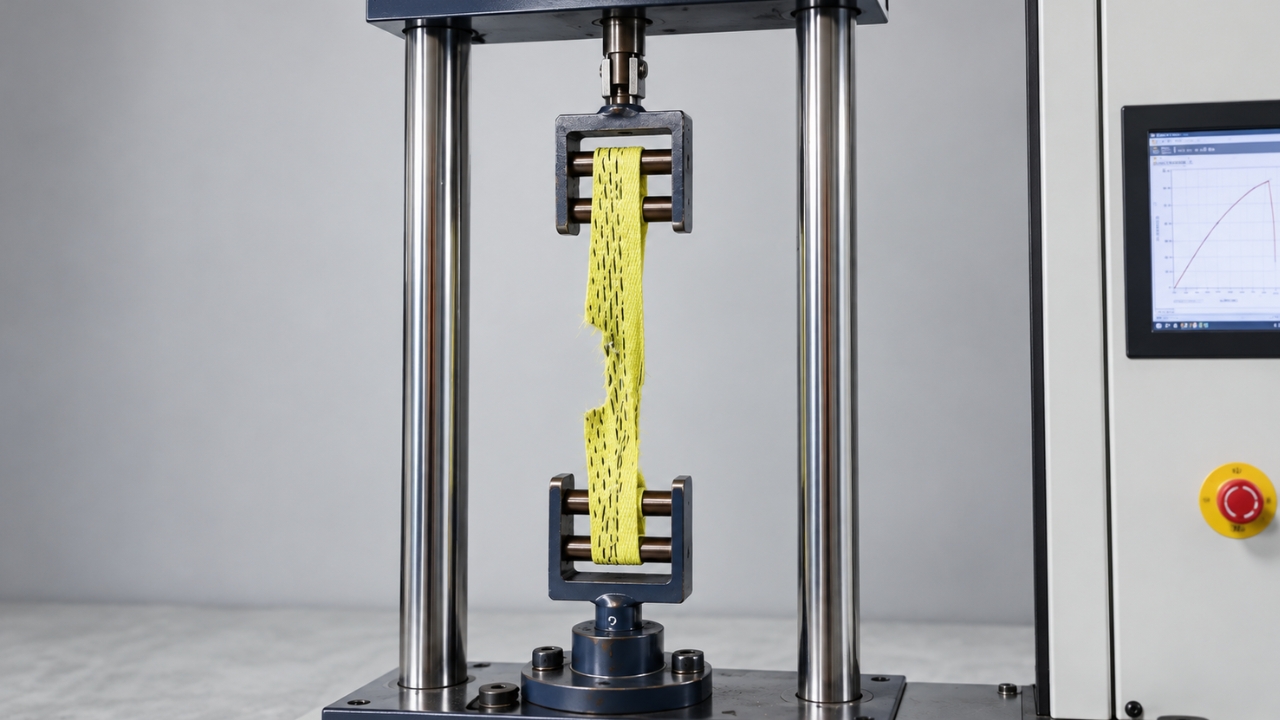
- Product testing: You need to confirm whether the supplier has testing equipment for fracture strength, wear resistance, sun resistance, etc., and issue a report. If the supplier can provide testing reports for the product, it can allow you to see the quality of the product more intuitively.
- Quality certification: Different products have different certification requirements, and you should confirm whether the supplier’s certification can meet the standard testing and certification process of your target market. This can help you avoid losses caused by unqualified certification.
BXseatbelt has rich production experience. All of our products are made of high-quality materials. We can provide you with product testing reports and certification standards. You don’t have to worry about the product not meeting the standards.
FAQ
Do Nylon And Polyester Webbing Have Good Color Fastness?
The color fastness of polyester webbing is better than that of nylon webbing. Polyester dyeing usually uses disperse dyes, which have a stable molecular structure and are resistant to washing and sun exposure. It has relatively little color change after long-term outdoor lighting and repeated cleaning.
Nylon webbing typically uses acidic dyes, which have weak adhesion to fibers. It is more prone to fading under high-temperature washing and prolonged exposure to ultraviolet radiation.
BXseatbelt can enhance the color fastness of products through color fixing technology according to your needs.
Why Do Car Seat Belts Only Use Polyester Webbing?
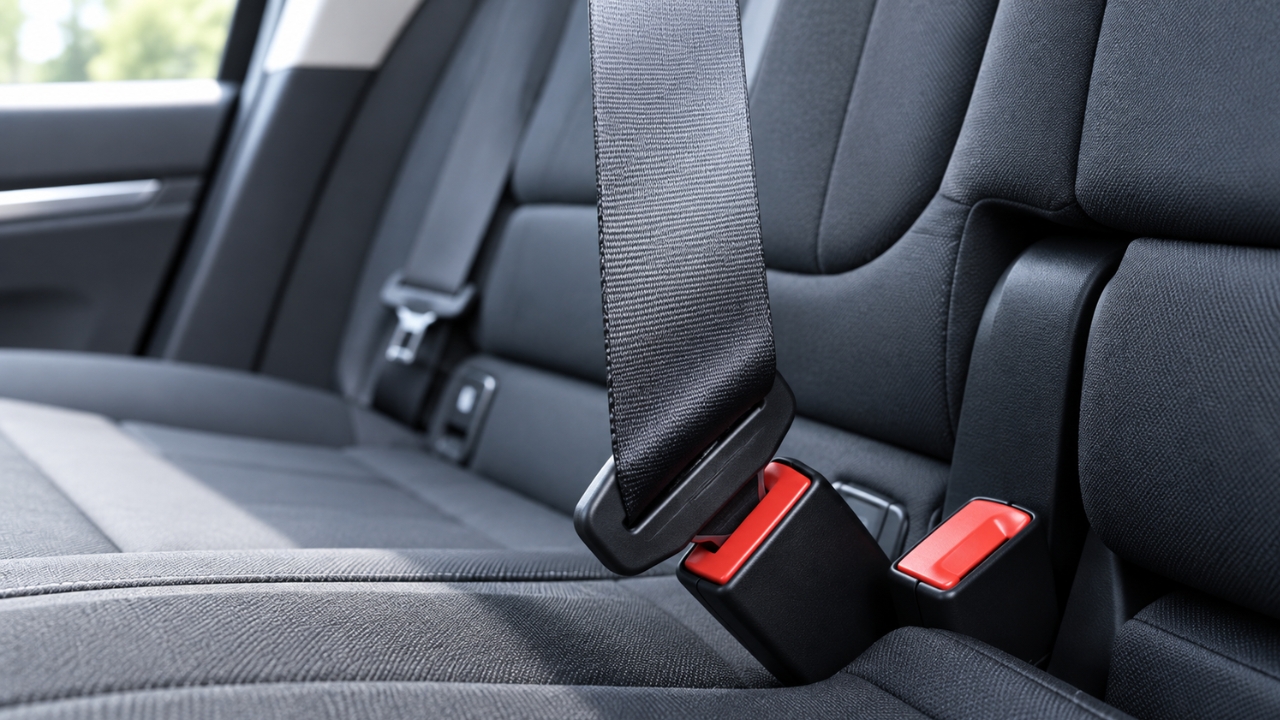
Car seat belts require high material stability, and polyester can meet their needs. The strength of polyester material remains almost unchanged in dry and wet conditions. It is not easily stretched or relaxed under long-term continuous stress.
Meanwhile, polyester has strong aging resistance and UV resistance, which can meet the mandatory certification requirements of the automotive industry. High-quality seat belts are usually made of high-grade polyester.
Nylon webbing shows a decrease in strength when in a damp state, and after prolonged use, the webbing will become longer. Therefore, it has a moderate protective effect during collisions and is not suitable for use in car seat belts.
The seat belts of BXseatbelt are made of high-grade polyester, ensuring reliable quality.
 What Factors Affect The Cost Of Polyester And Nylon Webbing?
The cost of webbing is not only determined by materials but also by its specifications, processing technology, compliance certification, and even color, which affect its price.
- Material: The price of nylon material is usually higher than that of polyester, and under the same specifications, the cost of nylon webbing is higher.
- Size: The width and thickness of the webbing both affect its cost. Our webbing comes in various size specifications. The regular widths are 1.75 inches, 2 inches, and 3 inches, and the thickness ranges from 1 to 1.2 mm. If you have special needs, we can also customize them for you.
- Processing technology: If you want to perform special treatments such as UV resistance, waterproofing, antique appearance, flame retardancy, etc., on the product, the cost of the product will increase.
- Color: The cost of some special colors and multi-color webbing is usually higher than that of regular primary color webbing.
What Are The Storage Requirements For The Two Types Of Webbing?
Both types of webbing need to be stored in a cool, dry, and well-ventilated location. You need to avoid letting them come into contact with rainwater and damp ground to prevent mold growth. Here are some other precautions for your reference.
- Firstly, it is recommended to store the webbing at room temperature and avoid high-temperature heat sources. High temperatures can accelerate fiber aging and reduce the tension of the webbing.
- Secondly, the storage of webbing needs to be kept away from strong acidic and alkaline substances, oil stains, and organic solvents to prevent the fiber structure of webbing from being corroded.
- Finally, it is best not to stack the webbing under heavy pressure to avoid deformation caused by long-term compression.
All webbing from BXseatbelt comes with dust-proof packaging at the factory to prevent dust accumulation. We suggest that you do not stockpile a large amount of goods.
Can BXseatbelt Customize Webbing?
Yes. BXseatbelt can customize webbing according to your needs, allowing you to choose the materials, textures, colors, logos, and sizes you need. We have rich experience in customization and can ensure that your customized webbing is compatible with your product.
We can provide you with sample testing and mass production after your confirmation, ensuring product quality.
Final Thought
Polyester and nylon each have their own advantages. There is no best, only the most suitable. BXseatbelt has extensive experience in webbing research and manufacturing. If you want to purchase or customize high-quality webbing, please feel free to contact us. We can recommend suitable products for you based on your needs.