


The various components of a seat belt require appropriate materials based on the forces they endure and how they function. This article will introduce the materials used in common seat belt components and, based on material properties, explain the key factors to consider when selecting seat belt materials.
What Material Are Seat Belts Made Of?
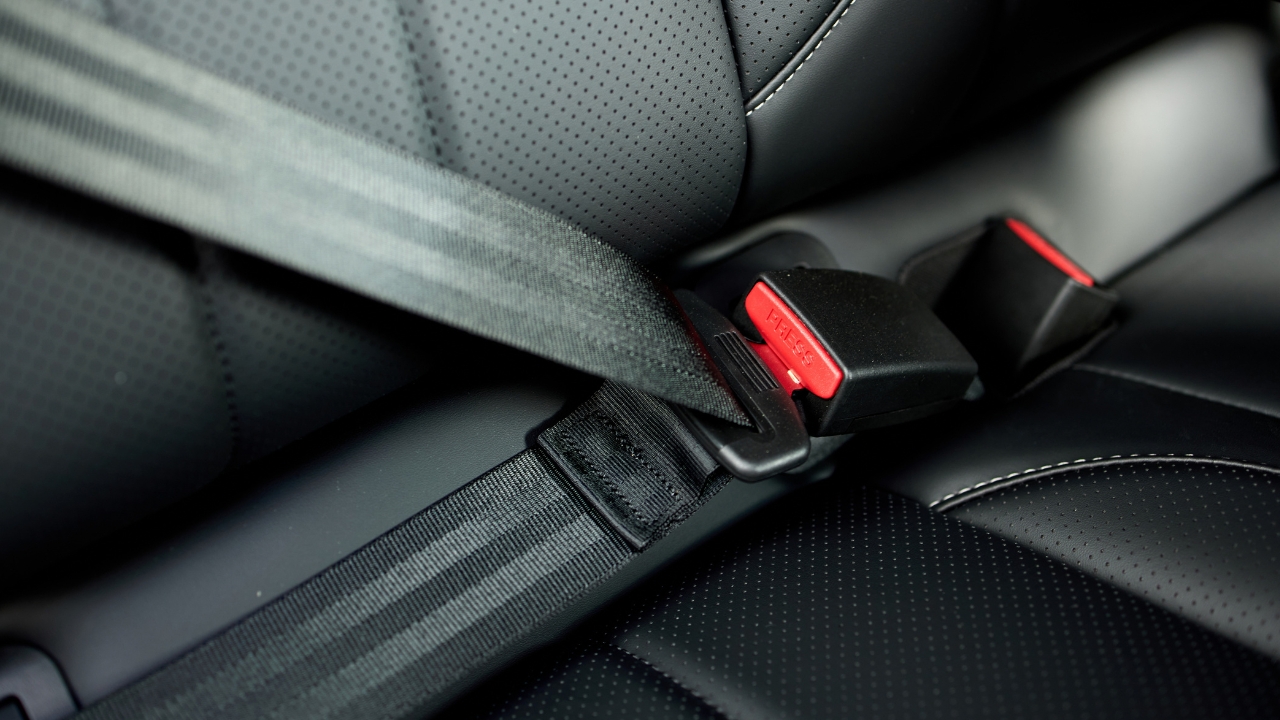
A seat belt may appear to consist of just a few parts, such as a webbing strap made from a specific belt strap material and a retractor. But what seat belts are made of is actually more complicated than it looks. Different components use different materials depending on the loads they carry and how they function.
Seat Belt Webbing Materials
The vast majority of modern automotive seat belt webbing is made primarily from high-strength polyester.
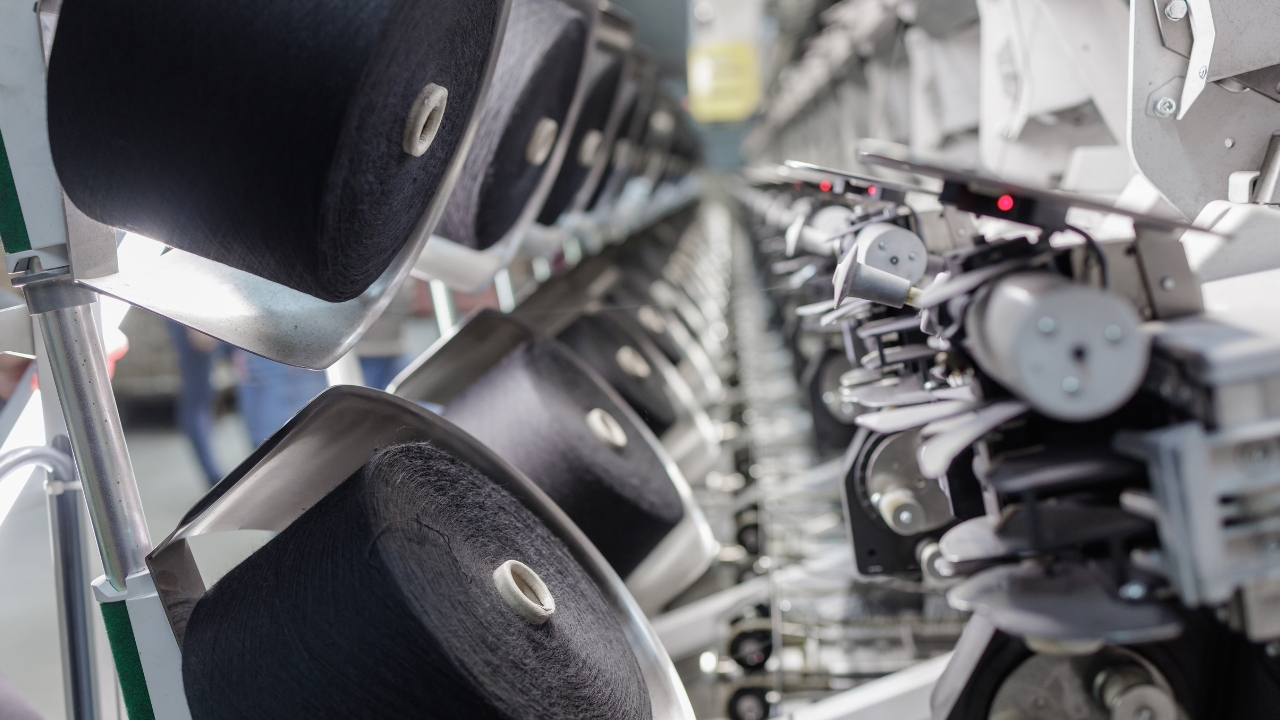
Polyester is widely used for modern seat belt webbing because of its high tensile strength, relatively low elongation, abrasion resistance, and UV resistance. The webbing itself is not ordinary fabric, but rather a structure formed by high-density weaving of high-strength polyester yarns.
Common seat belt webbing is approximately 46 mm wide. This high-strength construction is the foundation that enables the webbing to withstand impact loads.
The edges of the webbing are equally important. The fabric edges, formed through special treatment, reduce snagging and abrasion and are reinforced with sturdy polyester thread, thereby minimizing wear and tear during lasting use.
 Retractor Materials
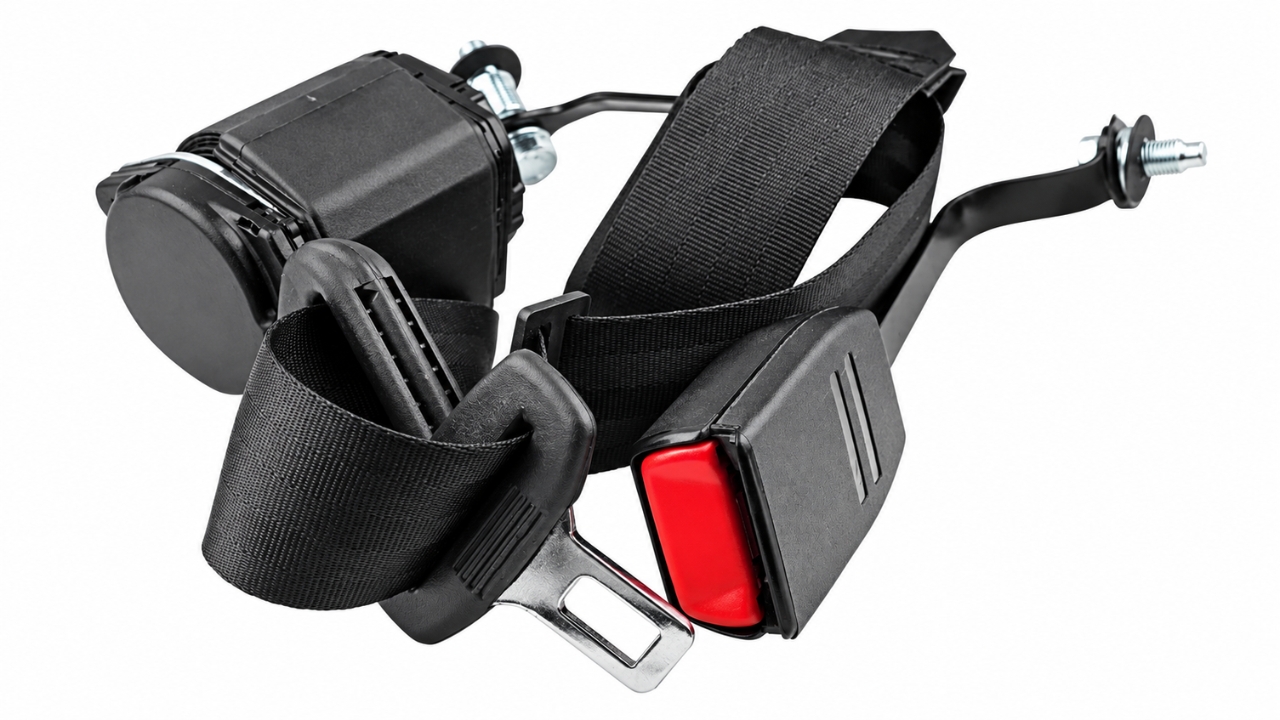
A seat belt retractor consists primarily of steel components and springs, and also includes a locking mechanism and a sensing mechanism. It controls the extension and retraction of the webbing, allowing it to be released and retracted as needed, and locking the webbing during rapid movement or under specific conditions.
Its metal structure and sensing mechanism must work in tandem to promptly restrict the webbing’s movement when necessary.
Seat Belt Buckle and Latch Plate Materials
Both the seat belt buckle and the tongue must withstand the high forces generated during a collision. The buckle is an assembly that typically contains metal structural components along with engineering plastic parts, while the tongue is primarily a metal component attached to the webbing. The tongue slides into the buckle to form a secure connection and must maintain its structural integrity under high loads.
Pillar Loop and Anchor Materials
Support rings are primarily used to guide the shoulder strap of a three-point seat belt, ensuring the webbing crosses the body at an appropriate angle and maintains a snug fit. Support rings are typically made of metal, though some products use engineering plastics, depending on the structural design and installation location. Anchor points secure the seat belt to the vehicle structure and are usually made of metal materials such as high-strength steel to withstand the high loads generated during a collision.
The steel support structure and connecting components also play a role in transmitting collision loads and must be matched to the strength and structure of components such as the webbing and retractor.
 Pretensioner and Load Limiter Materials
A pretensioner is designed to rapidly tighten the webbing during a collision or when a collision is detected, removing slack between the occupant and the belt. Depending on the design, it may use a pyrotechnic actuator or an electric motor and may be integrated into the retractor, buckle, or another part of the seat belt system. Internally, it typically consists of steel structural components, springs, and other metal and engineering plastic parts.
A load limiter controls the force transmitted through the seat belt to the occupant during a collision, helping reduce excessive belt loading on the chest while maintaining occupant restraint. Depending on the design, it typically uses metal components such as steel torsion bars or deformation elements to provide controlled force limitation.
How to Choose the Right Seat Belt Material
Strength
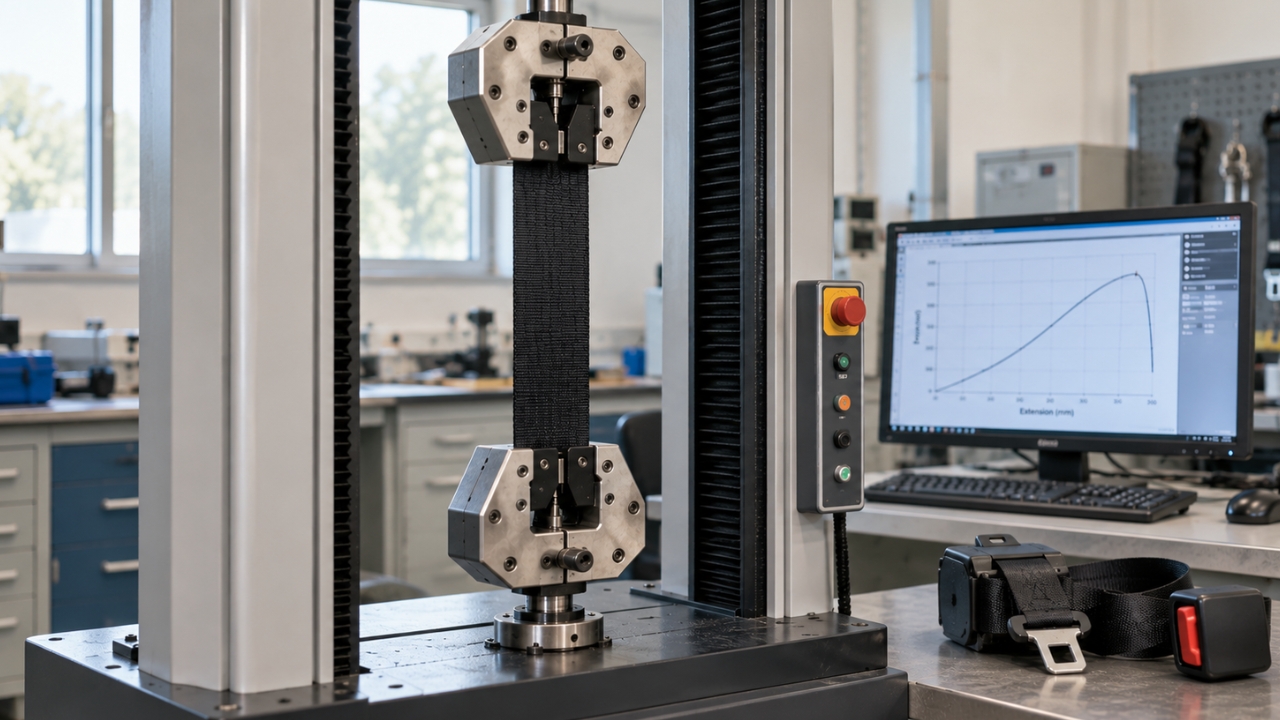
When selecting materials for seat belts, strength is the primary consideration. Seat belt webbing must withstand thousands of pounds of tensile force during a collision or sudden deceleration while remaining intact. Modern seat belts typically use high-strength polyester webbing, which provides sufficient tensile strength while maintaining a certain degree of flexibility.
The webbing does not simply “restrain” the occupant. In the event of a collision, the seat belt must quickly absorb the occupant’s momentum and distribute the impact forces to relatively strong areas of the body, such as the chest, shoulders, and pelvis. Insufficient material strength or a webbing structure unable to withstand the corresponding loads will compromise the protective performance of the entire seat belt system.
Therefore, when selecting a seat belt, you should focus not only on the name of the material but also on the actual strength it provides and whether the webbing can maintain its structural integrity after being subjected to significant loads.
Elongation
For seat belt webbing, lower elongation is not necessarily better. The webbing needs a controlled level of dynamic elongation so that it can absorb part of the impact energy and help manage the forces transferred to the occupant during a collision.
High-strength polyester webbing is designed to provide controlled elongation rather than maximum stiffness. During a severe deceleration event, a certain amount of elongation can contribute to dynamic energy absorption and increase the distance over which the occupant is decelerated. However, excessive elongation may reduce the belt’s ability to effectively control occupant movement.
For this reason, seat belt webbing should be evaluated based on its controlled dynamic elongation and its relationship with tensile strength, rather than simply selecting the material with the lowest elongation. The target elongation range depends on the specific webbing construction, material specification, and applicable performance requirements.
Durability
Seat belt materials must also withstand lasting use.
Therefore, the material typically needs to combine high strength, controlled elongation, abrasion resistance, and long-term durability. Polyester offers a practical balance of these properties and is widely used for automotive seat belt webbing. Polyester strikes a good balance among these properties and is one of the most widely used materials in modern seat belt webbing.
High-strength polyester webbing can withstand significant collision loads while offering good heat resistance and UV resistance. However, even if the material itself has good durability, this does not mean the webbing can be used indefinitely.
 Choose Based on Webbing Structure and Manufacturing
It’s not enough to just look at “100% polyester.” Even with the same material, different webbing structures and manufacturing methods can result in different final performance characteristics.
Seat belt webbing is typically formed by high-density weaving of high-strength polyester yarns. Standard seat belt webbing is approximately 46 millimeters wide and usually contains a large number of warp threads. A common weave pattern is herringbone twill; an eight-heddle weaving method helps increase yarn density, resulting in a stable webbing structure.
The webbing’s edges also deserve attention. Specially treated fabric edges can reduce snagging and scratching, and reinforcing them with sturdy polyester thread helps minimize edge wear during lasting use.
High-strength yarn is just the foundation; yarn density, weaving method, and edge treatment also influence the webbing’s durability and overall performance.
Choose Based on the Overall Seat Belt System
When selecting materials for seat belts, one cannot focus solely on the webbing. In actual use, the webbing must work in conjunction with components such as the retractor, buckle, tongue, steel structural parts, springs, locking mechanism, pretensioner, and load limiter.
The materials, strength, and structure of each component must be mutually compatible; simply increasing the strength of a single component does not necessarily improve the performance of the entire system.
However, the ultimate safety performance still depends on the webbing structure, weave density, and the coordinated design of components such as the retractor, buckle, pretensioner, and force limiter.
 FAQ
Why Is Polyester Fiber Used for Seat Belt Webbing?
Polyester fiber offers a useful combination of high tensile strength, controlled elongation, abrasion resistance, UV resistance, and dimensional stability. Compared with nylon, polyester generally has lower elongation and better resistance to UV exposure, making it well suited to automotive seat belt webbing.
When Should A Seat Belt Be Replaced Before Reaching Its Expected Service Life?
If the seat belt webbing shows signs of wear or other visible damage, it should be replaced immediately. After a collision, the seat belt should be inspected even if the webbing shows no obvious damage, as the retractor, pretensioner, buckle, or internal webbing may have been subjected to high impact loads.
If a seat belt is approximately 10 to 15 years old, or if it has been exposed to high temperatures or chemical corrosion, its actual condition should be assessed rather than relying solely on its age. When replacing the seat belt, follow the vehicle manufacturer’s maintenance procedures and use compatible, certified parts.
How Long Do Seat Belts Typically Last?
Under normal conditions, seat belts typically last about 10 to 15 years. However, there is no standard replacement interval that applies to all vehicles. The actual service life depends on a variety of factors, such as exposure to ultraviolet rays, high temperatures, humidity, contact with chemicals, wear and tear, and whether the seat belt has been involved in a collision.
What Should You Consider When Ordering Seat Belt Parts in Bulk?
If you need to purchase seat belt parts in bulk, in addition to material and performance specifications, you should also confirm the MOQ, lead time, and batch consistency in advance. The MOQ varies depending on the product type and customization requirements. The lead time depends on the order quantity and the level of customization.
Can Seat Belt Materials Be Customized for Different Vehicle Applications?
Yes. Different vehicle models or projects may have varying requirements regarding the dimensions and components of seat belt parts. When customizing, you should determine the material and component specifications based on the specific vehicle model, installation space, and mounting structure, rather than simply applying generic specifications. For projects requiring customization, we recommend confirming samples and technical specifications before proceeding with mass production.
How Can You Ensure Consistent Quality Across a Large Seat Belt Order?
For bulk purchases, we recommend clarifying the material specifications and key performance standards before placing an order, and using the confirmed samples or technical requirements as the basis for subsequent production and inspection.
This makes it easier to compare different batches and promptly identify any deviations in materials or processing. For lasting procurement projects, stable production processes and quality control procedures are equally important.
Final Thought
When selecting a safety harness, you should start by considering the material itself, paying close attention to its tensile strength, while also evaluating the overall design of components such as the retractor, buckle, pretensioner, and force limiter. If you are looking for seat belt solutions, please feel free to contact Bxseatbelts—we have extensive experience in this field.