

The seat belt buckle locks the seat belt tongue and releases the connection when needed. Different vehicle models and seat structures require different buckle mounting methods, interface dimensions and functional configurations. Understanding these differences helps automakers, buyers and component distributors evaluate products and suppliers and supplier evaluation.
What Is a Seat Belt Buckle?
A car seat belt buckle is a critical connecting component of the seat belt assembly. It receives and locks the seat belt tongue to secure the connection, which can be released by pressing the release button when needed.
Simply put:
- Buckle: Receives and locks the tongue.
- Tongue: Inserts into the buckle and engages with the internal latching mechanism.
- Release Button: Activates the internal mechanism to unlatch the buckle.
 Main Components of a Seat Belt Buckle
Although a seat belt buckle looks simple, its internal mechanism is compact and precisely engineered. Depending on the model, it may include the following components: Depending on the model, it may include the following components:
- Release Button
The release button triggers the internal buckle mechanism to release the latch. The button’s size, position and operation method affect ease of use, and its design must meet specified release performance requirements. - Internal Latching Mechanism
This is the core part that enables the buckle’s locking function. When the tongue is fully inserted, the internal mechanism engages with the tongue and maintains connection as designed. The structural design, manufacturing precision and durability of the latching mechanism directly determine buckle performance. - Housing
The housing encloses and protects the internal mechanism and provides support for components such as the release button. Its structure and materials must satisfy mechanical performance and environmental requirements for the product. - Mounting Fittings
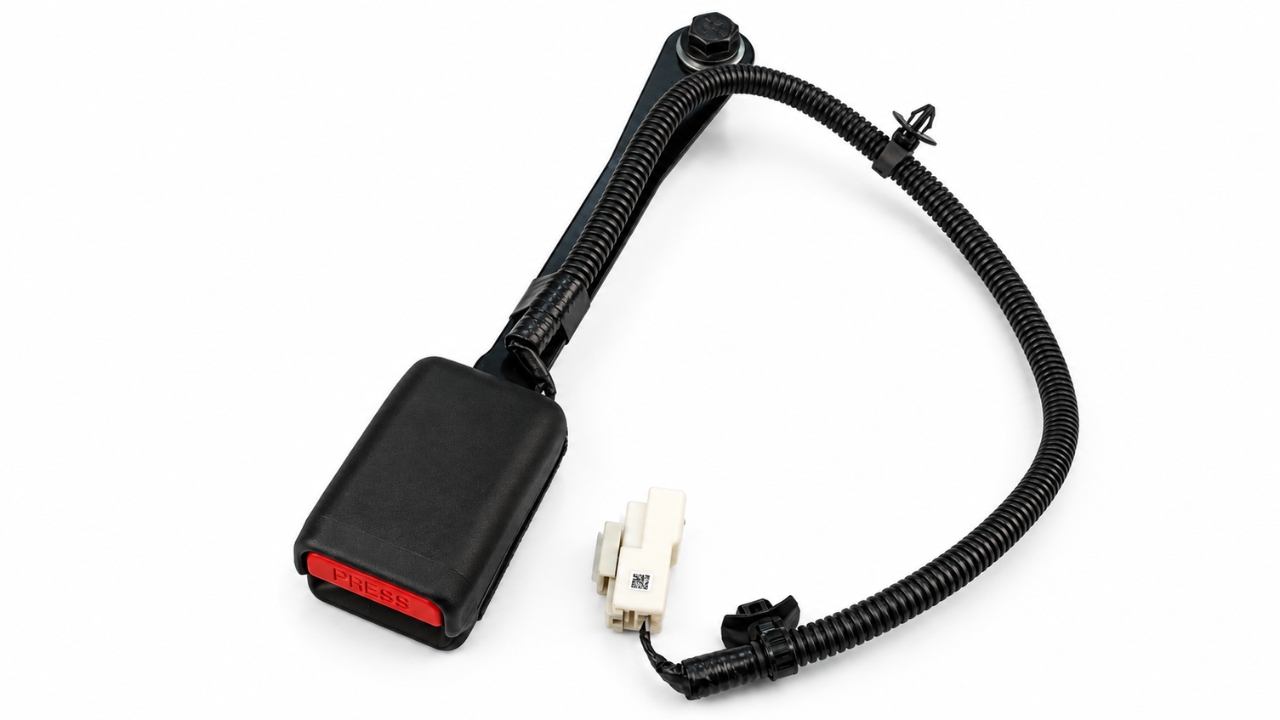
Buckles can be installed at designated positions via rigid metal stalks, flexible webbing extensions or other designs. Different connection types affect the buckle’s position, range of motion and compatibility with the mounting structure. - Electrical Components
Some seat belt buckles are fitted with a buckle state sensor, which sends signals to the vehicle system for functions such as the seat belt reminder. For these products, electrical connection and signal requirements must be considered alongside the mechanical interface.
Common Types of Seat Belt Buckles
Seat belt buckles can be classified by release method, mounting structure and functional configuration, as follows:
| Classification | Common Options | Key Differences |
| Release Method | Button-release design | Release operation and internal mechanism |
| Mounting Structure | Rigid stalk, flexible connection | Mounting position and range of movement |
| Functional Configuration | With or without a buckle state sensor | Availability of buckle engagement signals |
| Supply Configuration | Buckle only, buckle assembly with fittings | Scope of supply and included components |
- Button-Release Buckle
The button-release buckle unlocks the tongue by pressing the release button. It is the most common design for automotive seat belts. Button position, shape and internal release mechanism vary by product design, depending on application and configuration. - Rigid-Stalk Buckle vs Flexible-Connection Buckle
The main difference lies in the mounting structure. A rigid stalk keeps the buckle in a relatively fixed position, while a flexible connection allows the buckle to move within a certain range. These designs affect buckle placement, mobility and fit with the seat structure. - Buckles With or Without Sensors
Some buckles are equipped with a buckle state sensor to send engagement signals to the vehicle’s electronic system for seat belt status monitoring. Sensor-free buckles rely purely on mechanical structures for tongue locking and release. They differ in functional setup and electrical design.
 How to Select a Suitable Seat Belt Buckle
When sourcing seat belt buckles, first verify compatibility with the mating tongue and mounting structure, then check functional configuration, technical specifications and supplier capacity.
- Verify Buckle and Tongue Compatibility: For replacement projects, it is recommended to provide samples, drawings or part numbers of the original buckle or tongue. Besides checking critical dimensions, validate that the tongue inserts, latches and releases smoothly. Similar appearance does not guarantee direct interchangeability.
- Check Mounting Dimensions and Connection: Style Confirm stalk length, mounting hole positions, connection type and installation orientation to ensure suitability for the target seat or vehicle structure. For projects with limited space or special mounting locations, also check accessibility and operating space after installation.
- Clarify Functional and Electrical Requirements: If buckle engagement detection is required, confirm sensor configuration, connector type, pin assignment and signal specifications, and verify compatibility with the vehicle electrical system.
- Define Technical Specifications and Validation Requirements: Before requesting quotes or developing samples, define performance targets, dimensional tolerances, test items and applicable regulations or customer standards. Sample approval shall be based on agreed technical documents and acceptance criteria, not only visual inspection and basic operation.
- Evaluate Supplier Customization and Production Capabilities: If standard products cannot meet project requirements, check whether the supplier supports drawing-based development, sample testing and evaluation or custom structural design.
Buyers should also assess the supplier’s sample development process, quality control, technical documentation and ability to support stable, high-volume production and delivery.
| Items to Confirm | Information to Prepare |
| Product Matching | Buckle and tongue part numbers, samples or drawings |
| Mounting Requirements | Stalk dimensions, mounting hole layout and connection method |
| Functional Configuration | Whether sensors or other extra features are needed |
| Technical Requirements | Performance indicators, test items and applicable standards |
| Purchase Needs | Order quantity, customization requirements and delivery schedule |
FAQ
What Information Is Needed to Request a Quotation for Seat Belt Buckles?
Provide the estimated order quantity, product drawings or samples, mounting dimensions, mating tongue details and required functional configuration. For custom projects, include any special structural or technical requirements to help the supplier assess feasibility and prepare an accurate quotation.
 What Documents Should a Seat Belt Buckle Supplier Provide?
You may request product specifications, applicable test reports, inspection records and relevant quality management documents. Required documents depend on product use, target market and project requirements.
What Factors Affect the Price of Automotive Seat Belt Buckles?
Buckle prices are generally affected by structure, materials, sensor configuration, customization needs, testing requirements and order volume. Custom projects also incur costs for sample development and validation. Final quotations are determined based on product specifications and purchase requirements.
Can Suppliers Supply Both Buckles and Complete Seat Belt Assemblies?
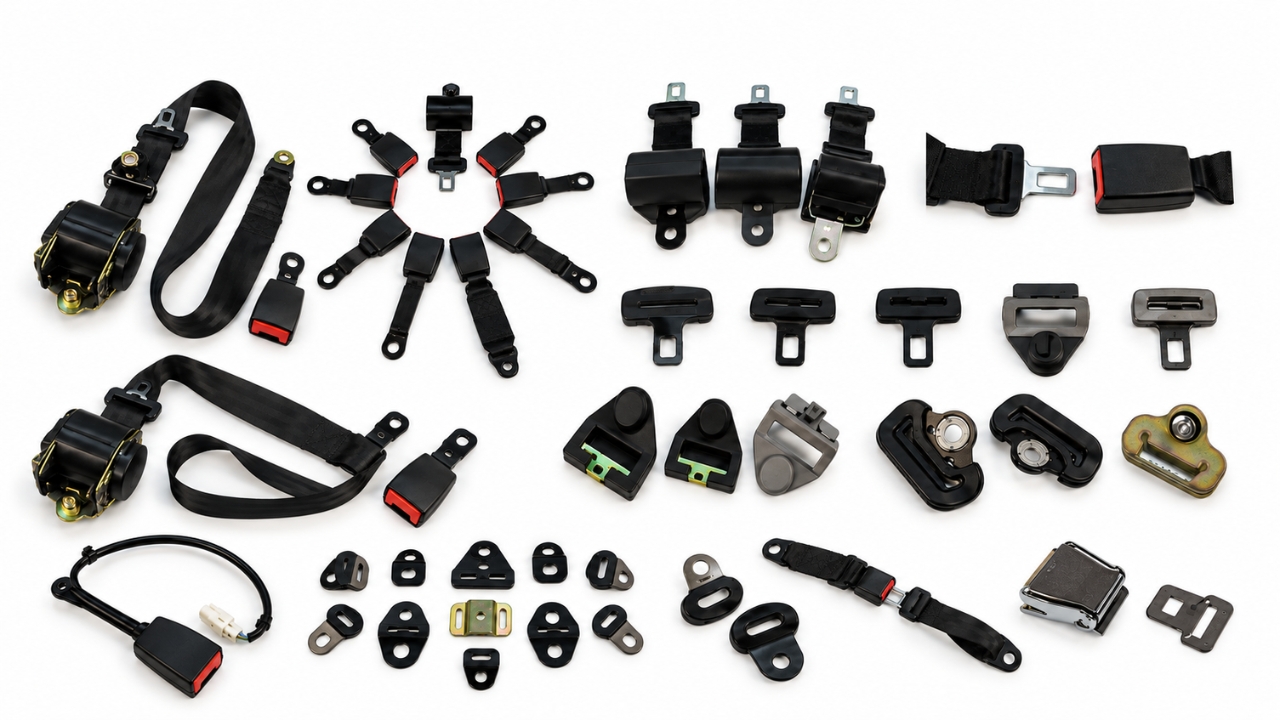
Some suppliers can provide buckles, webbing, retractors and other seat belt components, as well as full seat belt assemblies. Confirm their product range, component matching capability and validation requirements for complete assemblies before purchase.
Final Thoughts
If you are looking for a reliable seat belt buckle supplier, please share your product drawings, samples or technical specifications for further discussion. We are ready to answer all your questions.